Rector Silja Bára R. Ómarsdóttir sent the following message to students and staff at the beginning of the autumn semester: Dear students and colleagues, welcome to a new academic year.
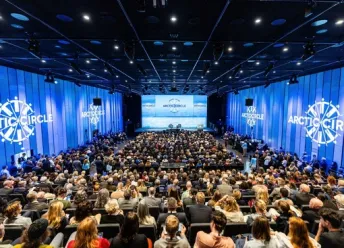
Representatives from around the world are meeting in Iceland this weekend to lay the groundwork for an International Scientific Assessment Panel, which will develop advice for policymakers on Earth-Space sustainability.
While Iceland currently ranks nr.1 in the world for gender equality, a newly released study found evolving forms of sexual violence including non-consensual choking or suffocation during sex, drugging, stealthing and forms of technology-facilitated sexual violence to be strikingly common among younger women.
The board of the Þórsteinn’s Fund calls for grant applications. The primary purpose of the Þórsteinn’s Fund is to support blind and visually impaired students at the University of Iceland.
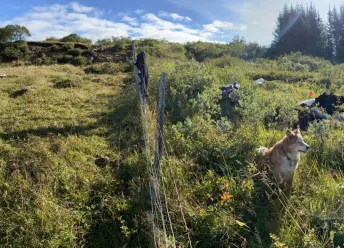
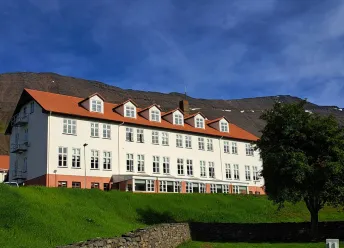
A new study by researchers at the University of Iceland at Hólar, the University of Iceland and domestic and international partner institutions has found significantly more carbon in the soil of land that has been continuously grazed than in areas that have been protected from grazing.
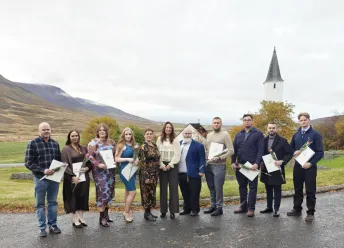
A graduation ceremony took place at the University of Iceland at Hólar last Friday, 9 October. It was a new chapter in the University's history when 26 graduates received their diplomas from the University of Iceland at Hólar, becoming the first to graduate under the new name.
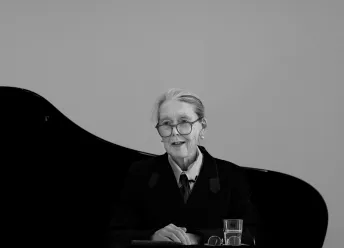
Anne Carson,
Þórey S. Þórisdóttir has been appointed director of the UI Institute of Research Centres, selected from a group of six applicants. The Institute will shortly be transferred to the University of Iceland at Hólar.