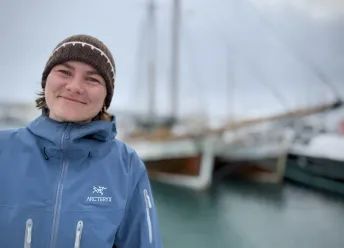
Skjálfandaflói Bay is a site of vital research, whale watching, and rich marine biodiversity. There, Julie Elisabeth Brantley Boesen is conducting research on the behaviour of white-beaked dolphins.
Fish consumption in Iceland has decreased markedly over the past few decades. Today, many people eat less fish than recommended by dietary guidelines. There are undoubtedly many explanations for this development, and one of them could be that eating fish simply isn’t cool enough.
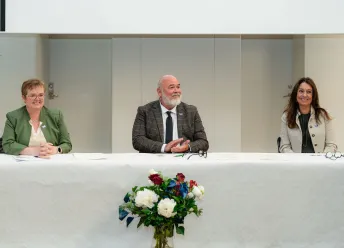
An agreement establishing the University of Iceland University Consortium was signed on 29 June at Hólar in Hjaltadalur, marking the beginning of a new chapter in higher education in Iceland.
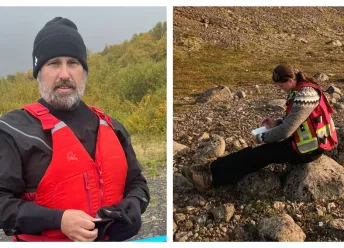
A new study by geologists at the University of Iceland suggests that earthquakes and dikes have had a greater influence on the distribution and frequency of large landslides on the Tröllaskagi peninsula than previously thought.
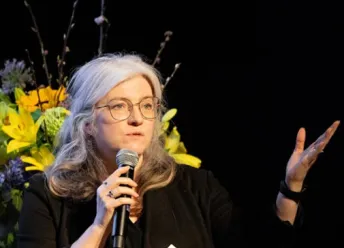
Ragnhildur Þóra Káradóttir, professor at Cambridge University and the University of Iceland’s Faculty of Medicine, has been elected as a Member of the European Molecular Biology Organisation (EMBO) for research excellence and exceptional achievements.
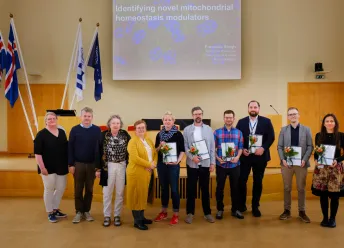
Seven grants have been awarded from the Eggert Fund at UI to support a range of research in the earth and life sciences. The grants, amounting to a total sum of ISK 7 million, were presented at a formal event in the UI Ceremonial Hall.
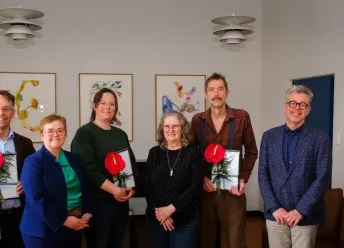
Three PhD students from the UI School of Humanities have been awarded grants from the School's Education Fund.
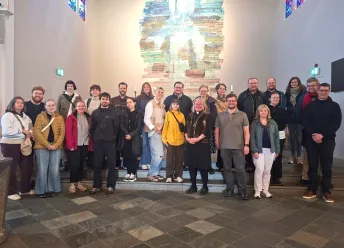
A group of students and teachers from Frankfurt, Helsinki, and Copenhagen are in Iceland to participate in a course in Skálholt and Reykjavík, organised by the Faculty of Theology and Religious Studies at the University of Iceland.
Representatives from the University of Iceland and the Reykjavík Global Forum signed a four-year partnership agreement at an event held at the Loftskeytastöðin Cultural Centre on Suðurgata last Friday, exactly 111 years after women in Iceland gained the right to vote.
Haraldur Bernharðsson, professor of Medieval Icelandic Studies, has been appointed as Dean of the School of Humanities. He was one of three applicants and will assume the position on July 1.