A visit to the RIFF international film festival, lunchtime concerts, a football tournament, and sessions on effective study skills and opportunities to study abroad are just some of the highlights of the University of Iceland’s Orientation Week, taking place from 31 August to 4 September.
Rector Silja Bára R. Ómarsdóttir sent her greetings to students and staff at the beginning of the autumn semester: Welcome to a new academic year. Autumn is always a time of change and new beginnings at UI.
Örn Guðmundsson has been appointed Director of Finance and Operations at the University of Iceland.
Scientists from the University of Iceland are participating this summer in an international research project that uses the latest technology to observe right whales and other great whales in the waters between Iceland and Greenland.
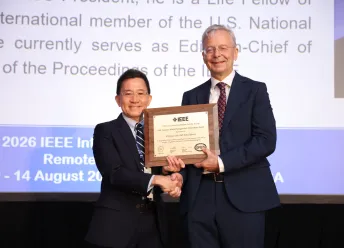
Jón Atli Benediktsson, a professor of electrical and computer engineering and the former Rector of the University of Iceland, was honoured earlier this week by the IEEE Geoscience and Remote Society (GRSS) for his outstanding contributions to remote sensing.
Researchers at the University of Iceland and the Icelandic Heart Association have demonstrated the importance of considering the long-term temporal stability of circulating proteins and other biomarkers in disease research.
The Arnamagnæan Summer School in Manuscript Studies 2026 was successfully held 15–25 of June in Reykjavík.
GRÓ GEST will launch its new global online course, Ending Violence through Human Rights Advocacy, on 10 August 2026 at 8:00 EAT.
Memorandum of understanding signed at the opening of the National Icelandic Horse Competition.
Two new school deans and 12 faculty heads took office at UI on 1 July, the same day that the University of Iceland University Consortium became a reality, officially establishing the University of Iceland at Hólar as an affiliated institution made up of three faculties.