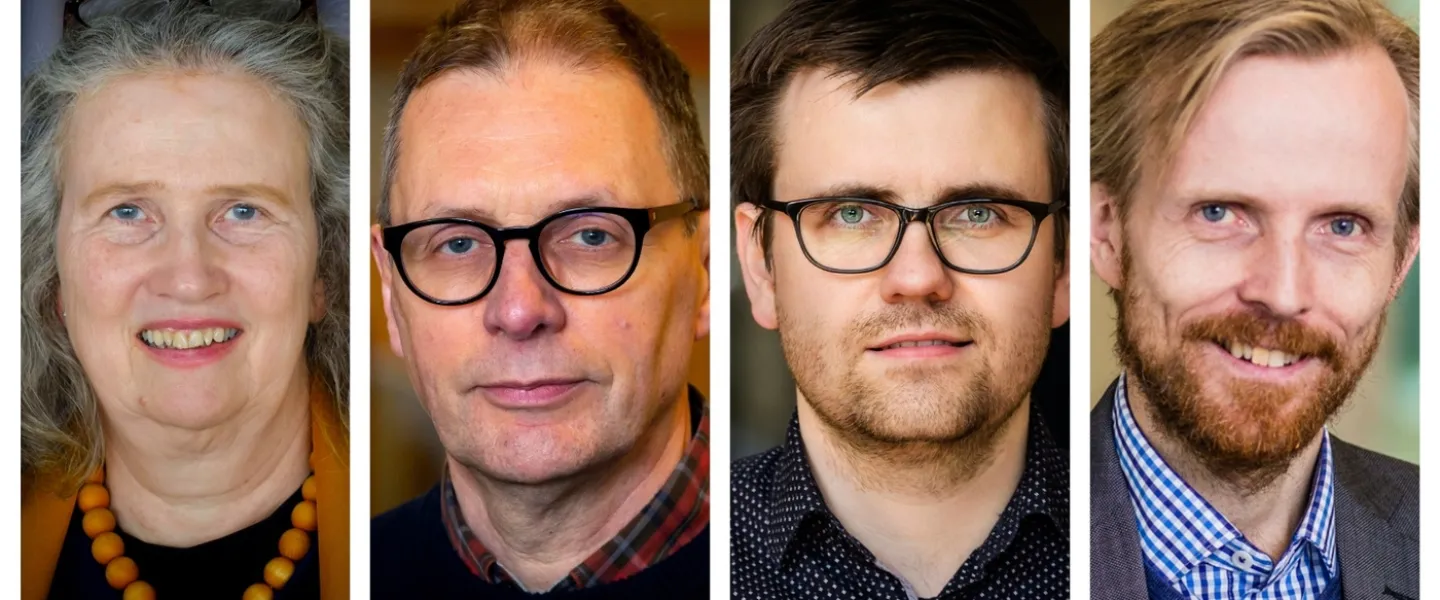
Researchers at the University of Iceland are involved in four Nordic research infrastructure hubs that recently received funding from the Nordic institution NordForsk. In total, 11 collaboration hubs are sharing ISK 2.3 billion, and competition for the grants was intense, with 51 applications submitted to NordForsk on this occasion.
The collaboration networks involving researchers from the University of Iceland are:
Nordic Historical Population Data (NordHistPop)
The project is hosted by the Centre for Digital Humanities and Arts at the University of Iceland, and its leader is Ólöf Garðarsdóttir, professor of Social History and dean of the School of Humanities. Partners come from all the Nordic countries, as well as Canada and the United States, together with the European research infrastructure DARIAH-ERIC.
The project is based on the unique historical population data available in the Nordic countries, Canada, and the United States concerning individuals and their circumstances.
“The aim of the project is, among other things, to link data so that it becomes possible to study the living conditions and life histories of individuals across national borders. The project brings together historians, demographers, data scientists, and computer scientists in workshops, summer schools, and “hackathons” to share experience and experiment with the available data,” says Ólöf.
Bridging Nordic Microscopy Infrastructures II (BNMI-II)
BNMI is a collaboration among all Nordic infrastructures working with microscopy in the life sciences. The Life Science Institute at the University of Iceland has been a key participant in this collaboration from the outset.
The importance of microscopy in the life sciences has grown dramatically in recent decades, enabling scientists to answer many questions about the function of proteins and molecules in the innermost regions of cells, and even to examine the structure and function of their smallest components. The technology is highly specialised and expensive, and it is crucial to have experts who know it well and can assist with its use.
For this reason, Nordic partners have joined forces to establish BNMI, aiming to strengthen communication and collaboration, train both specialists who work with the instruments and students who use them, and promote the shared use of equipment across the Nordic countries.
“At the University of Iceland, an imaging facility operates with two specialists who assist with the use of the technology, and it is clear that both they and students in the field have benefited greatly from this collaboration. Through the partnership, we have access to instruments that are not available in Iceland, and in many cases to instruments that will never be purchased here. Therefore, this vastly expands the possibilities of imaging in the life sciences,” says Eiríkur Steingrímsson, professor at the Life Science Institute of the University of Iceland, who leads the collaboration on behalf of the university.
NORDSTRUCT
NORDSTRUCT is a newly established Nordic umbrella organisation for integrative structural biology, bringing together 26 universities across five Nordic countries. In structural biology, advanced technologies are used to analyse the structure and function of biological molecules, which is fundamental to medicine, biotechnology, and sustainable solutions.
“In NORDSTRUCT, specialised doctoral courses will be offered, along with an interdisciplinary summer school for graduate students, group leader meetings, and exploratory collaboration grants for new collaborations, to provide coordinated access to research infrastructures and expertise in this field within the Nordic countries. Through its support, NordForsk offers Icelandic researchers new opportunities for research and Nordic collaboration,” says Jens G. Hjörleifsson, associate professor at the Faculty of Life and Environmental Sciences, who serves as the project’s national contact in Iceland.
Nordic-Baltic Dataverse Hub
The aim of the Nordic-Baltic Dataverse Hub is to create a collaborative platform of institutions in the Nordic countries that use the Dataverse hostin system to operate preservation repositories for research data. Dataverse is an open-source software developed by Harvard University to facilitate the reliable preservation of research data, and it has since been adopted by numerous institutions around the world, including GAGNÍS – the Icelandic Research Data Service.
“There are ever-increasing demands placed on the scientific community for the reliable handling and long-term preservation of research data. With that goal, the University of Iceland has worked intensively to build up various data infrastructures, including GAGNÍS, which can receive research data for hosting in accordance with international standards. Participation in the Nordic-Baltic Dataverse Hub will support the continued development and strengthening of this important service for the scientific community in Iceland,” says Kjartan Ólafsson, Research Lecturer at the University of Iceland, who is involved in the project on behalf of the University.
In addition, Icelandic institutions are participating in three other projects, and a full list of collaboration networks can be found here