Language skills
Programme length
1 years.
Study mode
Face-to-face learning
Application status
International students:
Students with Icelandic or Nordic citizenship:
- Would you like to expand your knowledge in the field of education for all?
- Do you work with multilingual children?
- Would you like to strengthen your ability to support a diverse group of learners?
This programme is taught in Icelandic.
Read more about the programme on the Icelandic version of the study programme page.
For admission to the program, the principle applies that the applicant has completed teacher training, developmental therapist training, pedagogy and education studies, leisure and social studies, or similar studies.
Students must meet the program´s requirements to receive a certificate of completion.
The following documents must accompany an application for this programme:
- Statement of purpose
- Certified copies of diplomas and transcripts
Further information on supporting documents can be found here
Programme structure
Check below to see how the programme is structured.
This programme does not offer specialisations.
- First year
- Fall
- Teaching Icelandic as a second language
- Spring 1
- Behavior and emotions in childhood: Challenges and interventions
First year | Fall
Teaching Icelandic as a second language (ÍET102F)
A mandatory (required) course for the programme
10 ECTS, credits
Course Description
Course description
This course is primarily intended for teachers specializing in the instruction of Icelandic as a second language but is also suitable for preschool teachers, classroom and subject teachers, special education teachers, and school administrators. The course aims to enhance participants' knowledge and understanding of Icelandic language acquisition among children and students with foreign backgrounds. It introduces practical approaches and methods for teaching speaking, listening, reading, writing, vocabulary, and grammar. Topics covered include plurilingualism, language acquisition, and learning; teacher competence and professional development in Icelandic as a second language; planning, teaching materials, teaching methods, and theories in the instruction of Icelandic as a second language. All course activities aim to increase participants' ability to apply targeted and professional teaching methods in Icelandic as a second language instruction and to support Icelandic at all educational levels. Additionally, the course encourages critical thinking about the application of teaching methods and the ability to justify pedagogical decisions with reference to Icelandic language policies and both Icelandic and international research on second language learning. Furthermore, the course is designed to inspire continuous knowledge-seeking and foster the creation of a learning community in the workplace.
Language of instruction: Icelandic
Face-to-face learning
Distance learning
First year | Spring 1
Behavior and emotions in childhood: Challenges and interventions (MAL003F)
A mandatory (required) course for the programme
10 ECTS, credits
2 fieldwork credits
Course Description
The focus of this course is on emotional and behavioural difficulties (EBD) among children and adolescents. Students learn about the basics of applied behaviour analysis, functional behavioural assessment and comprehensive positive behaviour support plans.
The learning arrangements consist of lectures and group work.
Language of instruction: Icelandic
Face-to-face learning
Distance learning
Prerequisites
Attendance required in class
First year
- Fall
- ÍET102FTeaching Icelandic as a second languageMandatory (required) course10A mandatory (required) course for the programme10 ECTS, creditsCourse Description
Course description
This course is primarily intended for teachers specializing in the instruction of Icelandic as a second language but is also suitable for preschool teachers, classroom and subject teachers, special education teachers, and school administrators. The course aims to enhance participants' knowledge and understanding of Icelandic language acquisition among children and students with foreign backgrounds. It introduces practical approaches and methods for teaching speaking, listening, reading, writing, vocabulary, and grammar. Topics covered include plurilingualism, language acquisition, and learning; teacher competence and professional development in Icelandic as a second language; planning, teaching materials, teaching methods, and theories in the instruction of Icelandic as a second language. All course activities aim to increase participants' ability to apply targeted and professional teaching methods in Icelandic as a second language instruction and to support Icelandic at all educational levels. Additionally, the course encourages critical thinking about the application of teaching methods and the ability to justify pedagogical decisions with reference to Icelandic language policies and both Icelandic and international research on second language learning. Furthermore, the course is designed to inspire continuous knowledge-seeking and foster the creation of a learning community in the workplace.
Face-to-face learningDistance learningPrerequisites- Spring 2
MAL003FBehavior and emotions in childhood: Challenges and interventionsMandatory (required) course10A mandatory (required) course for the programme10 ECTS, credits2 fieldwork creditsCourse DescriptionThe focus of this course is on emotional and behavioural difficulties (EBD) among children and adolescents. Students learn about the basics of applied behaviour analysis, functional behavioural assessment and comprehensive positive behaviour support plans.
The learning arrangements consist of lectures and group work.Face-to-face learningDistance learningPrerequisitesAttendance required in class
The University of Iceland collaborates with over 400 universities worldwide. This provides a unique opportunity for UI students to pursue a part of their studies abroad, gain valuable international experience, and strengthen their position in the job market.
Opportunities
Study abroad is always subject to faculty approval.
Requirements
Students can only apply for study abroad if their study programme is at least:
- 90 ECTS credits for undergraduate programmes
- 60 ECTS credits for graduate programmes
Recognition
Students can get courses taken abroad recognised towards their degree at UI so the mobility does not have to prolong the studies at UI. Students must agree with their faculty on the recognition of courses before the start of the mobility by signing a learning agreement.
People with this qualification work:
- with multilingual children
- in pre-schools
- in compulsory schools
- in upper secondary schools
- in other educational settings
This list is not exhaustive.
Kennó is the organisation for student teachers at the University of Iceland. Kennó organises events such as socials for new students, annual galas and workplace tours. Kennó has also organised the Come and Teach project, which is aimed at publicising teaching degrees.
- Follow Come and Teach on Facebook and Instagram.
- More about the UI student's social life.

Students appreciate the University of Iceland for its strong academic reputation, modern campus facilities, close-knit community, and affordable tuition.
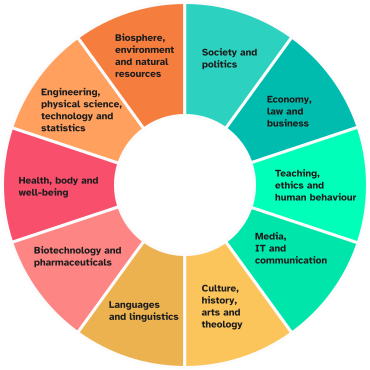
Study wheel
What interests you?
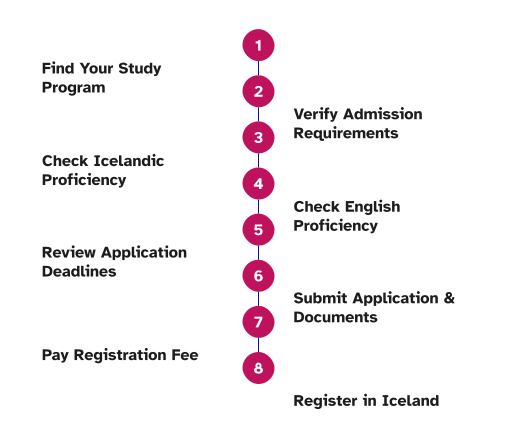
How to apply
Follow the path
If you still have questions, feel free to contact us.
School of Education
9:00 am - 3:00 pm
General Service and social media
The Service Desk is a point of access for all services. You can drop in at the University Centre or use the WebChat at the bottom right of this page.
Follow the School of Education on Instagram, Youtube
and Facebook
