Language skills
Programme length
Two years - 120 ECTS
Study mode
Distance learning
Application status
International students:
Students with Icelandic or Nordic citizenship:
- Do you want to learn more about management and administration in tourism?
- Are you interested in development and monitoring in tourism?
- Do you want to take a leadership role in event planning and management?
- Are you looking for a master’s programme that you can tailor to suit your interests?
- Are you planning to pursue doctoral studies?
This programme is taught in Icelandic.
Read more about the programme on the Icelandic version of the study programme page.
BA/BSc degree (with the minimum final grade of 6,5) or comparable educational background.
The following documents must accompany an application for this programme:
Further information on supporting documents can be found here
Programme structure
Check below to see how the programme is structured.
This programme does not offer specialisations.
- First year
- Fall
- Trends and Traditions in Tourism Studies
- Not taught this semesterSeminar
- Tourism Research
- Spring 1
- Methodology - Workshop
First year | Fall
Trends and Traditions in Tourism Studies (ROR4210120)
A mandatory (required) course for the programme
10 ECTS, credits
Course Description
In this course several classic texts that have shaped tourism studies will be read and their context and influence on the field traced in the literature. All students read a certain body of literature but each student selects one body of work based on own research interests. Theoretical background, research paradigms, concepts and methods will be investigated. Further, the epistemology of tourism studies will be studied as it is manifested in current literature.
Language of instruction: Icelandic
Distance learning
Not taught this semester
First year | Fall
Seminar (MÁL5110120)
A mandatory (required) course for the programme
10 ECTS, credits
Course Description
The aim of the course is to prepare students for participation in academic and professional discussions on tourism in contemporary times. Students must take an active part in building a scholarship in the course. The course is divided into several seminars and a final assignment. In each seminar, specific issues are discussed and analysed.
Language of instruction: Icelandic
Distance learning
The course is taught if the specified conditions are met
First year | Fall
Tourism Research (RÍF4105210)
A mandatory (required) course for the programme
5 ECTS, credits
Course Description
In this course several classic texts that have shaped tourism studies will be read. Students read a certain body of literature and discuss their impact on the research tradition of their field of study. Theoretical background, research paradigms, concepts and methods will be investigated. Further, the epistemology of tourism studies will be studied as it is manifested in current literature.
Language of instruction: Icelandic
Distance learning
The course is taught if the specified conditions are met
First year | Spring 1
Methodology - Workshop (AÐS4010120)
A mandatory (required) course for the programme
10 ECTS, credits
Course Description
The aim of the course is to provide an introduction to methodology, with a special focus on basic philosophical concepts. The first part of the course covers ontological issues and questions. The second part covers epistemological issues and questions. The course consists of a series of workshops in which each student's specific research project (for the MA thesis) is explored and monitored in terms of possible and relevant research methods that can be eleborated and applied.
The working languages in the course are Icelandic and English depending on participants background.
Language of instruction: English
Distance learning
- Year unspecified
- Fall
- Research Design and Methods
- Innovation and competitiveness
- Not taught this semesterWildlife Tourism Management in Arctic Settings
- Not taught this semesterSustainable Tourism Principles and Responsible Tourism Practices
- Not taught this semesterEquestrian tourism – theories and practices
- Year unspecified
- MA thesis
- MA thesis
- MA thesis
Year unspecified | Fall
Research Design and Methods (AFR5305)
A mandatory (required) course for the programme
5 ECTS, credits
Course Description
This course focuses on research designs and methods. Major steps of the research process from formulating a problem to disseminating results are discussed. The importance and methods of analyzing the current state of knowledge is introduced. How to analyze the structure of arguments, definitions of concepts, selecting research methods, relating to aspects of epistemology, research traditions and existing research in outdoor and tourism studies is introduced. During the course, the student should develop an understanding of the relationship between theory and practice in research and prepare for their own research project.
Language of instruction: English
Distance learning
Year unspecified | Fall
Innovation and competitiveness (NSF4310180)
Free elective course within the programme
10 ECTS, credits
Course Description
Innovation is increasingly defined as a driving force of business- and destination competitiveness within the fast developing tourism industry. This course, introduces the concept of competitiveness at a businesses, industry and country wide level. Important drivers of competence and competitiveness such as innovation and knowledge transfer are discussed. Tourism clusters, cluster initiatives and networks are introduced and their role in development of competitiveness and innovation is discussed.
Language of instruction: Icelandic
Distance learning
The course is taught if the specified conditions are met
Not taught this semester
Year unspecified | Fall
Wildlife Tourism Management in Arctic Settings (VNN4510180)
Free elective course within the programme
10 ECTS, credits
Course Description
Wildlife tourism managers are tasked with the demands of developing tourism management plans that meet the needs of the local community and tourists, while also minimizing negative impacts on wildlife. The course will discuss theories that underpin wildlife tourism management and will evaluate case studies of management actions globally. The focus of the course is on Arctic settings because of the specific needs of this particular area and the amplified effects of global climate change. We will specifically discuss three key element to wildlife management such as, tourism effects on wildlife ecology, local community involvement in management actions, and tourists themselves. This is an interdisciplinary course which discusses both social and natural science methodologies.
Language of instruction: English
Distance learning
The course is taught if the specified conditions are met
Not taught this semester
Year unspecified | Fall
Sustainable Tourism Principles and Responsible Tourism Practices (SÁF4610180)
Free elective course within the programme
10 ECTS, credits
Course Description
The concept of sustainability has become important with regards to tourism development and policies. This course analyses the principles of sustainable tourism and outlines its development as a concept. We will discuss some specific understandings of sustainability issues such as resource, activity, and community-based traditions. The relationship between sustainable tourism and sustainable development will be critically examined. Case studies on responsible actions and practices in tourism will be discussed in the second half of the course. There is a total of six online seminars.
Language of instruction: English
Distance learning
The course is taught if the specified conditions are met
Not taught this semester
Year unspecified | Fall
Equestrian tourism – theories and practices (HTF4410180)
Free elective course within the programme
10 ECTS, credits
Course Description
Equestrian tourism is a fast growing niche of recreational tourism. In this course theories and practices of the worldwide equestrian tourism industry is introduced. The horse industry, including equestrian tourism is addressed. The equestrian tourism industry is viewed from the perspective of business development, innovation and management but also as cultural tourism, agri-tourism, health tourism and eco/nature based tourism. Research on the demand and the supply side of the industry are viewed. Gender differences and ethical issues of using horses within the tourism industry are addressed. Future opportunities within the field of equestrian tourism are discussed. The Icelandic equestrian tourism industry is used as a case of development of equestrian tourism in a specific destination.
Language of instruction: Icelandic
Distance learning
The course is taught if the specified conditions are met
Year unspecified | Year unspecified
MA thesis (MA5005100, MA5005100, MA5005100)
A mandatory (required) course for the programme
10/10/10 ECTS, credits
Course Description
The thesis is submitted and defended in a public presentation where the student takes questions from the evaluation panel and the public. Instructional methods: Reading, writing, presenting
Language of instruction: Icelandic
Part of the total project/thesis credits
Year unspecified | Year unspecified
MA thesis (MA5005100, MA5005100, MA5005100)
A mandatory (required) course for the programme
10/10/10 ECTS, credits
Course Description
The thesis is submitted and defended in a public presentation where the student takes questions from the evaluation panel and the public. Instructional methods: Reading, writing, presenting.
Language of instruction: Icelandic
Part of the total project/thesis credits
First year
- Fall
- ROR4210120Trends and Traditions in Tourism StudiesMandatory (required) course10A mandatory (required) course for the programme10 ECTS, creditsCourse Description
In this course several classic texts that have shaped tourism studies will be read and their context and influence on the field traced in the literature. All students read a certain body of literature but each student selects one body of work based on own research interests. Theoretical background, research paradigms, concepts and methods will be investigated. Further, the epistemology of tourism studies will be studied as it is manifested in current literature.
Distance learningPrerequisitesNot taught this semesterMÁL5110120SeminarMandatory (required) course10A mandatory (required) course for the programme10 ECTS, creditsCourse DescriptionThe aim of the course is to prepare students for participation in academic and professional discussions on tourism in contemporary times. Students must take an active part in building a scholarship in the course. The course is divided into several seminars and a final assignment. In each seminar, specific issues are discussed and analysed.
Distance learningThe course is taught if the specified conditions are metPrerequisitesRÍF4105210Tourism ResearchMandatory (required) course5A mandatory (required) course for the programme5 ECTS, creditsCourse DescriptionIn this course several classic texts that have shaped tourism studies will be read. Students read a certain body of literature and discuss their impact on the research tradition of their field of study. Theoretical background, research paradigms, concepts and methods will be investigated. Further, the epistemology of tourism studies will be studied as it is manifested in current literature.
Distance learningThe course is taught if the specified conditions are metPrerequisites- Spring 2
AÐS4010120Methodology - WorkshopMandatory (required) course10A mandatory (required) course for the programme10 ECTS, creditsCourse DescriptionThe aim of the course is to provide an introduction to methodology, with a special focus on basic philosophical concepts. The first part of the course covers ontological issues and questions. The second part covers epistemological issues and questions. The course consists of a series of workshops in which each student's specific research project (for the MA thesis) is explored and monitored in terms of possible and relevant research methods that can be eleborated and applied.
The working languages in the course are Icelandic and English depending on participants background.
Distance learningPrerequisites- Fall
- AFR5305Research Design and MethodsMandatory (required) course5A mandatory (required) course for the programme5 ECTS, creditsCourse Description
This course focuses on research designs and methods. Major steps of the research process from formulating a problem to disseminating results are discussed. The importance and methods of analyzing the current state of knowledge is introduced. How to analyze the structure of arguments, definitions of concepts, selecting research methods, relating to aspects of epistemology, research traditions and existing research in outdoor and tourism studies is introduced. During the course, the student should develop an understanding of the relationship between theory and practice in research and prepare for their own research project.
Distance learningPrerequisitesNSF4310180Innovation and competitivenessElective course10Free elective course within the programme10 ECTS, creditsCourse DescriptionInnovation is increasingly defined as a driving force of business- and destination competitiveness within the fast developing tourism industry. This course, introduces the concept of competitiveness at a businesses, industry and country wide level. Important drivers of competence and competitiveness such as innovation and knowledge transfer are discussed. Tourism clusters, cluster initiatives and networks are introduced and their role in development of competitiveness and innovation is discussed.
Distance learningThe course is taught if the specified conditions are metPrerequisitesNot taught this semesterVNN4510180Wildlife Tourism Management in Arctic SettingsElective course10Free elective course within the programme10 ECTS, creditsCourse DescriptionWildlife tourism managers are tasked with the demands of developing tourism management plans that meet the needs of the local community and tourists, while also minimizing negative impacts on wildlife. The course will discuss theories that underpin wildlife tourism management and will evaluate case studies of management actions globally. The focus of the course is on Arctic settings because of the specific needs of this particular area and the amplified effects of global climate change. We will specifically discuss three key element to wildlife management such as, tourism effects on wildlife ecology, local community involvement in management actions, and tourists themselves. This is an interdisciplinary course which discusses both social and natural science methodologies.
Distance learningThe course is taught if the specified conditions are metPrerequisitesNot taught this semesterSÁF4610180Sustainable Tourism Principles and Responsible Tourism PracticesElective course10Free elective course within the programme10 ECTS, creditsCourse DescriptionThe concept of sustainability has become important with regards to tourism development and policies. This course analyses the principles of sustainable tourism and outlines its development as a concept. We will discuss some specific understandings of sustainability issues such as resource, activity, and community-based traditions. The relationship between sustainable tourism and sustainable development will be critically examined. Case studies on responsible actions and practices in tourism will be discussed in the second half of the course. There is a total of six online seminars.
Distance learningThe course is taught if the specified conditions are metPrerequisitesNot taught this semesterHTF4410180Equestrian tourism – theories and practicesElective course10Free elective course within the programme10 ECTS, creditsCourse DescriptionEquestrian tourism is a fast growing niche of recreational tourism. In this course theories and practices of the worldwide equestrian tourism industry is introduced. The horse industry, including equestrian tourism is addressed. The equestrian tourism industry is viewed from the perspective of business development, innovation and management but also as cultural tourism, agri-tourism, health tourism and eco/nature based tourism. Research on the demand and the supply side of the industry are viewed. Gender differences and ethical issues of using horses within the tourism industry are addressed. Future opportunities within the field of equestrian tourism are discussed. The Icelandic equestrian tourism industry is used as a case of development of equestrian tourism in a specific destination.
Distance learningThe course is taught if the specified conditions are metPrerequisites- Year unspecified
MA5005100, MA5005100, MA5005100MA thesisMandatory (required) course10/10/10A mandatory (required) course for the programme10/10/10 ECTS, creditsCourse DescriptionThe thesis is submitted and defended in a public presentation where the student takes questions from the evaluation panel and the public. Instructional methods: Reading, writing, presenting
PrerequisitesPart of the total project/thesis creditsMA5005100, MA5005100, MA5005100MA thesisMandatory (required) course10/10/10A mandatory (required) course for the programme10/10/10 ECTS, creditsCourse DescriptionThe thesis is submitted and defended in a public presentation where the student takes questions from the evaluation panel and the public. Instructional methods: Reading, writing, presenting
PrerequisitesPart of the total project/thesis creditsMA5005100, MA5005100, MA5005100MA thesisMandatory (required) course10/10/10A mandatory (required) course for the programme10/10/10 ECTS, creditsCourse DescriptionThe thesis is submitted and defended in a public presentation where the student takes questions from the evaluation panel and the public. Instructional methods: Reading, writing, presenting.
PrerequisitesPart of the total project/thesis creditsYear unspecified- Fall
- ROR4210120Trends and Traditions in Tourism StudiesMandatory (required) course10A mandatory (required) course for the programme10 ECTS, creditsCourse Description
In this course several classic texts that have shaped tourism studies will be read and their context and influence on the field traced in the literature. All students read a certain body of literature but each student selects one body of work based on own research interests. Theoretical background, research paradigms, concepts and methods will be investigated. Further, the epistemology of tourism studies will be studied as it is manifested in current literature.
Distance learningPrerequisitesNot taught this semesterMÁL5110120SeminarMandatory (required) course10A mandatory (required) course for the programme10 ECTS, creditsCourse DescriptionThe aim of the course is to prepare students for participation in academic and professional discussions on tourism in contemporary times. Students must take an active part in building a scholarship in the course. The course is divided into several seminars and a final assignment. In each seminar, specific issues are discussed and analysed.
Distance learningThe course is taught if the specified conditions are metPrerequisitesRÍF4105210Tourism ResearchMandatory (required) course5A mandatory (required) course for the programme5 ECTS, creditsCourse DescriptionIn this course several classic texts that have shaped tourism studies will be read. Students read a certain body of literature and discuss their impact on the research tradition of their field of study. Theoretical background, research paradigms, concepts and methods will be investigated. Further, the epistemology of tourism studies will be studied as it is manifested in current literature.
Distance learningThe course is taught if the specified conditions are metPrerequisites- Spring 2
AÐS4010120Methodology - WorkshopMandatory (required) course10A mandatory (required) course for the programme10 ECTS, creditsCourse DescriptionThe aim of the course is to provide an introduction to methodology, with a special focus on basic philosophical concepts. The first part of the course covers ontological issues and questions. The second part covers epistemological issues and questions. The course consists of a series of workshops in which each student's specific research project (for the MA thesis) is explored and monitored in terms of possible and relevant research methods that can be eleborated and applied.
The working languages in the course are Icelandic and English depending on participants background.
Distance learningPrerequisites- Fall
- AFR5305Research Design and MethodsMandatory (required) course5A mandatory (required) course for the programme5 ECTS, creditsCourse Description
This course focuses on research designs and methods. Major steps of the research process from formulating a problem to disseminating results are discussed. The importance and methods of analyzing the current state of knowledge is introduced. How to analyze the structure of arguments, definitions of concepts, selecting research methods, relating to aspects of epistemology, research traditions and existing research in outdoor and tourism studies is introduced. During the course, the student should develop an understanding of the relationship between theory and practice in research and prepare for their own research project.
Distance learningPrerequisitesNSF4310180Innovation and competitivenessElective course10Free elective course within the programme10 ECTS, creditsCourse DescriptionInnovation is increasingly defined as a driving force of business- and destination competitiveness within the fast developing tourism industry. This course, introduces the concept of competitiveness at a businesses, industry and country wide level. Important drivers of competence and competitiveness such as innovation and knowledge transfer are discussed. Tourism clusters, cluster initiatives and networks are introduced and their role in development of competitiveness and innovation is discussed.
Distance learningThe course is taught if the specified conditions are metPrerequisitesNot taught this semesterVNN4510180Wildlife Tourism Management in Arctic SettingsElective course10Free elective course within the programme10 ECTS, creditsCourse DescriptionWildlife tourism managers are tasked with the demands of developing tourism management plans that meet the needs of the local community and tourists, while also minimizing negative impacts on wildlife. The course will discuss theories that underpin wildlife tourism management and will evaluate case studies of management actions globally. The focus of the course is on Arctic settings because of the specific needs of this particular area and the amplified effects of global climate change. We will specifically discuss three key element to wildlife management such as, tourism effects on wildlife ecology, local community involvement in management actions, and tourists themselves. This is an interdisciplinary course which discusses both social and natural science methodologies.
Distance learningThe course is taught if the specified conditions are metPrerequisitesNot taught this semesterSÁF4610180Sustainable Tourism Principles and Responsible Tourism PracticesElective course10Free elective course within the programme10 ECTS, creditsCourse DescriptionThe concept of sustainability has become important with regards to tourism development and policies. This course analyses the principles of sustainable tourism and outlines its development as a concept. We will discuss some specific understandings of sustainability issues such as resource, activity, and community-based traditions. The relationship between sustainable tourism and sustainable development will be critically examined. Case studies on responsible actions and practices in tourism will be discussed in the second half of the course. There is a total of six online seminars.
Distance learningThe course is taught if the specified conditions are metPrerequisitesNot taught this semesterHTF4410180Equestrian tourism – theories and practicesElective course10Free elective course within the programme10 ECTS, creditsCourse DescriptionEquestrian tourism is a fast growing niche of recreational tourism. In this course theories and practices of the worldwide equestrian tourism industry is introduced. The horse industry, including equestrian tourism is addressed. The equestrian tourism industry is viewed from the perspective of business development, innovation and management but also as cultural tourism, agri-tourism, health tourism and eco/nature based tourism. Research on the demand and the supply side of the industry are viewed. Gender differences and ethical issues of using horses within the tourism industry are addressed. Future opportunities within the field of equestrian tourism are discussed. The Icelandic equestrian tourism industry is used as a case of development of equestrian tourism in a specific destination.
Distance learningThe course is taught if the specified conditions are metPrerequisites- Year unspecified
MA5005100, MA5005100, MA5005100MA thesisMandatory (required) course10/10/10A mandatory (required) course for the programme10/10/10 ECTS, creditsCourse DescriptionThe thesis is submitted and defended in a public presentation where the student takes questions from the evaluation panel and the public. Instructional methods: Reading, writing, presenting
PrerequisitesPart of the total project/thesis creditsMA5005100, MA5005100, MA5005100MA thesisMandatory (required) course10/10/10A mandatory (required) course for the programme10/10/10 ECTS, creditsCourse DescriptionThe thesis is submitted and defended in a public presentation where the student takes questions from the evaluation panel and the public. Instructional methods: Reading, writing, presenting
PrerequisitesPart of the total project/thesis creditsMA5005100, MA5005100, MA5005100MA thesisMandatory (required) course10/10/10A mandatory (required) course for the programme10/10/10 ECTS, creditsCourse DescriptionThe thesis is submitted and defended in a public presentation where the student takes questions from the evaluation panel and the public. Instructional methods: Reading, writing, presenting.
PrerequisitesPart of the total project/thesis credits
Additional information The University of Iceland collaborates with over 400 universities worldwide. This provides a unique opportunity for UI students to pursue a part of their studies abroad, gain valuable international experience, and strengthen their position in the job market.
Opportunities
Study abroad is always subject to faculty approval.
Requirements
Students can only apply for study abroad if their study programme is at least:
- 90 ECTS credits for undergraduate programmes
- 60 ECTS credits for graduate programmes
Recognition
Students can get courses taken abroad recognised towards their degree at UI so the mobility does not have to prolong the studies at UI. Students must agree with their faculty on the recognition of courses before the start of the mobility by signing a learning agreement.
An education in this area can open up opportunities in:
- Policy development
- Planning
- Management and administration in tourism
- Event management
- Development and monitoring in tourism
This list is not exhaustive.
- The programme will also prepare you for doctoral studies.
Students at the University of Iceland at Hólar are encouraged to build relationships by getting to know each other during on-site teaching blocks and taking the initiative to organise student social events within their faculty.
Students of the University of Iceland at Hólar will receive student cards and discounts in line with other students within the University System.
University of Iceland students frequently meet in the Student Cellar, and UI at Hólar students are encouraged to do the same where possible.
Students' comments  Students appreciate the University of Iceland for its strong academic reputation, modern campus facilities, close-knit community, and affordable tuition.
Helpful content 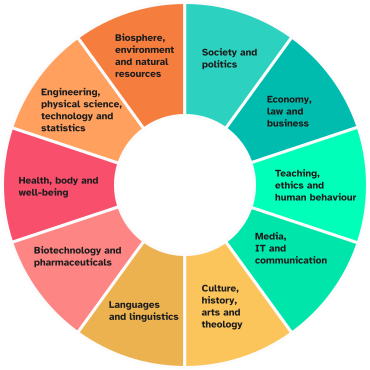
Study wheel
What interests you?
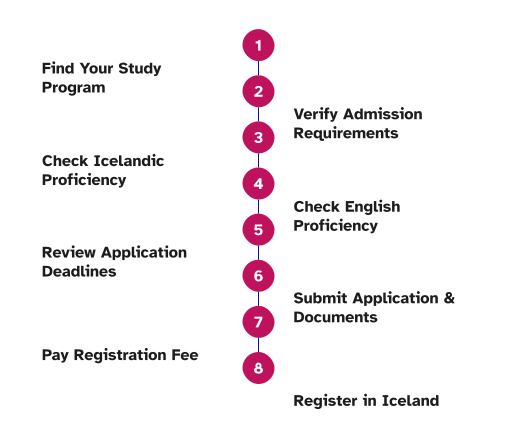
How to apply
Follow the path
Contact us If you still have questions, feel free to contact us.
University of Iceland at HólarHólar í HjaltadalMon - Thu 10 am - 12 pm and 12:30 - 2 pm and Fri 10 am - 12 pmGeneral Service and Social MediaThe UI Service Desk on campus in Reykjavík is a point of access for all services. You can drop in at the University Centre or use the WebChat at the bottom right of this page.
Share