Language skills
Programme length
One year - 30 ECTS
Study mode
Blended learning
Application status
International students:
Students with Icelandic or Nordic citizenship:
- Do you have at least 5 years experience of farriery?
- Do you want to gain the skills required to meet international standards?
- Do you want to gain specialist knowledge in hoof care and shoeing for the Icelandic horse?
The programme aims to provide students with the knowledge and skills required to meet international standards and requirements for farrier certification. Emphasis is placed on specialist knowledge in hoof care and shoeing for the Icelandic horse.
The programme spans one academic year and combines on-site teaching sessions at Hólar with distance learning, for a total of 30 ECTS. It includes both practical and theoretical elements.
The programme is aimed exclusively at students with considerable experience of farriery. The programme is taught in English.
a) High school exam or other comparable education/experience,
b) At least 5 years´experience of farrier work.
c) Submitance of documentation of own work, short essay about background in farriery and motivation for taking part in this course. Fooowed by an online interview.
30 ECTS must be completed to receive a certificate of completion.
Programme structure
Check below to see how the programme is structured.
This programme does not offer specialisations.
- First year
- Fall
- Horse biology and management
- The Icelandic horse
- Spring 1
- The farriery profession
- Specialized farriery
- Equipment, materials, general farriery
First year | Fall
Horse biology and management (HBM1008190)
A mandatory (required) course for the programme
8 ECTS, credits
Course Description
Course content: The structure, role and function of the horse's major organ systems, such as the heart & vascular, digestive, respiratory, nervous and sensory systems. Emphasis on the musculoskeletal system, in particular hooves and bones, muscles, tendons and ligaments of the legs. Methods to assess the condition, health and hoof related diseases. Principles in horse behaviour and how to conduct their management and handling in shoeing in a horse-friendly manner.
Language of instruction: Icelandic
Distance learning
First year | Fall
The Icelandic horse (IHJ1102190)
A mandatory (required) course for the programme
2 ECTS, credits
Course Description
Course content: The Icelandic horse, its history, breeding and international distribution. The characteristics of the breed with a emphasize on biomechanics, gaits and conformation and the system of breeding horse assessment and sport competitions rules and regulations. Analysis of gaits and conformation. Overview of the Icelandic horse industry, country of origin and the organization of international association of the breed.
Language of instruction: Icelandic
Distance learning
First year | Spring 1
The farriery profession (FPS1202190)
A mandatory (required) course for the programme
2 ECTS, credits
Course Description
Course content: The farrier profession, code of conduct, international licences and formal education. Pedagogical principles in vocational training, the educational role of the farrier and customer communication. An overview of the farrier business, market, and future aspects of horse welfare and farriery.
Language of instruction: Icelandic
Distance learning
First year | Spring 1
Specialized farriery (SFJ1410190)
A mandatory (required) course for the programme
10 ECTS, credits
Course Description
Forging techniques and metalwork. Presentation of craftmanship. Specialized shoeing plans. Horse assessment for performance and soundness. Knowledge of the properties and application of all relevant materials used in farriery. Up to date terminology and communication skills.
Language of instruction: Icelandic
Distance learning
First year | Spring 1
Equipment, materials, general farriery (EMG1308190)
A mandatory (required) course for the programme
8 ECTS, credits
Course Description
Horseshoeing off a high standard in craftmanship and adaption to the horse’s needs. Handling and maintaining the tools of the trade. Trim and maintain hoof health on barefoot horses. Forging techniques. Evaluation of the quality of farriery. Knowledge of the properties and application of different materials used in farriery. Health and safety.
Language of instruction: Icelandic
Distance learning
First year
- Fall
- HBM1008190Horse biology and managementMandatory (required) course8A mandatory (required) course for the programme8 ECTS, creditsCourse Description
Course content: The structure, role and function of the horse's major organ systems, such as the heart & vascular, digestive, respiratory, nervous and sensory systems. Emphasis on the musculoskeletal system, in particular hooves and bones, muscles, tendons and ligaments of the legs. Methods to assess the condition, health and hoof related diseases. Principles in horse behaviour and how to conduct their management and handling in shoeing in a horse-friendly manner.
Distance learningPrerequisitesIHJ1102190The Icelandic horseMandatory (required) course2A mandatory (required) course for the programme2 ECTS, creditsCourse DescriptionCourse content: The Icelandic horse, its history, breeding and international distribution. The characteristics of the breed with a emphasize on biomechanics, gaits and conformation and the system of breeding horse assessment and sport competitions rules and regulations. Analysis of gaits and conformation. Overview of the Icelandic horse industry, country of origin and the organization of international association of the breed.
Distance learningPrerequisites- Spring 2
FPS1202190The farriery professionMandatory (required) course2A mandatory (required) course for the programme2 ECTS, creditsCourse DescriptionCourse content: The farrier profession, code of conduct, international licences and formal education. Pedagogical principles in vocational training, the educational role of the farrier and customer communication. An overview of the farrier business, market, and future aspects of horse welfare and farriery.
Distance learningPrerequisitesSFJ1410190Specialized farrieryMandatory (required) course10A mandatory (required) course for the programme10 ECTS, creditsCourse DescriptionForging techniques and metalwork. Presentation of craftmanship. Specialized shoeing plans. Horse assessment for performance and soundness. Knowledge of the properties and application of all relevant materials used in farriery. Up to date terminology and communication skills.
Distance learningPrerequisitesEMG1308190Equipment, materials, general farrieryMandatory (required) course8A mandatory (required) course for the programme8 ECTS, creditsCourse DescriptionHorseshoeing off a high standard in craftmanship and adaption to the horse’s needs. Handling and maintaining the tools of the trade. Trim and maintain hoof health on barefoot horses. Forging techniques. Evaluation of the quality of farriery. Knowledge of the properties and application of different materials used in farriery. Health and safety.
Distance learningPrerequisites
The University of Iceland collaborates with over 400 universities worldwide. This provides a unique opportunity for UI students to pursue a part of their studies abroad, gain valuable international experience, and strengthen their position in the job market.
Opportunities
Study abroad is always subject to faculty approval.
Requirements
Students can only apply for study abroad if their study programme is at least:
- 90 ECTS credits for undergraduate programmes
- 60 ECTS credits for graduate programmes
Recognition
Students can get courses taken abroad recognised towards their degree at UI so the mobility does not have to prolong the studies at UI. Students must agree with their faculty on the recognition of courses before the start of the mobility by signing a learning agreement.
- Completing this programme can open up opportunities in:
- Farriery
- Services to horse farms and equestrians
- Working with veterinarians
- Teaching or mentoring in farriery
- Consulting on hoof care
This list is not exhaustive
Students at the University of Iceland at Hólar are encouraged to build relationships by getting to know each other during on-site teaching blocks and taking the initiative to organise student social events within their faculty.
Students of the University of Iceland at Hólar will receive student cards and discounts in line with other students within the University System.
University of Iceland students frequently meet in the Student Cellar, and UI at Hólar students are encouraged to do the same where possible.

Students appreciate the University of Iceland for its strong academic reputation, modern campus facilities, close-knit community, and affordable tuition.
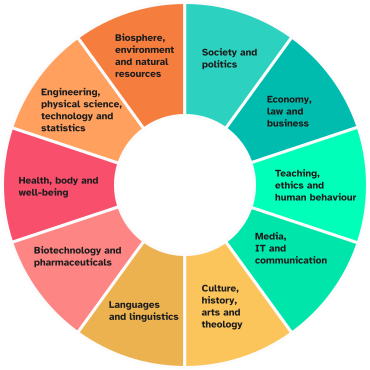
Study wheel
What interests you?
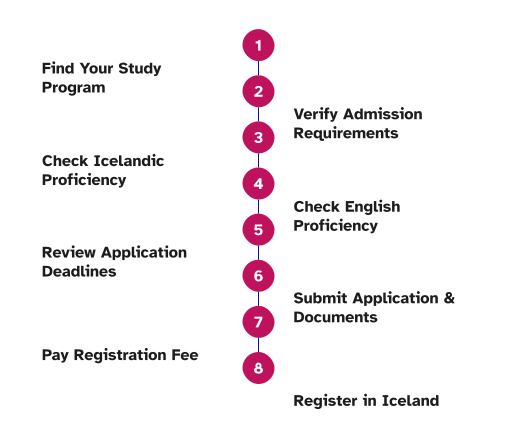
How to apply
Follow the path
If you still have questions, feel free to contact us.
University of Iceland at Hólar
Hólar í Hjaltadal
Mon - Thu 10 am - 12 pm and 12:30 - 2 pm and Fri 10 am - 12 pm
General Service and Social Media
The UI Service Desk is a point of access for all services. You can drop in at the University Centre or use the WebChat at the bottom right of this page.