- Are you a qualified teacher?
- Do you have at least two years of work experience?
- Are you involved in training student teachers or newly qualified teachers?
- Do you want to enhance your mentoring skills?
This is a practical micro-credential that introduces students to a wide range of tools and techniques that they can put into practice in their jobs.
There is a particular focus on the role of educational consultants, school services and teachers involved in mentoring student teachers, newly qualified teachers or other teaching colleagues.
The programme is designed for students who have completed an undergraduate degree in educational sciences with a first class grade and have at least two years’ experience of work related to education and the education system.
Programme structure
The programme is 30 ECTS and is organised as one year of part-time study alongside employment.
It is composed of 3 mandatory courses..
Main objectives
The programme aims to enhance the mentoring skills of those who provide professional mentoring and consulting to teachers and schools in the field of pedagogy and education. Mentoring programmes should work to build the professional competence of individuals, groups and units based on the philosophy of a learning community.
Other
Completing the programme may allow you to apply for a Master's programme
In general, admission to a programme at the Master's level requires the applicant to have completed an undergraduate degree with a first-class grade (7.25). In addition, a teaching license and at least two years of work experience after completing a teaching qualification are required.
30 ECTS must be completed
- CV
- Certified copies of diplomas and transcripts
- Letter of motivation
- License
Further information on supporting documents can be found here
Programme structure
Check below to see how the programme is structured.
This programme does not offer specialisations.
- First year
- Fall
- Mentoring – Methods and approaches to mentoring
- Educational Development and Professional Growth
- Mentoring and instructional consultancy: Structures and methods
- Spring 1
- Leadership and teaching consultancy
- Mentoring and instructional consultancy: Reflective Practice and Professional Growth
Mentoring – Methods and approaches to mentoring (STM104F)
The course is intended for teachers at all school levels and other professionals who engage in mentoring within education. The course is a basic course in the specialization of Professional Mentoring in Education and is also offered as an elective course.
The main objectives of the course are to enhance knowledge and skills of mentoring, goals of mentoring, the mentoring role, to introduce methods and approaches in mentoring, and to apply that knowledge in practice. The aim is also that students can use theories and concepts to discuss and organise their own role as mentoring teachers. Further, to heighten students' awareness of how mentoring can enhance professional competence amongst individuals and groups e.g. student teachers during their practicum, newly graduated and more experienced teachers, and other professionals working in education. The emphasis is on the practical training in approaches to mentoring aimed at further development of professionalism. The mutual responsibility on behalf of both partners will also be discussed.
Educational Development and Professional Growth (STM110F)
The purpose of this course is to assist students in understanding some major concepts, theories, and models of development in educational settings with a focus on the enhancment of cultural conditions in order to encourage improvement. Students are expected to become competent in organising, planning and leading institutional development projects. The course is based on theories about schools and other related institutions as learning communities.
Ways of working
The course is structured in eight parts in distance learning. Two days are on campus during the term. Beside that students read and discuss online. They are also invited to participate in workshops on campus. Assignments are practical and linked with daily work. Student collaboration and discussions is emphases.
Mentoring and instructional consultancy: Structures and methods (STM112F)
|
Course description in English:* The course is intended for teachers at all school levels as well as other professionals who provide workplace-based mentoring in the fields of education and pedagogy. Its aim is to provide participants with a theoretical and practical foundation in mentoring and instructional coaching. The course emphasizes developing participants’ ability to support professional learning processes in schools and to foster trust, responsibility, and constructive communication between mentors and mentees. Participants are introduced to key theories of learning and teaching, mentoring, and teacher professional development, and they learn to apply structured methods and tools for mentoring. Upon completion of the course, participants will be able to draw on theoretical concepts and frameworks to analyze and plan mentoring activities in educational settings. The course explores how workplace-based mentoring and instructional coaching can strengthen the professional competence of various groups, including student teachers in practicum placements, novice teachers, experienced teachers engaged in professional development, and other education professionals. Emphasis is placed on practical training in mentoring and instructional coaching as a means to enhance professional practice. The course also addresses the responsibilities, roles, and forms of collaboration between mentors and mentees, with attention to the professional and organizational challenges that arise in school environments. |
Leadership and teaching consultancy (STM215F)
The purpose of this course is that participants get to know the basic techniques used in educational guidance and interdisciplinary collaboration as well as to acquire training in using them. They get acquainted with theoretical discussion on the importance of good collaboration with students, parents and colleagues, and gain an increased understanding of its value. Participants identify and understand the key basic concepts, theories and approaches relating to educational guidance in schools, including cooperation between home and school.
Objectives- participants:
- recognize different theoretical points of view relating to professional communication and supervision.
- recognize main theories and research on home and school collaboration
- have an understanding of the importance of teacher's role in home and school collaboration
- have an understanding of the impact of their own professional guidance and collaboration
- can discuss and different ways of guidance and cooperation with different parties, e.g. parents and colleagues
- recognize the importance of empowerment as it relates to cooperation with students, parents and colleagues
- are familiar with the basic skills and competency in interdisciplinary collaboration, such as teamwork
Teaching: Lectures, discussions, individual and group projects.
Methods: The course is on the post-graduate level. Participants read and work independently and utilize the potential of Moodle for communication and discussions with teachers and other participants in the course. Attendance is expected in on-site sessions.
Mentoring and instructional consultancy: Reflective Practice and Professional Growth (STM217F)
This advanced course builds on the cours Mentoring and instructional consultancy: Structures and methods. Its purpose is to deepen participants’ understanding of their own mentoring approaches, strengthen professional self-awareness, and develop reflective practice as a key component of professional learning.
The course emphasizes critical analysis of mentoring practices, self-assessment, peer feedback, and the development of mentoring strategies that are responsive to diverse learners and educational contexts. Participants engage with real cases from their own practice, explore personal learning trajectories, and address ethical and relational challenges that arise in mentoring roles.
Special emphasis is placed on developing a strong professional identity as a mentor, making informed and ethically responsible decisions, and cultivating the ability to support the autonomy and professional growth of others. This course is intended for educators and professionals who wish to advance their mentoring practice in a deeper, more analytic, and research-informed way.
- Fall
- STM104FMentoring – Methods and approaches to mentoringMandatory (required) course10A mandatory (required) course for the programme10 ECTS, creditsCourse Description
The course is intended for teachers at all school levels and other professionals who engage in mentoring within education. The course is a basic course in the specialization of Professional Mentoring in Education and is also offered as an elective course.
The main objectives of the course are to enhance knowledge and skills of mentoring, goals of mentoring, the mentoring role, to introduce methods and approaches in mentoring, and to apply that knowledge in practice. The aim is also that students can use theories and concepts to discuss and organise their own role as mentoring teachers. Further, to heighten students' awareness of how mentoring can enhance professional competence amongst individuals and groups e.g. student teachers during their practicum, newly graduated and more experienced teachers, and other professionals working in education. The emphasis is on the practical training in approaches to mentoring aimed at further development of professionalism. The mutual responsibility on behalf of both partners will also be discussed.
Distance learningPrerequisitesAttendance required in classSTM110FEducational Development and Professional GrowthMandatory (required) course10A mandatory (required) course for the programme10 ECTS, creditsCourse DescriptionThe purpose of this course is to assist students in understanding some major concepts, theories, and models of development in educational settings with a focus on the enhancment of cultural conditions in order to encourage improvement. Students are expected to become competent in organising, planning and leading institutional development projects. The course is based on theories about schools and other related institutions as learning communities.
Ways of working
The course is structured in eight parts in distance learning. Two days are on campus during the term. Beside that students read and discuss online. They are also invited to participate in workshops on campus. Assignments are practical and linked with daily work. Student collaboration and discussions is emphases.Distance learningPrerequisitesAttendance required in classSTM112FMentoring and instructional consultancy: Structures and methodsElective course5Free elective course within the programme5 ECTS, creditsCourse DescriptionCourse description in English:*
The course is intended for teachers at all school levels as well as other professionals who provide workplace-based mentoring in the fields of education and pedagogy. Its aim is to provide participants with a theoretical and practical foundation in mentoring and instructional coaching.
The course emphasizes developing participants’ ability to support professional learning processes in schools and to foster trust, responsibility, and constructive communication between mentors and mentees. Participants are introduced to key theories of learning and teaching, mentoring, and teacher professional development, and they learn to apply structured methods and tools for mentoring.
Upon completion of the course, participants will be able to draw on theoretical concepts and frameworks to analyze and plan mentoring activities in educational settings. The course explores how workplace-based mentoring and instructional coaching can strengthen the professional competence of various groups, including student teachers in practicum placements, novice teachers, experienced teachers engaged in professional development, and other education professionals.
Emphasis is placed on practical training in mentoring and instructional coaching as a means to enhance professional practice. The course also addresses the responsibilities, roles, and forms of collaboration between mentors and mentees, with attention to the professional and organizational challenges that arise in school environments.
Distance learningPrerequisites- Spring 2
STM215FLeadership and teaching consultancyMandatory (required) course10A mandatory (required) course for the programme10 ECTS, creditsCourse DescriptionThe purpose of this course is that participants get to know the basic techniques used in educational guidance and interdisciplinary collaboration as well as to acquire training in using them. They get acquainted with theoretical discussion on the importance of good collaboration with students, parents and colleagues, and gain an increased understanding of its value. Participants identify and understand the key basic concepts, theories and approaches relating to educational guidance in schools, including cooperation between home and school.
Objectives- participants:
- recognize different theoretical points of view relating to professional communication and supervision.
- recognize main theories and research on home and school collaboration
- have an understanding of the importance of teacher's role in home and school collaboration
- have an understanding of the impact of their own professional guidance and collaboration
- can discuss and different ways of guidance and cooperation with different parties, e.g. parents and colleagues
- recognize the importance of empowerment as it relates to cooperation with students, parents and colleagues
- are familiar with the basic skills and competency in interdisciplinary collaboration, such as teamwork
Teaching: Lectures, discussions, individual and group projects.
Methods: The course is on the post-graduate level. Participants read and work independently and utilize the potential of Moodle for communication and discussions with teachers and other participants in the course. Attendance is expected in on-site sessions.
Distance learningPrerequisitesAttendance required in classSTM217FMentoring and instructional consultancy: Reflective Practice and Professional GrowthElective course5Free elective course within the programme5 ECTS, creditsCourse DescriptionThis advanced course builds on the cours Mentoring and instructional consultancy: Structures and methods. Its purpose is to deepen participants’ understanding of their own mentoring approaches, strengthen professional self-awareness, and develop reflective practice as a key component of professional learning.
The course emphasizes critical analysis of mentoring practices, self-assessment, peer feedback, and the development of mentoring strategies that are responsive to diverse learners and educational contexts. Participants engage with real cases from their own practice, explore personal learning trajectories, and address ethical and relational challenges that arise in mentoring roles.
Special emphasis is placed on developing a strong professional identity as a mentor, making informed and ethically responsible decisions, and cultivating the ability to support the autonomy and professional growth of others. This course is intended for educators and professionals who wish to advance their mentoring practice in a deeper, more analytic, and research-informed way.
Distance learningPrerequisites
The University of Iceland collaborates with over 400 universities worldwide. This provides a unique opportunity to pursue part of your studies at an international university thus gaining added experience and fresh insight into your field of study.
Students generally have the opportunity to join an exchange programme, internship, or summer courses. However, exchanges are always subject to faculty approval.
Students have the opportunity to have courses evaluated as part of their studies at the University of Iceland, so their stay does not have to affect the duration of their studies.
An education in this area can open up opportunities in:
- Teaching in preschools, compulsory schools and upper secondary schools
- Consultancy services for schools
- Various careers in education and child development
This list is not exhaustive
Kennó is the organisation for student teachers at the University of Iceland. Kennó organises events such as socials for new students, annual galas and workplace tours. Kennó has also organised the Come and Teach project, which is aimed at publicising teaching degrees.
- Follow Come and Teach on Facebook and Instagram.
- More about the UI student's social life.
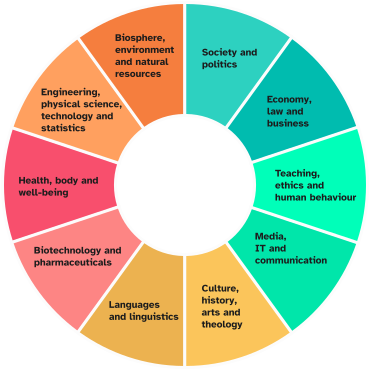
Study wheel
What interests you?
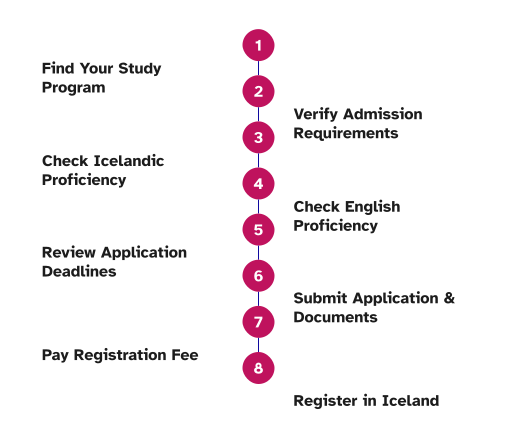
How to apply
Follow the path
If you still have questions, feel free to contact us.
The Service Desk is a point of access for all services. You can drop in at the University Centre or use the WebChat at the bottom right of this page.
Follow the School of Education on Instagram, Youtube
and Facebook