
Language skills
Programme length
Three years - 90 ECTS
Study mode
Distance learning
Application status
International students:
Students with Icelandic or Nordic citizenship:
- Do you want to work with Iceland’s most valuable natural resource?
- Are you interested in aquaculture?
- Do you want an education that will directly benefit you in roles within the industry?
- Do you want to work in a fast-growing industry that offers a wide range of future opportunities?
This programme is taught in Icelandic.
Read more about the programme on the Icelandic version of the study programme page.
Applicants must have completed the Icelandic matriculation examination (stúdentspróf) or other preparatory education deemed equivalent by the University Council, in accordance with Act No. 63/2006. Applications from individuals who have not completed the matriculation examination shall be referred to the Teaching Committee for review.
Students enrolled at other universities may also undertake part of their studies at the University of Iceland at Hólar, provided that this is stipulated in a formal agreement between the institutions.
Students should finish the diploma (90 ECTS) within three years from first enrollment.
Programme structure
Check below to see how the programme is structured.
This programme does not offer specialisations.
- First year
- Fall
- Practicum
- Fish Reproduction
- Larvae Culture
- Fish and Water
- Introduction to Aquaculture
- Fundamentals for studying aquaculture organisms
- Spring 1
- Health and hygiene
- Harvest and Processing
- Environmental Issues of Aquaculture
- Ongrowing
- Facilities and Equipment
- Not taught this semesterPracticum
- Summer
- Practicum
First year | Fall
Practicum (VER2028120)
A mandatory (required) course for the programme
28 ECTS, credits
28 fieldwork credits
Course Description
Practicum is a part of the diploma program. Each student works for 12 weeks in an aquaculture station. The student should return normal working hours and participate in all common tasks within the station. In addition, the student should work towards a project aimed for improvement. The student selects the project in collaboration with the station manager and the on-site supervisor and the teacher at Hólar. The student should have access to numerical information regarding the production in the station. e.g. info on water, water quality and handling, feed and feeding, growth and growth curves, in addition to cost related factors (that the supervisor is willing to give). The student should be allowed to work independently as much as his experience allows.
In addition to the above the student should identify issues in relation to running and working in the station, which could be improved. And use his/her knowledge to suggest improvement that could be used for benefit of the station. Students could use the ideology of SWOT analysis for this work and that way identify strengths, weaknesses, opportunities and threats for the station. The project needs to be part of the report in the end of the practicum.
The practicum is a part of the diploma study, but is not valuated for BS-study.
Language of instruction: Icelandic
Distance learning
Prerequisites
First year | Fall
Fish Reproduction (KOH1306190)
A mandatory (required) course for the programme
6 ECTS, credits
Course Description
The aim of the course is for the student to gain an understanding of fish reproduction, and how knowledge of it is used in aquaculture, for example sexual maturation, spawning, spawning and rearing of fish and rearing of early stages, whether it is a freshwater or marine species. Emphasis is placed on the developmental biology of salmonids.
The course is three weeks. The first two weeks comprises lectures, and associated quizzes and discussions. The onsite visit is usually in the second week, where students tackle a variety of hands-on activities, such as collecting fish gametes and following protocol of fish breeding, observing fish developmental early stages, and practice calculations.
The third and final week of the course has special emphasis on the reproductive biological characteristics of important farmed fish species in Iceland and elsewhere. In the final week we discuss about triploidy and selective breeding.
Language of instruction: Icelandic
Distance learning
First year | Fall
Larvae Culture (SOF1406120)
A mandatory (required) course for the programme
6 ECTS, credits
Course Description
The objectives of the course are to introduce to students theoretical and technical background behind aquaculture and handling of fish larvae and juveniles. The focus will be one a number of species in fresh and marine waters. The course will be taught over three weeks. The course will include lectures where the most important subject matter will be discussed. Practical excersises on campus as well as discussions. In the practicum the students will be introduced to first feeding of salmonids and other species as well as the rairing of life feed. The course evaluation is in the form of written assignments and exam.
Language of instruction: Icelandic
Distance learning
First year | Fall
Fish and Water (FOV1206200)
A mandatory (required) course for the programme
6 ECTS, credits
Course Description
The course starts by two short introductory chapters presenting some basics on (1) the osmotic regulation in aquatic organisms and (2) respiration and circulation respectively aiming at better understanding the main chapter on (3) water quality in aquaculture. The first chapter tackles the concept of osmosis, some basics in chemistry and how it applies to living organisms (both invertebrates and vertebrates). The second chapter tackles some basics on the properties of gases in water before describing the specificities of the aquatic respiration (anatomy and physiology of organs involved in aquatic organisms) and how it links to circulation e.g. how gases are transported in the blood. The last and main chapter tackles the different aspects of water quality in aquaculture. We put an emphasize on the importance of good water quality to support survival, welfare, growth of aquaculture fish. The main water parameters including salinity, temperature, pH, oxygen, carbon dioxide, alkalinity, hardness, ammonia are described among others. The course explains why these parameters are important, how they interact with each other, how they can be measured and monitored in aquaculture, what are the effects on aquaculture fish depending on species, how the water quality can be maintained using different devices.
Language of instruction: English
Distance learning
First year | Fall
Introduction to Aquaculture (INF1006180)
A mandatory (required) course for the programme
6 ECTS, credits
Course Description
The course consists of two main components, introduction to new students / methodology and aquaculture in general. (1) Introduction to new students / methodology: Students will be introduced to the operations at Hólar University College and the services available. Students will attend general lectures on the role of universities, critical thinking, and ethics. In terms of methodology, students are introduced to study techniques, how to search for, evaluate and use references (APA-system), and how to write essays. (2) Aquaculture in general: An overview is given on the aquaculture species in Iceland, production and value, main aquaculture methods, and this is placed within a general context of global production, and of other food. The latter involves an overview on which countries produce the most and what species dominate production. The course lasts three weeks. During the first week all students attend a session for new students, learn about methodology, and finally take a field trip to aquaculture stations in North Iceland, to get acquainted with their operation, guided by a lecturer/teacher. The main emphasis of this field trip is on methods and quantity of production, marketing, structure of aquacultural systems, and methods and process of rearing. Apart from this first week, the course mainly consists of lectures, discussions and exercises where students work alone or in groups.
Language of instruction: English
Distance learning
First year | Fall
Fundamentals for studying aquaculture organisms (URL1108200)
A mandatory (required) course for the programme
8 ECTS, credits
Course Description
The main goal for students of this course is to obtain basic knowledge and understanding of chemistry, biology and mathematics as relevant to aquaculture. In this context, the course covers basics of inorganic chemistry, from atoms to chemical bonds and reactions. Organic- and biochemistry is discussed, focusing on important molecules for life (for example, sugars, proteins, fatty acids) and associated chemical processes. The student will review basic cell biology and how cells work together forming organs and organisms. Introduction to the biology and anatomy of organisms. The taxonomic system will be discussed shortly for organisms relevant to aquaculture, ranging from viruses to animals. During a practical on-site period, experience will be gained to conduct useful calculations (basic algebra) and apply those using small datasets in spreadsheets (Excel).
The course is taught over four weeks, where the first two consist of lectures and smaller student projects. In the third week a three-day on campus period takes place to work on calculations and participate in discussions. In the final week of the course students mostly return assignments and take a final exam.
Language of instruction: English
Distance learning
First year | Spring 1
Health and hygiene (SOH1604200)
A mandatory (required) course for the programme
4 ECTS, credits
Course Description
The course starts by introducing all the usual terms used in pathology. A short introduction is given about the world aquaculture in particular some historical examples of diseases with strong consequences. This is followed by the different methods used to prevent fish diseases on the farm. Then come successively the main bacterial, viral, fungal and parasitic fish diseases.
Language of instruction: English
Distance learning
First year | Spring 1
Harvest and Processing (SOV1506200)
A mandatory (required) course for the programme
6 ECTS, credits
Course Description
The course tackles the different methods used to harvest, slaughter and process farmed fish and the factors that can affect the preservation of the quality of the products. The methods used for freshness evaluation are then discussed. This is followed by different methods to preserve the products and add value (freezing, salting, drying and smoking). The course puts also an emphasize on hygiene and micro-organisms in food. A brief overview of products certification and labelling is given with a focus on organic aquaculture. Risk assessment and risk management according to the HACCP (Hazard Analysis and Critical Control Point) are finally discussed in the context of aquaculture production and food safety.
Language of instruction: English
Distance learning
First year | Spring 1
Environmental Issues of Aquaculture (UMF1706190)
A mandatory (required) course for the programme
6 ECTS, credits
Course Description
Students should get an overview of the environmental issues associated with aquaculture worldwide and specifically Iceland, laws and regulations concerning aquaculture and how aquaculture influences or alters natural aquatic environments. The course starts with a short introduction to environmental science and philosophical issues relating to the exploitation of natural resources will be provided. The problems discussed are e.g., organic and chemical pollution, habitat destruction and modification, depletion of harvested natural populations and the issue of escaping farmed fish will be discussed. Finally, concepts and novelties aimed at minimising these environmental impacts, e.g. polyculture and organic aquaculture, are introduced. The course is three weeks, the first part of the course consists of lectures and home assignments, the second week students are first preparing for and then attend an onsite practicum, give a seminar, and participate in discussion. In the final week of the course students return home assignments and take a final exam.
Language of instruction: Icelandic
Distance learning
First year | Spring 1
Ongrowing (ÁFR1808120)
A mandatory (required) course for the programme
8 ECTS, credits
Course Description
The objective is to teach students about the importance of biological and technical factors regarding farming fish from the fingerling stage until slaughtering size. The focus will be on the farming of salmonides and other species that seem likely to be of aquacultural importance in or around Iceland. Important management factors will be discussed. A four week course. Teaching methods: Mainly lectures and demonstrations. Student assignments include production plans, involving calculations of growth, amount of feed, feed costs etc. Calculations of water requirements - the amount, in/out flow, currenting, quality, space requirements etc.
Language of instruction: Icelandic
Distance learning
First year | Spring 1
Facilities and Equipment (EBÚ1906180)
A mandatory (required) course for the programme
6 ECTS, credits
Course Description
The main content of the course deals with how to prepare and maintain good culture conditions for aquaculture species, especially when breeding on land.
The course will cover various aspects of designing a fish farm and its operation, including how to influence utilization and maximize efficiency and effectiveness. Water harvesting, water transport and water utilization in both flow-through and RAS systems will be addressed, as well as design of farming equipment and laws governing its operation. Students will receive insight of the composition, function and operation of RAS systems in aquaculture and training in measuring and managing water quality.
The course will add to the content of previous courses (Fish and Water, Larvae Culture) while diving deeper into the subject matter.
The aim of the course is for the student to gain an insight into the operation and use of various technical equipment used in fish farming. The installation and maintenance of piping systems in fish farms will be taught. The function and use of various equipment related to water quality maintenance and monitoring are discussed.
The course lasts for 4 weeks. Teaching is in the form of lectures, assignments and practical exercises. In the fourth week of the course, students attend an onsite session where students practice managing RAS systems and measuring water quality.
Language of instruction: Icelandic
Distance learning
Not taught this semester
First year | Spring 1
Practicum (VER2028120)
Free elective course within the programme
28 ECTS, credits
28 fieldwork credits
Course Description
Practicum is a part of the diploma program. Each student works for 12 weeks in an aquaculture station. The student should return normal working hours and participate in all common tasks within the station. In addition, the student should work towards a project aimed for improvement. The student selects the project in collaboration with the station manager and the on-site supervisor and the teacher at Hólar. The student should have access to numerical information regarding the production in the station. e.g. info on water, water quality and handling, feed and feeding, growth and growth curves, in addition to cost related factors (that the supervisor is willing to give). The student should be allowed to work independently as much as his experience allows.
In addition to the above the student should identify issues in relation to running and working in the station, which could be improved. And use his/her knowledge to suggest improvement that could be used for benefit of the station. Students could use the ideology of SWOT analysis for this work and that way identify strengths, weaknesses, opportunities and threats for the station. The project needs to be part of the report in the end of the practicum.
The practicum is a part of the diploma study, but is not valuated for BS-study.
Language of instruction: Icelandic
Distance learning
Prerequisites
First year | Summer
Practicum (VER2028120)
A mandatory (required) course for the programme
28 ECTS, credits
28 fieldwork credits
Course Description
Practicum is a part of the diploma program. Each student works for 12 weeks in an aquaculture station. The student should return normal working hours and participate in all common tasks within the station. In addition, the student should work towards a project aimed for improvement. The student selects the project in collaboration with the station manager and the on-site supervisor and the teacher at Hólar. The student should have access to numerical information regarding the production in the station. e.g. info on water, water quality and handling, feed and feeding, growth and growth curves, in addition to cost related factors (that the supervisor is willing to give). The student should be allowed to work independently as much as his experience allows.
In addition to the above the student should identify issues in relation to running and working in the station, which could be improved. And use his/her knowledge to suggest improvement that could be used for benefit of the station. Students could use the ideology of SWOT analysis for this work and that way identify strengths, weaknesses, opportunities and threats for the station. The project needs to be part of the report in the end of the practicum.
The practicum is a part of the diploma study, but is not valuated for BS-study.
Language of instruction: Icelandic
Distance learning
Prerequisites
First year
- Fall
- VER2028120PracticumMandatory (required) course28A mandatory (required) course for the programme28 ECTS, credits28 fieldwork creditsCourse Description
Practicum is a part of the diploma program. Each student works for 12 weeks in an aquaculture station. The student should return normal working hours and participate in all common tasks within the station. In addition, the student should work towards a project aimed for improvement. The student selects the project in collaboration with the station manager and the on-site supervisor and the teacher at Hólar. The student should have access to numerical information regarding the production in the station. e.g. info on water, water quality and handling, feed and feeding, growth and growth curves, in addition to cost related factors (that the supervisor is willing to give). The student should be allowed to work independently as much as his experience allows.
In addition to the above the student should identify issues in relation to running and working in the station, which could be improved. And use his/her knowledge to suggest improvement that could be used for benefit of the station. Students could use the ideology of SWOT analysis for this work and that way identify strengths, weaknesses, opportunities and threats for the station. The project needs to be part of the report in the end of the practicum.
The practicum is a part of the diploma study, but is not valuated for BS-study.
Distance learningPrerequisitesKOH1306190Fish ReproductionMandatory (required) course6A mandatory (required) course for the programme6 ECTS, creditsCourse DescriptionThe aim of the course is for the student to gain an understanding of fish reproduction, and how knowledge of it is used in aquaculture, for example sexual maturation, spawning, spawning and rearing of fish and rearing of early stages, whether it is a freshwater or marine species. Emphasis is placed on the developmental biology of salmonids.
The course is three weeks. The first two weeks comprises lectures, and associated quizzes and discussions. The onsite visit is usually in the second week, where students tackle a variety of hands-on activities, such as collecting fish gametes and following protocol of fish breeding, observing fish developmental early stages, and practice calculations.
The third and final week of the course has special emphasis on the reproductive biological characteristics of important farmed fish species in Iceland and elsewhere. In the final week we discuss about triploidy and selective breeding.
Distance learningPrerequisitesSOF1406120Larvae CultureMandatory (required) course6A mandatory (required) course for the programme6 ECTS, creditsCourse DescriptionThe objectives of the course are to introduce to students theoretical and technical background behind aquaculture and handling of fish larvae and juveniles. The focus will be one a number of species in fresh and marine waters. The course will be taught over three weeks. The course will include lectures where the most important subject matter will be discussed. Practical excersises on campus as well as discussions. In the practicum the students will be introduced to first feeding of salmonids and other species as well as the rairing of life feed. The course evaluation is in the form of written assignments and exam.
Distance learningPrerequisitesFOV1206200Fish and WaterMandatory (required) course6A mandatory (required) course for the programme6 ECTS, creditsCourse DescriptionThe course starts by two short introductory chapters presenting some basics on (1) the osmotic regulation in aquatic organisms and (2) respiration and circulation respectively aiming at better understanding the main chapter on (3) water quality in aquaculture. The first chapter tackles the concept of osmosis, some basics in chemistry and how it applies to living organisms (both invertebrates and vertebrates). The second chapter tackles some basics on the properties of gases in water before describing the specificities of the aquatic respiration (anatomy and physiology of organs involved in aquatic organisms) and how it links to circulation e.g. how gases are transported in the blood. The last and main chapter tackles the different aspects of water quality in aquaculture. We put an emphasize on the importance of good water quality to support survival, welfare, growth of aquaculture fish. The main water parameters including salinity, temperature, pH, oxygen, carbon dioxide, alkalinity, hardness, ammonia are described among others. The course explains why these parameters are important, how they interact with each other, how they can be measured and monitored in aquaculture, what are the effects on aquaculture fish depending on species, how the water quality can be maintained using different devices.
Distance learningPrerequisitesINF1006180Introduction to AquacultureMandatory (required) course6A mandatory (required) course for the programme6 ECTS, creditsCourse DescriptionThe course consists of two main components, introduction to new students / methodology and aquaculture in general. (1) Introduction to new students / methodology: Students will be introduced to the operations at Hólar University College and the services available. Students will attend general lectures on the role of universities, critical thinking, and ethics. In terms of methodology, students are introduced to study techniques, how to search for, evaluate and use references (APA-system), and how to write essays. (2) Aquaculture in general: An overview is given on the aquaculture species in Iceland, production and value, main aquaculture methods, and this is placed within a general context of global production, and of other food. The latter involves an overview on which countries produce the most and what species dominate production. The course lasts three weeks. During the first week all students attend a session for new students, learn about methodology, and finally take a field trip to aquaculture stations in North Iceland, to get acquainted with their operation, guided by a lecturer/teacher. The main emphasis of this field trip is on methods and quantity of production, marketing, structure of aquacultural systems, and methods and process of rearing. Apart from this first week, the course mainly consists of lectures, discussions and exercises where students work alone or in groups.
Distance learningPrerequisitesURL1108200Fundamentals for studying aquaculture organismsMandatory (required) course8A mandatory (required) course for the programme8 ECTS, creditsCourse DescriptionThe main goal for students of this course is to obtain basic knowledge and understanding of chemistry, biology and mathematics as relevant to aquaculture. In this context, the course covers basics of inorganic chemistry, from atoms to chemical bonds and reactions. Organic- and biochemistry is discussed, focusing on important molecules for life (for example, sugars, proteins, fatty acids) and associated chemical processes. The student will review basic cell biology and how cells work together forming organs and organisms. Introduction to the biology and anatomy of organisms. The taxonomic system will be discussed shortly for organisms relevant to aquaculture, ranging from viruses to animals. During a practical on-site period, experience will be gained to conduct useful calculations (basic algebra) and apply those using small datasets in spreadsheets (Excel).
The course is taught over four weeks, where the first two consist of lectures and smaller student projects. In the third week a three-day on campus period takes place to work on calculations and participate in discussions. In the final week of the course students mostly return assignments and take a final exam.
Distance learningPrerequisites- Spring 2
SOH1604200Health and hygieneMandatory (required) course4A mandatory (required) course for the programme4 ECTS, creditsCourse DescriptionThe course starts by introducing all the usual terms used in pathology. A short introduction is given about the world aquaculture in particular some historical examples of diseases with strong consequences. This is followed by the different methods used to prevent fish diseases on the farm. Then come successively the main bacterial, viral, fungal and parasitic fish diseases.
Distance learningPrerequisitesSOV1506200Harvest and ProcessingMandatory (required) course6A mandatory (required) course for the programme6 ECTS, creditsCourse DescriptionThe course tackles the different methods used to harvest, slaughter and process farmed fish and the factors that can affect the preservation of the quality of the products. The methods used for freshness evaluation are then discussed. This is followed by different methods to preserve the products and add value (freezing, salting, drying and smoking). The course puts also an emphasize on hygiene and micro-organisms in food. A brief overview of products certification and labelling is given with a focus on organic aquaculture. Risk assessment and risk management according to the HACCP (Hazard Analysis and Critical Control Point) are finally discussed in the context of aquaculture production and food safety.
Distance learningPrerequisitesUMF1706190Environmental Issues of AquacultureMandatory (required) course6A mandatory (required) course for the programme6 ECTS, creditsCourse DescriptionStudents should get an overview of the environmental issues associated with aquaculture worldwide and specifically Iceland, laws and regulations concerning aquaculture and how aquaculture influences or alters natural aquatic environments. The course starts with a short introduction to environmental science and philosophical issues relating to the exploitation of natural resources will be provided. The problems discussed are e.g., organic and chemical pollution, habitat destruction and modification, depletion of harvested natural populations and the issue of escaping farmed fish will be discussed. Finally, concepts and novelties aimed at minimising these environmental impacts, e.g. polyculture and organic aquaculture, are introduced. The course is three weeks, the first part of the course consists of lectures and home assignments, the second week students are first preparing for and then attend an onsite practicum, give a seminar, and participate in discussion. In the final week of the course students return home assignments and take a final exam.
Distance learningPrerequisitesÁFR1808120OngrowingMandatory (required) course8A mandatory (required) course for the programme8 ECTS, creditsCourse DescriptionThe objective is to teach students about the importance of biological and technical factors regarding farming fish from the fingerling stage until slaughtering size. The focus will be on the farming of salmonides and other species that seem likely to be of aquacultural importance in or around Iceland. Important management factors will be discussed. A four week course. Teaching methods: Mainly lectures and demonstrations. Student assignments include production plans, involving calculations of growth, amount of feed, feed costs etc. Calculations of water requirements - the amount, in/out flow, currenting, quality, space requirements etc.
Distance learningPrerequisitesEBÚ1906180Facilities and EquipmentMandatory (required) course6A mandatory (required) course for the programme6 ECTS, creditsCourse DescriptionThe main content of the course deals with how to prepare and maintain good culture conditions for aquaculture species, especially when breeding on land.
The course will cover various aspects of designing a fish farm and its operation, including how to influence utilization and maximize efficiency and effectiveness. Water harvesting, water transport and water utilization in both flow-through and RAS systems will be addressed, as well as design of farming equipment and laws governing its operation. Students will receive insight of the composition, function and operation of RAS systems in aquaculture and training in measuring and managing water quality.
The course will add to the content of previous courses (Fish and Water, Larvae Culture) while diving deeper into the subject matter.
The aim of the course is for the student to gain an insight into the operation and use of various technical equipment used in fish farming. The installation and maintenance of piping systems in fish farms will be taught. The function and use of various equipment related to water quality maintenance and monitoring are discussed.
The course lasts for 4 weeks. Teaching is in the form of lectures, assignments and practical exercises. In the fourth week of the course, students attend an onsite session where students practice managing RAS systems and measuring water quality.
Distance learningPrerequisitesNot taught this semesterVER2028120PracticumElective course28Free elective course within the programme28 ECTS, credits28 fieldwork creditsCourse DescriptionPracticum is a part of the diploma program. Each student works for 12 weeks in an aquaculture station. The student should return normal working hours and participate in all common tasks within the station. In addition, the student should work towards a project aimed for improvement. The student selects the project in collaboration with the station manager and the on-site supervisor and the teacher at Hólar. The student should have access to numerical information regarding the production in the station. e.g. info on water, water quality and handling, feed and feeding, growth and growth curves, in addition to cost related factors (that the supervisor is willing to give). The student should be allowed to work independently as much as his experience allows.
In addition to the above the student should identify issues in relation to running and working in the station, which could be improved. And use his/her knowledge to suggest improvement that could be used for benefit of the station. Students could use the ideology of SWOT analysis for this work and that way identify strengths, weaknesses, opportunities and threats for the station. The project needs to be part of the report in the end of the practicum.
The practicum is a part of the diploma study, but is not valuated for BS-study.
Distance learningPrerequisites- Summer
VER2028120PracticumMandatory (required) course28A mandatory (required) course for the programme28 ECTS, credits28 fieldwork creditsCourse DescriptionPracticum is a part of the diploma program. Each student works for 12 weeks in an aquaculture station. The student should return normal working hours and participate in all common tasks within the station. In addition, the student should work towards a project aimed for improvement. The student selects the project in collaboration with the station manager and the on-site supervisor and the teacher at Hólar. The student should have access to numerical information regarding the production in the station. e.g. info on water, water quality and handling, feed and feeding, growth and growth curves, in addition to cost related factors (that the supervisor is willing to give). The student should be allowed to work independently as much as his experience allows.
In addition to the above the student should identify issues in relation to running and working in the station, which could be improved. And use his/her knowledge to suggest improvement that could be used for benefit of the station. Students could use the ideology of SWOT analysis for this work and that way identify strengths, weaknesses, opportunities and threats for the station. The project needs to be part of the report in the end of the practicum.
The practicum is a part of the diploma study, but is not valuated for BS-study.
Distance learningPrerequisitesAdditional information The University of Iceland collaborates with over 400 universities worldwide. This provides a unique opportunity for UI students to pursue a part of their studies abroad, gain valuable international experience, and strengthen their position in the job market.
Opportunities
Study abroad is always subject to faculty approval.
Requirements
Students can only apply for study abroad if their study programme is at least:
- 90 ECTS credits for undergraduate programmes
- 60 ECTS credits for graduate programmes
Recognition
Students can get courses taken abroad recognised towards their degree at UI so the mobility does not have to prolong the studies at UI. Students must agree with their faculty on the recognition of courses before the start of the mobility by signing a learning agreement.
Completing this programme can open up opportunities in:
- Land-based aquaculture
- Offshore aquaculture
- Seaweed farming and algaculture
- Shellfish aquaculture
- Other industries related to aquaculture
This list is not exhaustive
Students at the University of Iceland at Hólar are encouraged to build relationships by getting to know each other during on-site teaching blocks and taking the initiative to organise student social events within their faculty.
Students of the University of Iceland at Hólar will receive student cards and discounts in line with other students within the University System.
University of Iceland students frequently meet in the Student Cellar, and UI at Hólar students are encouraged to do the same where possible.
Students' comments  Students appreciate the University of Iceland for its strong academic reputation, modern campus facilities, close-knit community, and affordable tuition.
Helpful content 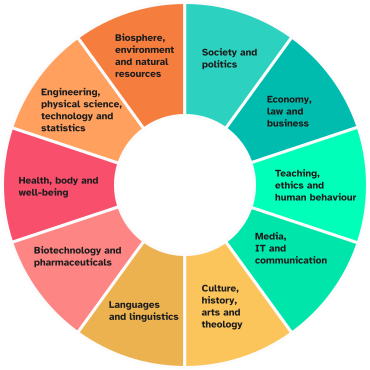
Study wheel
What interests you?
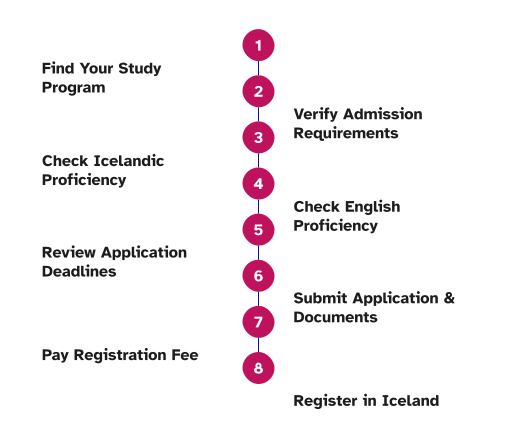
How to apply
Follow the path
Contact us If you still have questions, feel free to contact us.
University of Iceland at HólarHólar í HjaltadalMon - Thu 10 am - 12 pm and 12:30 - 2 pm and Fri 10 am - 12 pmGeneral Service and Social MediaThe UI Service Desk on campus in Reykjavík is a point of access for all services. You can drop in at the University Centre or use the WebChat at the bottom right of this page.
Share