""
Language skills
required, minimum level of B2
Programme length
Two semesters
Study mode
Face-to-face learning
Application status
International students:
Students with Icelandic or Nordic citizenship:
Overview

  • Have you completed a BS/BA/B.Ed. degree?
  • Are you a nurse planning to take the MS in midwifery with professional recognition?
  • Are you a nurse with an Icelandic nursing license but a degree from another country that is not considered equivalent to the Icelandic BS and are you considering graduate studies?

Prerequisites for applying to the MS in midwifery with professional recognition

For those who have completed a BS in nursing and have an Icelandic nursing license.

The programme includes the following two courses, totalling 12 ECTS.

  • Women, health and society
  • Sexual and reproductive health

Prerequisites for nurses with an Icelandic nursing license and a degree from another country not considered equivalent to the Icelandic BS.

Prerequisite study path A
This programme is designed for students who have an Icelandic nursing license and have completed a nursing degree equivalent to a three-year programme at an Icelandic university (180 ECTS). The programme is made up of six courses, totalling 30 ECTS. The courses were chosen based on experience of the knowledge most commonly lacking in nursing graduates from other countries, namely research-based studies and various knowledge about the Icelandic healthcare system. The courses on this programme will fill these gaps.

Prerequisite study path B
This programme is designed for students who have an Icelandic nursing license and have completed a nursing degree equivalent to a two-year programme at an Icelandic university (120 ECTS). The programme is made up of 9 courses, totalling 45 ECTS. The courses were chosen based on experience of the knowledge most commonly lacking in nursing graduates from other countries, namely research-based studies and various knowledge about the Icelandic healthcare system. The courses on this programme will fill these gaps.

Please note that this programme is only intended for:

  • Nurses that intend to apply for a Master´s in Midwifery with professional recognition must finish the required courses HJÚ828G Women, health and society and HJÚ825G Sexual and reproductive health.
  • Licensed nurses that have a degree in nursing from a foreign university that is not comparable to the Icelandic Bachelor´s degree and intend to apply for studies in a graduate programme.

An applicant for the prerequisites for a Master´s in Midwifery with a professional recognition, must have completed a BS degree in nursing and have a valid license to practice as a nurse in Iceland. If the prospective applicant has an equivalent Bachelor´s degree from another university than the University of Iceland they must hand in a certified copy of their diploma, stamped, on paper.

Prerequisites for Midwifery with professional recognition (12 ECTS):

A Bachelor´s degree in nursing is required and a valid license to practice as a nurse in Iceland. Students are expected to complete their studies in one semester.

Programme structure

Check below to see how the programme is structured.

Year unspecified | Spring 1
Sexual and Reproductive Health (HJÚ825G)
A mandatory (required) course for the programme
6 ECTS, credits
Course Description

In the course the students get to know the conceptual framework of sexual and reproductive health (SRH) and explore important issues pertaining to the individual, the couple and how the society can influence SRH of people. Also, the students will get insight into many influential factors on SRH such as diseases which can disturb normal bodily function and influence sexual well-being. The course is supposed to empower students to deal with SRH matters by providing them good knowledge, provide them with opportunities to express themselves about sexual matters and to get practical experience in providing sexual health information to others.

Language of instruction: Icelandic
Face-to-face learning
The course is taught if the specified conditions are met
Prerequisites
Attendance required in class
Year unspecified | Spring 1
Women, Health and Society (HJÚ828G)
A mandatory (required) course for the programme
6 ECTS, credits
Course Description

This course is about women, health and society and examines physical, psycho-social and environmental concepts and influence on women's health. Political policy making and concepts about health are explored in relation to gender issues. The focus is on lífe events from a holistic life course perspective and bio-medical approach. Specific knowledge about women’s anatomy and physiology in the context of childbirth is explored. Gynaecology and basic concepts in genetics and chromosomal diagnostics in relation to pregnancy are introduced.

Language of instruction: Icelandic
Face-to-face learning
The course is taught if the specified conditions are met
Prerequisites
Attendance required in class
First year | Fall
Home Nursing Care (HJÚ711G)
A mandatory (required) course for the programme
4 ECTS, credits
Course Description

The focus of this course is the home as a place of health care. The meaning and value of the home for people will be addressed as well as the impact of increased use of technology in the organization and provision of care and treatment. The course will explore the relationship between the environment of the home and health and well being of the members of the household. Furthermore, it will address a number of issues related to being a carer and their collaboration with the formal health- and social care system. The organization of different services will be described and discussed.

Language of instruction: Icelandic
Face-to-face learning
Attendance required in class
First year | Fall
Chronic Illness and Health Care (HJÚ727G)
A mandatory (required) course for the programme
5 ECTS, credits
Course Description

In the first part the focus is on the Icelandic health care system in international context, illness behavior, explanations of health services utilization, characteristics of users of health services,and quality assessment in health care. In the second part the emphasis is on concepts, characteristics and phenomena related to chronic illness as well as on nursing care for the chronically ill and their families. Ethical dilemmas related to health care of chronically ill people and their families are identified and analyzed. Services of welfare institutions are introduced as well as patient organizations.

Language of instruction: Icelandic
Face-to-face learning
The course is taught if the specified conditions are met
Prerequisites
Attendance required in class
First year | Fall
Family Nursing (HJÚ529G)
A mandatory (required) course for the programme
3 ECTS, credits
Course Description

This course focuses on familiarising students with the roles of nurses within health clinics, i.e. infant and young child care and general patient reception. Particular emphasis is placed on the care and monitoring of newborns, postpartum mothers and families, nursing for young families, the principles of family nursing and the implementation of these principles for patients at the health clinic.  The course introduces students to the way new parents adjust to the role, including for example bonding in families.  It also addresses variations, such as the impact of the pregnancy and birth on the health of the mother and child and postpartum depression. Students will acquire basic knowledge and training in the evaluation of the health and individual needs of mothers, newborns and families in the postpartum period, both through clinical training and problem solving exercises.  Emphasis will be placed on training students in patient communication and preventative and health promoting nursing.

The main objective of the course is to deepen students' understanding of the healthcare services provided at a health clinic, as well as increasing their understanding of the role of nurses in general and specialised patient reception at health clinics.  The main focus is on health protection as well as education and support for families who are patients at the health clinic.  There will be discussion of terminology and theories connected to family nursing, health protection and methods for developing family interviews and education and support initiatives. The course will also address how nurses can apply evidence-based working practices in a clinical setting and the principles of health clinic nursing in practice and research. Government healthcare policy will be key.  The course is intended to give students an opportunity to develop their skills in helping individuals and families look after their own health.  Students will have the opportunity to familiarise themselves with certain specialisations within nursing. 

Language of instruction: Icelandic
Face-to-face learning
Prerequisites
First year | Fall
Home Nursing Care (HJÚ711G)
A mandatory (required) course for the programme
4 ECTS, credits
Course Description

The focus of this course is the home as a place of health care. The meaning and value of the home for people will be addressed as well as the impact of increased use of technology in the organization and provision of care and treatment. The course will explore the relationship between the environment of the home and health and well being of the members of the household. Furthermore, it will address a number of issues related to being a carer and their collaboration with the formal health- and social care system. The organization of different services will be described and discussed.

Language of instruction: Icelandic
Face-to-face learning
Attendance required in class
First year | Fall
Family Nursing (HJÚ529G)
A mandatory (required) course for the programme
3 ECTS, credits
Course Description

This course focuses on familiarising students with the roles of nurses within health clinics, i.e. infant and young child care and general patient reception. Particular emphasis is placed on the care and monitoring of newborns, postpartum mothers and families, nursing for young families, the principles of family nursing and the implementation of these principles for patients at the health clinic.  The course introduces students to the way new parents adjust to the role, including for example bonding in families.  It also addresses variations, such as the impact of the pregnancy and birth on the health of the mother and child and postpartum depression. Students will acquire basic knowledge and training in the evaluation of the health and individual needs of mothers, newborns and families in the postpartum period, both through clinical training and problem solving exercises.  Emphasis will be placed on training students in patient communication and preventative and health promoting nursing.

The main objective of the course is to deepen students' understanding of the healthcare services provided at a health clinic, as well as increasing their understanding of the role of nurses in general and specialised patient reception at health clinics.  The main focus is on health protection as well as education and support for families who are patients at the health clinic.  There will be discussion of terminology and theories connected to family nursing, health protection and methods for developing family interviews and education and support initiatives. The course will also address how nurses can apply evidence-based working practices in a clinical setting and the principles of health clinic nursing in practice and research. Government healthcare policy will be key.  The course is intended to give students an opportunity to develop their skills in helping individuals and families look after their own health.  Students will have the opportunity to familiarise themselves with certain specialisations within nursing. 

Language of instruction: Icelandic
Face-to-face learning
Prerequisites
First year | Fall
Chronic Illness and Health Care (HJÚ727G)
A mandatory (required) course for the programme
5 ECTS, credits
Course Description

In the first part the focus is on the Icelandic health care system in international context, illness behavior, explanations of health services utilization, characteristics of users of health services,and quality assessment in health care. In the second part the emphasis is on concepts, characteristics and phenomena related to chronic illness as well as on nursing care for the chronically ill and their families. Ethical dilemmas related to health care of chronically ill people and their families are identified and analyzed. Services of welfare institutions are introduced as well as patient organizations.

Language of instruction: Icelandic
Face-to-face learning
The course is taught if the specified conditions are met
Prerequisites
Attendance required in class
First year | Fall
Communication and Health Education (HJÚ314G)
A mandatory (required) course for the programme
7 ECTS, credits
Course Description

This is a second-year course in the undergraduate nursing program and it builds on the knowledge students have acquired in nursing, social sciences, and psychology. The aim of the course is to lay the foundation for students’ competence in: 1) high-quality communication, 2) establishing an effective therapeutic relationship, 3) providing patient education using evidence-based methods and 4) understanding how these competencies relate to the safety of healthcare service users. Communication will be explored from multiple perspectives, and students will have numerous opportunities to practice both during and outside class sessions. Particular emphasis will be placed on active listening, responding in challenging communication situations and constructive communication with users of healthcare services. The concepts of respect, professional responsibility of healthcare workers and professionalism will also be discussed in relation to the universal right to healthcare.

The course will further address the purpose of health education for users of healthcare services and the relationship between education, outcomes and treatment success. Key theories in health education and adult learning will be introduced, along with the concept of health literacy. The educational process will be examined in light of differing patient needs, and students will practice planning and delivering education. Various teaching methods and educational tools will be reviewed, as well as how the knowledge, skills and attitudes of nurses can influence the effectiveness of patient education.


HÆFNIVIÐMIР

On completion of the course, the student will be able to:

  1. Use constructive communication strategies in a variety of situations
  2. Explain the therapeutic relationship and its importance in nursing care
  3. Reflect on how their own communication style influences the development of therapeutic relationships with patients
  4. Critically discuss the fundamental components of health education, including its purpose, ethics, major learning theories, and the educational process
  5. Develop and justify an educational plan for a patient on a defined topic
  6. Explain how communication and education affect safety within the healthcare system
Language of instruction: Icelandic
Face-to-face learning
First year | Spring 1
Statistics (HJÚ214G)
A mandatory (required) course for the programme
4 ECTS, credits
Course Description

This course introduces the fundamental concepts of applied statistics with a practical focus on using the Jamovi software. Students learn key elements of descriptive and inferential statistics, including how to perform, interpret, and present statistical analyses relevant to health sciences. Core topics include variable types and research designs, measures of central tendency and variability, graphical data presentation, standardization and distributions, hypothesis testing (including t-tests and χ² tests), and correlation (including Pearson’s r and Spearman’s r). Emphasis is placed on hands-on skills in Jamovi and on critically interpreting statistical results within the context of nursing and health research.

Language of instruction: Icelandic
Face-to-face learning
Prerequisites
First year | Spring 1
Statistics (HJÚ214G)
A mandatory (required) course for the programme
4 ECTS, credits
Course Description

This course introduces the fundamental concepts of applied statistics with a practical focus on using the Jamovi software. Students learn key elements of descriptive and inferential statistics, including how to perform, interpret, and present statistical analyses relevant to health sciences. Core topics include variable types and research designs, measures of central tendency and variability, graphical data presentation, standardization and distributions, hypothesis testing (including t-tests and χ² tests), and correlation (including Pearson’s r and Spearman’s r). Emphasis is placed on hands-on skills in Jamovi and on critically interpreting statistical results within the context of nursing and health research.

Language of instruction: Icelandic
Face-to-face learning
Prerequisites
First year | Spring 1
Thesis (HJÚ818L)
A mandatory (required) course for the programme
10 ECTS, credits
Course Description

The course From theory to practice in nursing is a 10 credit course that prepares students to present new clinical nursing knowledge. Students work under the guidance of a member of the Faculty of Nursing and Midwifery and clinical nurse with a MS degree.

Language of instruction: Icelandic
Face-to-face learning
Prerequisites
Attendance required in class
Part of the total project/thesis credits
First year | Spring 1
Elective Course in Clinical Nursing (HJÚ823G)
A mandatory (required) course for the programme
2 ECTS, credits
Course Description

Student will choose the clinical placement. It has to be a clinical placement where patients /people are provided nursing and where student can enhance his/her clinical skills and knowledge. Specific conditions include that student has not been working there before and that a nurse is practicing there.

Language of instruction: Icelandic
Face-to-face learning
Prerequisites
Attendance required in class
First year | Spring 1
Research Methodology (HJÚ243G)
A mandatory (required) course for the programme
4 ECTS, credits
Course Description

The objectives of this course are for students to gain understanding of main methodological concepts as well as knowledge about the mostly used methods in nursing research.

Language of instruction: Icelandic
Face-to-face learning
First year | Spring 1
Research Methodology (HJÚ243G)
A mandatory (required) course for the programme
4 ECTS, credits
Course Description

The objectives of this course are for students to gain understanding of main methodological concepts as well as knowledge about the mostly used methods in nursing research.

Language of instruction: Icelandic
Face-to-face learning
First year | Spring 1
Thesis (HJÚ818L)
A mandatory (required) course for the programme
10 ECTS, credits
Course Description

The course From theory to practice in nursing is a 10 credit course that prepares students to present new clinical nursing knowledge. Students work under the guidance of a member of the Faculty of Nursing and Midwifery and clinical nurse with a MS degree.

Language of instruction: Icelandic
Face-to-face learning
Prerequisites
Attendance required in class
Part of the total project/thesis credits
Year unspecified
  • Spring 2
  • HJÚ825G
    Sexual and Reproductive Health
    Mandatory (required) course
    6
    A mandatory (required) course for the programme
    6 ECTS, credits
    Course Description

    In the course the students get to know the conceptual framework of sexual and reproductive health (SRH) and explore important issues pertaining to the individual, the couple and how the society can influence SRH of people. Also, the students will get insight into many influential factors on SRH such as diseases which can disturb normal bodily function and influence sexual well-being. The course is supposed to empower students to deal with SRH matters by providing them good knowledge, provide them with opportunities to express themselves about sexual matters and to get practical experience in providing sexual health information to others.

    Face-to-face learning
    The course is taught if the specified conditions are met
    Prerequisites
    Attendance required in class
  • HJÚ828G
    Women, Health and Society
    Mandatory (required) course
    6
    A mandatory (required) course for the programme
    6 ECTS, credits
    Course Description

    This course is about women, health and society and examines physical, psycho-social and environmental concepts and influence on women's health. Political policy making and concepts about health are explored in relation to gender issues. The focus is on lífe events from a holistic life course perspective and bio-medical approach. Specific knowledge about women’s anatomy and physiology in the context of childbirth is explored. Gynaecology and basic concepts in genetics and chromosomal diagnostics in relation to pregnancy are introduced.

    Face-to-face learning
    The course is taught if the specified conditions are met
    Prerequisites
    Attendance required in class
First year
  • Fall
  • HJÚ711G
    Home Nursing Care hide
    Mandatory (required) course
    4
    A mandatory (required) course for the programme
    4 ECTS, credits
    Course Description

    The focus of this course is the home as a place of health care. The meaning and value of the home for people will be addressed as well as the impact of increased use of technology in the organization and provision of care and treatment. The course will explore the relationship between the environment of the home and health and well being of the members of the household. Furthermore, it will address a number of issues related to being a carer and their collaboration with the formal health- and social care system. The organization of different services will be described and discussed.

    Face-to-face learning
    Prerequisites
    Attendance required in class
  • HJÚ727G
    Chronic Illness and Health Care hide
    Mandatory (required) course
    5
    A mandatory (required) course for the programme
    5 ECTS, credits
    Course Description

    In the first part the focus is on the Icelandic health care system in international context, illness behavior, explanations of health services utilization, characteristics of users of health services,and quality assessment in health care. In the second part the emphasis is on concepts, characteristics and phenomena related to chronic illness as well as on nursing care for the chronically ill and their families. Ethical dilemmas related to health care of chronically ill people and their families are identified and analyzed. Services of welfare institutions are introduced as well as patient organizations.

    Face-to-face learning
    The course is taught if the specified conditions are met
    Prerequisites
    Attendance required in class
  • HJÚ529G
    Family Nursing hide
    Mandatory (required) course
    3
    A mandatory (required) course for the programme
    3 ECTS, credits
    Course Description

    This course focuses on familiarising students with the roles of nurses within health clinics, i.e. infant and young child care and general patient reception. Particular emphasis is placed on the care and monitoring of newborns, postpartum mothers and families, nursing for young families, the principles of family nursing and the implementation of these principles for patients at the health clinic.  The course introduces students to the way new parents adjust to the role, including for example bonding in families.  It also addresses variations, such as the impact of the pregnancy and birth on the health of the mother and child and postpartum depression. Students will acquire basic knowledge and training in the evaluation of the health and individual needs of mothers, newborns and families in the postpartum period, both through clinical training and problem solving exercises.  Emphasis will be placed on training students in patient communication and preventative and health promoting nursing.

    The main objective of the course is to deepen students' understanding of the healthcare services provided at a health clinic, as well as increasing their understanding of the role of nurses in general and specialised patient reception at health clinics.  The main focus is on health protection as well as education and support for families who are patients at the health clinic.  There will be discussion of terminology and theories connected to family nursing, health protection and methods for developing family interviews and education and support initiatives. The course will also address how nurses can apply evidence-based working practices in a clinical setting and the principles of health clinic nursing in practice and research. Government healthcare policy will be key.  The course is intended to give students an opportunity to develop their skills in helping individuals and families look after their own health.  Students will have the opportunity to familiarise themselves with certain specialisations within nursing. 

    Face-to-face learning
    Prerequisites
  • HJÚ711G
    Home Nursing Care hide
    Mandatory (required) course
    4
    A mandatory (required) course for the programme
    4 ECTS, credits
    Course Description

    The focus of this course is the home as a place of health care. The meaning and value of the home for people will be addressed as well as the impact of increased use of technology in the organization and provision of care and treatment. The course will explore the relationship between the environment of the home and health and well being of the members of the household. Furthermore, it will address a number of issues related to being a carer and their collaboration with the formal health- and social care system. The organization of different services will be described and discussed.

    Face-to-face learning
    Prerequisites
    Attendance required in class
  • HJÚ529G
    Family Nursing hide
    Mandatory (required) course
    3
    A mandatory (required) course for the programme
    3 ECTS, credits
    Course Description

    This course focuses on familiarising students with the roles of nurses within health clinics, i.e. infant and young child care and general patient reception. Particular emphasis is placed on the care and monitoring of newborns, postpartum mothers and families, nursing for young families, the principles of family nursing and the implementation of these principles for patients at the health clinic.  The course introduces students to the way new parents adjust to the role, including for example bonding in families.  It also addresses variations, such as the impact of the pregnancy and birth on the health of the mother and child and postpartum depression. Students will acquire basic knowledge and training in the evaluation of the health and individual needs of mothers, newborns and families in the postpartum period, both through clinical training and problem solving exercises.  Emphasis will be placed on training students in patient communication and preventative and health promoting nursing.

    The main objective of the course is to deepen students' understanding of the healthcare services provided at a health clinic, as well as increasing their understanding of the role of nurses in general and specialised patient reception at health clinics.  The main focus is on health protection as well as education and support for families who are patients at the health clinic.  There will be discussion of terminology and theories connected to family nursing, health protection and methods for developing family interviews and education and support initiatives. The course will also address how nurses can apply evidence-based working practices in a clinical setting and the principles of health clinic nursing in practice and research. Government healthcare policy will be key.  The course is intended to give students an opportunity to develop their skills in helping individuals and families look after their own health.  Students will have the opportunity to familiarise themselves with certain specialisations within nursing. 

    Face-to-face learning
    Prerequisites
  • HJÚ727G
    Chronic Illness and Health Care hide
    Mandatory (required) course
    5
    A mandatory (required) course for the programme
    5 ECTS, credits
    Course Description

    In the first part the focus is on the Icelandic health care system in international context, illness behavior, explanations of health services utilization, characteristics of users of health services,and quality assessment in health care. In the second part the emphasis is on concepts, characteristics and phenomena related to chronic illness as well as on nursing care for the chronically ill and their families. Ethical dilemmas related to health care of chronically ill people and their families are identified and analyzed. Services of welfare institutions are introduced as well as patient organizations.

    Face-to-face learning
    The course is taught if the specified conditions are met
    Prerequisites
    Attendance required in class
  • HJÚ314G
    Communication and Health Education hide
    Mandatory (required) course
    7
    A mandatory (required) course for the programme
    7 ECTS, credits
    Course Description

    This is a second-year course in the undergraduate nursing program and it builds on the knowledge students have acquired in nursing, social sciences, and psychology. The aim of the course is to lay the foundation for students’ competence in: 1) high-quality communication, 2) establishing an effective therapeutic relationship, 3) providing patient education using evidence-based methods and 4) understanding how these competencies relate to the safety of healthcare service users. Communication will be explored from multiple perspectives, and students will have numerous opportunities to practice both during and outside class sessions. Particular emphasis will be placed on active listening, responding in challenging communication situations and constructive communication with users of healthcare services. The concepts of respect, professional responsibility of healthcare workers and professionalism will also be discussed in relation to the universal right to healthcare.

    The course will further address the purpose of health education for users of healthcare services and the relationship between education, outcomes and treatment success. Key theories in health education and adult learning will be introduced, along with the concept of health literacy. The educational process will be examined in light of differing patient needs, and students will practice planning and delivering education. Various teaching methods and educational tools will be reviewed, as well as how the knowledge, skills and attitudes of nurses can influence the effectiveness of patient education.


    HÆFNIVIÐMIР

    On completion of the course, the student will be able to:

    1. Use constructive communication strategies in a variety of situations
    2. Explain the therapeutic relationship and its importance in nursing care
    3. Reflect on how their own communication style influences the development of therapeutic relationships with patients
    4. Critically discuss the fundamental components of health education, including its purpose, ethics, major learning theories, and the educational process
    5. Develop and justify an educational plan for a patient on a defined topic
    6. Explain how communication and education affect safety within the healthcare system
    Face-to-face learning
    Prerequisites
  • Spring 2
  • HJÚ214G
    Statistics hide
    Mandatory (required) course
    4
    A mandatory (required) course for the programme
    4 ECTS, credits
    Course Description

    This course introduces the fundamental concepts of applied statistics with a practical focus on using the Jamovi software. Students learn key elements of descriptive and inferential statistics, including how to perform, interpret, and present statistical analyses relevant to health sciences. Core topics include variable types and research designs, measures of central tendency and variability, graphical data presentation, standardization and distributions, hypothesis testing (including t-tests and χ² tests), and correlation (including Pearson’s r and Spearman’s r). Emphasis is placed on hands-on skills in Jamovi and on critically interpreting statistical results within the context of nursing and health research.

    Face-to-face learning
    Prerequisites
  • HJÚ214G
    Statistics hide
    Mandatory (required) course
    4
    A mandatory (required) course for the programme
    4 ECTS, credits
    Course Description

    This course introduces the fundamental concepts of applied statistics with a practical focus on using the Jamovi software. Students learn key elements of descriptive and inferential statistics, including how to perform, interpret, and present statistical analyses relevant to health sciences. Core topics include variable types and research designs, measures of central tendency and variability, graphical data presentation, standardization and distributions, hypothesis testing (including t-tests and χ² tests), and correlation (including Pearson’s r and Spearman’s r). Emphasis is placed on hands-on skills in Jamovi and on critically interpreting statistical results within the context of nursing and health research.

    Face-to-face learning
    Prerequisites
  • HJÚ818L
    Thesis hide
    Mandatory (required) course
    10
    A mandatory (required) course for the programme
    10 ECTS, credits
    Course Description

    The course From theory to practice in nursing is a 10 credit course that prepares students to present new clinical nursing knowledge. Students work under the guidance of a member of the Faculty of Nursing and Midwifery and clinical nurse with a MS degree.

    Face-to-face learning
    Prerequisites
    Attendance required in class
    Part of the total project/thesis credits
  • HJÚ823G
    Elective Course in Clinical Nursing hide
    Mandatory (required) course
    2
    A mandatory (required) course for the programme
    2 ECTS, credits
    Course Description

    Student will choose the clinical placement. It has to be a clinical placement where patients /people are provided nursing and where student can enhance his/her clinical skills and knowledge. Specific conditions include that student has not been working there before and that a nurse is practicing there.

    Face-to-face learning
    Prerequisites
    Attendance required in class
  • HJÚ243G
    Research Methodology hide
    Mandatory (required) course
    4
    A mandatory (required) course for the programme
    4 ECTS, credits
    Course Description

    The objectives of this course are for students to gain understanding of main methodological concepts as well as knowledge about the mostly used methods in nursing research.

    Face-to-face learning
    Prerequisites
  • HJÚ243G
    Research Methodology hide
    Mandatory (required) course
    4
    A mandatory (required) course for the programme
    4 ECTS, credits
    Course Description

    The objectives of this course are for students to gain understanding of main methodological concepts as well as knowledge about the mostly used methods in nursing research.

    Face-to-face learning
    Prerequisites
  • HJÚ818L
    Thesis hide
    Mandatory (required) course
    10
    A mandatory (required) course for the programme
    10 ECTS, credits
    Course Description

    The course From theory to practice in nursing is a 10 credit course that prepares students to present new clinical nursing knowledge. Students work under the guidance of a member of the Faculty of Nursing and Midwifery and clinical nurse with a MS degree.

    Face-to-face learning
    Prerequisites
    Attendance required in class
    Part of the total project/thesis credits
Additional information

The University of Iceland collaborates with over 400 universities worldwide. This provides a unique opportunity to pursue part of your studies at an international university thus gaining added experience and fresh insight into your field of study.

Students generally have the opportunity to join an exchange programme, internship, or summer courses. However, exchanges are always subject to faculty approval.

Students have the opportunity to have courses evaluated as part of their studies at the University of Iceland, so their stay does not have to affect the duration of their studies.

Completing the BS programme in nursing confers the right to apply for a nursing license.

Nursing is a wide and varied profession with plentiful opportunities for diverse careers in the private and public sectors.

Nurses work in:

  • Hospitals
  • Health clinics
  • Mental health
  • Rehabilitation
  • Education and prevention
  • Relief work
  • Administration and strategic planning

This list is not exhaustive.

Graduates from the UI Faculty of Nursing are highly sought after all over the world. The Shanghai Rankings (ARWU) place the Faculty of Nursing at the University of Iceland 100-150 in a list of the best nursing faculties in the world.

Nurses are in high demand in Iceland.

  • The student organisation Curator organises a busy social calendar at the Faculty of Nursing and Midwifery. Curator aims to promote fun, community and a positive atmosphere at the Faculty.
  • Curator organises events such as new student orientations, workplace tours, mystery trips, etc.
  • Follow Curator on Facebook.

More about the UI student's social life

Students' comments
Portrait photo of Rakel Haraldsdóttir
Initially hesitant about nursing’s four-year programme, I later embraced an accelerated path. The diverse curriculum mirrors the varied roles in nursing. I’m grateful for this flexible option.
Portrait photo of Þórunn Friðriksdóttir
Combining nursing with my background in special education opens many opportunities. The challenging and rewarding programme ensures job security and offers diverse career paths.
Helpful content
Aurora Cooperation

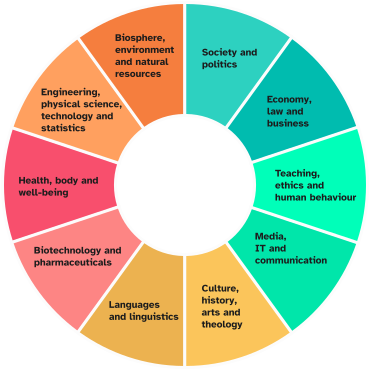
Study wheel

What interests you?

Aurora Cooperation

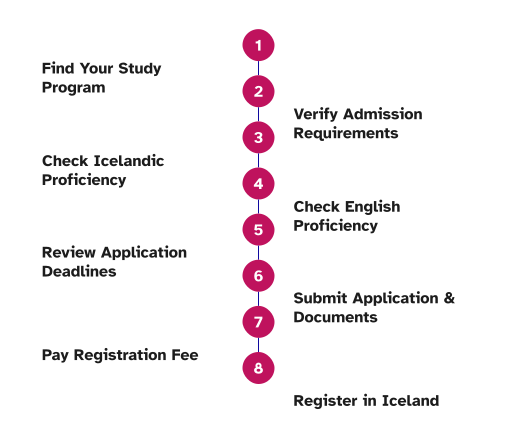
How to apply

Follow the path

Contact us

If you still have questions, feel free to contact us.

Faculty of Nursing and Midwifery
Weekdays 9 am-12 pm and 1-3 pm
General Service

The Service Desk is a point of access for all services. You can drop in at the University Centre or use the WebChat at the bottom right of this page.

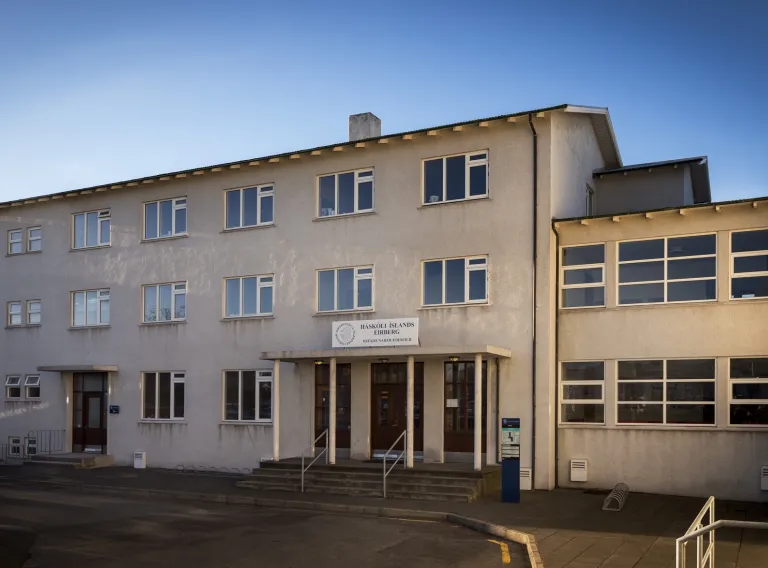
University of Iceland, Eirberg

Share

Did this help?

Why wasn't this information helpful

Limit to 250 characters.