- Have you completed a qualification for preschool assistants?
- Do you have experience working in a preschool?
- Do you plan to pursue further qualifications in preschool teacher education?
This is a 60 ECTS diploma for people who have completed a qualification for preschool assistants at the upper secondary school level.
The objective of the programme is to prepare students for further study in preschool teacher education.
Completing this programme grants access to the B.Ed. programme in preschool teacher education. All credits from the diploma may be transferred to the B.Ed. programme.
Students study part-time (50%) over two years with a mixture of on-site and distance learning.
Course topics include:
- Working practices in preschools
- The role of preschool teachers
- Language acquisition and development
- Language development and bilingualism
- How play affects brain development
- Childhood literacy
- Movement and dramatic expression
- Music in preschools
- Natural sciences and mathematics
- Toddlers in preschool
Other
Upon graduation from a teacher's program at an Icelandic university, a teacher must have a competency in Icelandic that corresponds to a minimum of C1 in the European Language Framework.
Here you can see the Language Framework of the Council of Europe.
Applicants must have completed preparatory studies at the secondary level, comparable to a preschool assistant programme (Icelandic: leikskólabrú, leikskólaliði), and have three years' work experience in a preschool. Three years of work experience in a preschool is required, and students must be employed in a preschool during their studies.
60 credits are required for the diploma
Programme structure
Check below to see how the programme is structured.
This programme does not offer specialisations.
- First year
- Fall
- Children’s immediate environment in play and learning
- Academic writing and critical reading
- Spring 1
- Dramatic expression and Movement, inside and outside
- The Preschool as a Educational Institution
Children’s immediate environment in play and learning (LSK101G)
This course examines how children's immediate environment can serve as a rich context for learning in science, mathematics and information technology, with particular emphasis on children's own observations, inquiries, and experimental activities. Students are introduced to the foundational principles of outdoor education and explore examples of pedagogical approaches and projects well-suited to this context.
The course addresses scientific and mathematical phenomena present in children's surroundings, including mammals, small animals, plants, shapes, quantity, patterns, water, and air. Students engage with a range of data sources and methodological approaches to support the planning and organisation of teaching, utilising the environment as a meaningful resource for learning in science and mathematics.
In addition, students have the opportunity to implement selected activities with children in authentic educational settings, thereby connecting theoretical perspectives with practical application.
Academic writing and critical reading (LSK002G)
The main objective of the course is to prepare students for reading, writing and communicating academic texts.
The course will cover various types of scholarly material and its representation. Students will familiarise themselves with different aspects of academic writing and learn to distinguish between different genres. Students will be trained in independent and critical reading of different texts. Copyright, plagiarism, and fake news will also be discussed.
Students will acquire skills in working with academic texts, such as abstracts and summaries and in using sources when writing their own texts. They will also receive instructions in making bibliographies and using citation systems. Students will also be trained to use source material in their own writing and to distinguish their own voice from the source.
Dramatic expression and Movement, inside and outside (LSK004G)
This course introduces methods of dramatic expression related to caring, trust and feelings of security in children, as a mechanism to bolster tolerance, friendship, and expression. The focus is on the importance of movement and training in pre- and primary school settings, on the creation and choice of plays, and on how this relates to other activities and learning processes.
The Preschool as a Educational Institution (LSK001G)
The main aims of the course are for students to gain knowledge about and insight into the role and position of the preschool in the Icelandic educational system, how different ideologies, visions, and attitudes are embedded in the goals and methods of preschool education, and the role of preschool teachers in children's learning.
It is an introductory course in preschool education that emphasises the educational role and the professional workplace of preschool teachers. The fundamental view is that children are entitled to challenging projects and opportunities to participate in society, grounded in equality and democratic participation.
- Second year
- Spring 1
- Not taught this semesterMusic in early childhood
- Not taught this semesterPlay, interaction and Play, communication and documentation
Music in early childhood (LSK009G)
This course introduces students to scholarly literature on children's musical development and to current methods in early childhood music education. The course readings cover current knowledge about the effects of music from birth through the first years of life.
Play, interaction and Play, communication and documentation (LSK401G)
The course covers major theories of play and their influence on preschool practice. It examines diverse expressions of play and learning, on the one hand from children's perspectives and, on the other, from adults' perspectives. Emphasis is placed on research on children's interactions, peer culture, and agency in play. The role of preschool teachers in children's play will be discussed, and observation and documentation methods for assessing and making children's learning in play visible will be introduced. In addition, the course explores how the preschool learning environment affects children's participation in play.
Attendance is required in weekly classes. Attendance is also required in on-site sessions in Saga.
Some course assignments are field-based and are completed by students at their workplace. Emphasis is placed on students practising connecting theoretical readings with preschool practice in the field.
- Fall
- LSK101GChildren’s immediate environment in play and learningMandatory (required) course10A mandatory (required) course for the programme10 ECTS, creditsCourse Description
This course examines how children's immediate environment can serve as a rich context for learning in science, mathematics and information technology, with particular emphasis on children's own observations, inquiries, and experimental activities. Students are introduced to the foundational principles of outdoor education and explore examples of pedagogical approaches and projects well-suited to this context.
The course addresses scientific and mathematical phenomena present in children's surroundings, including mammals, small animals, plants, shapes, quantity, patterns, water, and air. Students engage with a range of data sources and methodological approaches to support the planning and organisation of teaching, utilising the environment as a meaningful resource for learning in science and mathematics.
In addition, students have the opportunity to implement selected activities with children in authentic educational settings, thereby connecting theoretical perspectives with practical application.
Face-to-face learningDistance learningPrerequisitesAttendance required in classLSK002GAcademic writing and critical readingMandatory (required) course5A mandatory (required) course for the programme5 ECTS, creditsCourse DescriptionThe main objective of the course is to prepare students for reading, writing and communicating academic texts.
The course will cover various types of scholarly material and its representation. Students will familiarise themselves with different aspects of academic writing and learn to distinguish between different genres. Students will be trained in independent and critical reading of different texts. Copyright, plagiarism, and fake news will also be discussed.
Students will acquire skills in working with academic texts, such as abstracts and summaries and in using sources when writing their own texts. They will also receive instructions in making bibliographies and using citation systems. Students will also be trained to use source material in their own writing and to distinguish their own voice from the source.
Distance learningPrerequisitesAttendance required in class- Spring 2
LSK004GDramatic expression and Movement, inside and outsideMandatory (required) course10A mandatory (required) course for the programme10 ECTS, creditsCourse DescriptionThis course introduces methods of dramatic expression related to caring, trust and feelings of security in children, as a mechanism to bolster tolerance, friendship, and expression. The focus is on the importance of movement and training in pre- and primary school settings, on the creation and choice of plays, and on how this relates to other activities and learning processes.
Distance learningPrerequisitesAttendance required in classLSK001GThe Preschool as a Educational InstitutionMandatory (required) course5A mandatory (required) course for the programme5 ECTS, creditsCourse DescriptionThe main aims of the course are for students to gain knowledge about and insight into the role and position of the preschool in the Icelandic educational system, how different ideologies, visions, and attitudes are embedded in the goals and methods of preschool education, and the role of preschool teachers in children's learning.
It is an introductory course in preschool education that emphasises the educational role and the professional workplace of preschool teachers. The fundamental view is that children are entitled to challenging projects and opportunities to participate in society, grounded in equality and democratic participation.
Distance learningPrerequisitesAttendance required in class- Spring 2
- Not taught this semesterLSK009GMusic in early childhoodMandatory (required) course5A mandatory (required) course for the programme5 ECTS, creditsCourse Description
This course introduces students to scholarly literature on children's musical development and to current methods in early childhood music education. The course readings cover current knowledge about the effects of music from birth through the first years of life.
Distance learningPrerequisitesAttendance required in classNot taught this semesterLSK401GPlay, interaction and Play, communication and documentationMandatory (required) course10A mandatory (required) course for the programme10 ECTS, creditsCourse DescriptionThe course covers major theories of play and their influence on preschool practice. It examines diverse expressions of play and learning, on the one hand from children's perspectives and, on the other, from adults' perspectives. Emphasis is placed on research on children's interactions, peer culture, and agency in play. The role of preschool teachers in children's play will be discussed, and observation and documentation methods for assessing and making children's learning in play visible will be introduced. In addition, the course explores how the preschool learning environment affects children's participation in play.
Attendance is required in weekly classes. Attendance is also required in on-site sessions in Saga.
Some course assignments are field-based and are completed by students at their workplace. Emphasis is placed on students practising connecting theoretical readings with preschool practice in the field.
Face-to-face learningDistance learningPrerequisitesAttendance required in class
Second year- Fall
- LSK101GChildren’s immediate environment in play and learningMandatory (required) course10A mandatory (required) course for the programme10 ECTS, creditsCourse Description
This course examines how children's immediate environment can serve as a rich context for learning in science, mathematics and information technology, with particular emphasis on children's own observations, inquiries, and experimental activities. Students are introduced to the foundational principles of outdoor education and explore examples of pedagogical approaches and projects well-suited to this context.
The course addresses scientific and mathematical phenomena present in children's surroundings, including mammals, small animals, plants, shapes, quantity, patterns, water, and air. Students engage with a range of data sources and methodological approaches to support the planning and organisation of teaching, utilising the environment as a meaningful resource for learning in science and mathematics.
In addition, students have the opportunity to implement selected activities with children in authentic educational settings, thereby connecting theoretical perspectives with practical application.
Face-to-face learningDistance learningPrerequisitesAttendance required in classLSK002GAcademic writing and critical readingMandatory (required) course5A mandatory (required) course for the programme5 ECTS, creditsCourse DescriptionThe main objective of the course is to prepare students for reading, writing and communicating academic texts.
The course will cover various types of scholarly material and its representation. Students will familiarise themselves with different aspects of academic writing and learn to distinguish between different genres. Students will be trained in independent and critical reading of different texts. Copyright, plagiarism, and fake news will also be discussed.
Students will acquire skills in working with academic texts, such as abstracts and summaries and in using sources when writing their own texts. They will also receive instructions in making bibliographies and using citation systems. Students will also be trained to use source material in their own writing and to distinguish their own voice from the source.
Distance learningPrerequisitesAttendance required in class- Spring 2
LSK004GDramatic expression and Movement, inside and outsideMandatory (required) course10A mandatory (required) course for the programme10 ECTS, creditsCourse DescriptionThis course introduces methods of dramatic expression related to caring, trust and feelings of security in children, as a mechanism to bolster tolerance, friendship, and expression. The focus is on the importance of movement and training in pre- and primary school settings, on the creation and choice of plays, and on how this relates to other activities and learning processes.
Distance learningPrerequisitesAttendance required in classLSK001GThe Preschool as a Educational InstitutionMandatory (required) course5A mandatory (required) course for the programme5 ECTS, creditsCourse DescriptionThe main aims of the course are for students to gain knowledge about and insight into the role and position of the preschool in the Icelandic educational system, how different ideologies, visions, and attitudes are embedded in the goals and methods of preschool education, and the role of preschool teachers in children's learning.
It is an introductory course in preschool education that emphasises the educational role and the professional workplace of preschool teachers. The fundamental view is that children are entitled to challenging projects and opportunities to participate in society, grounded in equality and democratic participation.
Distance learningPrerequisitesAttendance required in class- Spring 2
- Not taught this semesterLSK009GMusic in early childhoodMandatory (required) course5A mandatory (required) course for the programme5 ECTS, creditsCourse Description
This course introduces students to scholarly literature on children's musical development and to current methods in early childhood music education. The course readings cover current knowledge about the effects of music from birth through the first years of life.
Distance learningPrerequisitesAttendance required in classNot taught this semesterLSK401GPlay, interaction and Play, communication and documentationMandatory (required) course10A mandatory (required) course for the programme10 ECTS, creditsCourse DescriptionThe course covers major theories of play and their influence on preschool practice. It examines diverse expressions of play and learning, on the one hand from children's perspectives and, on the other, from adults' perspectives. Emphasis is placed on research on children's interactions, peer culture, and agency in play. The role of preschool teachers in children's play will be discussed, and observation and documentation methods for assessing and making children's learning in play visible will be introduced. In addition, the course explores how the preschool learning environment affects children's participation in play.
Attendance is required in weekly classes. Attendance is also required in on-site sessions in Saga.
Some course assignments are field-based and are completed by students at their workplace. Emphasis is placed on students practising connecting theoretical readings with preschool practice in the field.
Face-to-face learningDistance learningPrerequisitesAttendance required in class
Additional information The University of Iceland collaborates with over 400 universities worldwide. This provides a unique opportunity to pursue part of your studies at an international university thus gaining added experience and fresh insight into your field of study.
Students generally have the opportunity to join an exchange programme, internship, or summer courses. However, exchanges are always subject to faculty approval.
Students have the opportunity to have courses evaluated as part of their studies at the University of Iceland, so their stay does not have to affect the duration of their studies.
Knowledge of preschool teaching can open up careers in:
- Preschool teaching
- Preschool leadership
- Management in pedagogy and education
This list is not exhaustive.
- The student organisation for student teachers at the University of Iceland is called Kennó
- Kennó organises events such as socials for new students, annual galas and workplace tours
- Get an insight into the lives of student teachers and qualified teachers through the Come and Teach project and the Icelandic Education Award
Students' comments
Students appreciate the University of Iceland for its strong academic reputation, modern campus facilities, close-knit community, and affordable tuition.Helpful content Study wheel
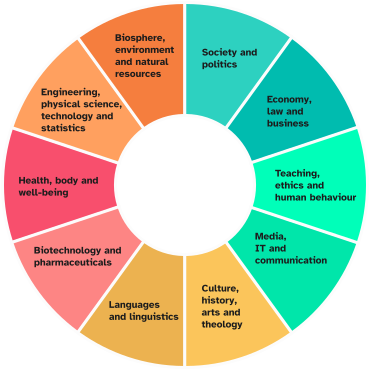
What interests you?
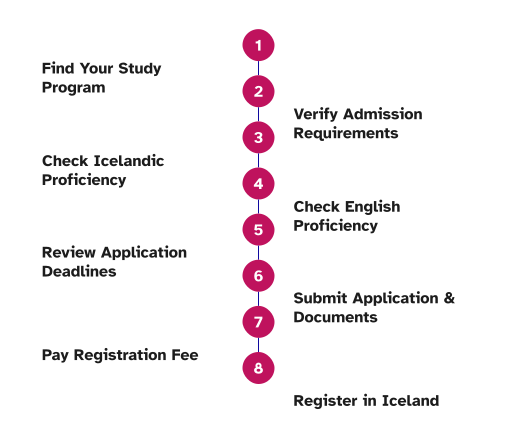
How to apply
Follow the path
Contact us If you still have questions, feel free to contact us.
School of Education9:00 am - 3:00 pmGeneral Service and social mediaThe Service Desk is a point of access for all services. You can drop in at the University Centre or use the WebChat at the bottom right of this page.
Follow the School of Education on Instagram, Youtube
and Facebook
Share