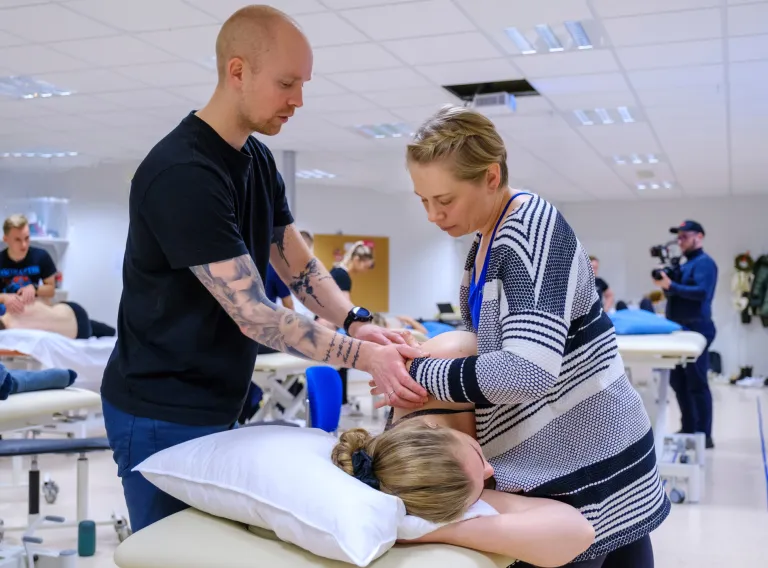
- Do you want to gain specialist knowledge of the skeletal system?
- Do you want a practical clinical programme?
- Do you want to learn more about diagnosis and treatment in physical therapy?
- Do you want the option to go on to do a PhD?
This is a theoretical and clinical graduate programme.
The programme has two main components. The first component is about theoretical study with a focus on basic and applied research. The second component consists of clinical courses and internships in various health care facilities.
Programme structure
The programme is 120 ECTS and is organised as two years of full-time study.
The programme is made up of
- Courses, 48 ECTS
- Clinical training, 42 ECTS
- Master’s thesis, 30 ECTS
Organisation of teaching
This programme is primarily taught in Icelandic, but some courses may be taught in English. Most textbooks are in English.
Generally, only students who have completed a 180 ECTS BS in physical therapy science with a first class grade will be admitted to the MS programme.
Main objectives
Students will learn to apply clinical reasoning and decision making, evidence-based practices, diagnosis and treatments. After completing the programme, students will be competent to provide physical therapy services with or without a referral from another healthcare professional.
Other
Completing an MS in physical therapy qualifies you to work as a physiotherapist.
Completing the programme allows you to apply for doctoral studies.
To be admitted to the MS in Physical Therapy, the applicant must have finished a BS degree in physical therapy sciences with at least a GPA of 6,5. Up to 35 students may be admitted to the master's program.
A total of 120 ECTS must be completed during the study period and of those, students complete a 30 ECTS research project and thesis. Students must complete all coursework from the earlier year prior to commencing the second.
Programme structure
Check below to see how the programme is structured.
This programme does not offer specialisations.
- First year
- Fall
- Physical therapy of the musculoskeletal system IIA
- Physical therapy of the musculoskeletal system IIB
- Musculoskeletal physiotherapy III
- Clinical Education I
- Adaptive equipment
- Spring 1
- Research methods
- Geriatric physical therapy
- Clinical Education II
- Pediatric physical therapy
- Motor Control
- Motion Analysis - biomechanics
- Sport Physical Therapy
- Review Essay in Physical Therapy MS
Physical therapy of the musculoskeletal system IIA (SJÚ102F)
The course aim is to produce students capable of planning and performing a physical examination for clinical musculoskeletal problems, create a treatment plan, perform treatments, and follow-up on their results. The course heavily emphasises clinical reasoning and interwining basic knowledge and clinical skills.
During the course, students use all fundamental components of a musculoskeletal examination; general presentation, postural and movement assessment, palpation, assessment of strength, flexibility, mobility, stability, endurance, using special tests, and standardized assessment tools. Students also practice writing reports for their cases.
The course uses a case-based learning approach. Students get clinical cases from teachers, work on them independently, and discuss cases and practice relevant skills in class supported by the teachers. Independent and student-driven work is emphasized.
Physical therapy of the musculoskeletal system IIB (SJÚ103F)
The course aim is to produce students capable of planning and performing a physical examination for clinical musculoskeletal problems, create a treatment plan, perform treatments, and follow-up on their results. The course heavily emphasises clinical reasoning and interwining basic knowledge and clinical skills.
During the course, students use all fundamental components of a musculoskeletal examination; general presentation, postural and movement assessment, palpation, assessment of strength, flexibility, mobility, stability, endurance, using special tests, and standardized assessment tools. Students also practice writing reports for their cases.
The course uses a case-based learning approach. Students get clinical cases from teachers, work on them independently, and discuss cases and practice relevant skills in class supported by the teachers. Independent and student-driven work is emphasized.
Musculoskeletal physiotherapy III (SJÚ104F)
The course is taught via lectures, discussion groups, assignments and clinical visits. Emphasis is placed on covering rheumatic and mixed connective tissue diseases as well as chronic pain. Physical therapy management strategies are used to implement clinical reasoning regarding diagnosis and treatment. Standard methods for physical therapy assessment are taught, as are ways to evaluate functional ability, symptoms and quality of life, and devising an appropriate treatment plan. The goal is that the student will gain knowledge in the area of multidisciplinary treatment approach for patients and skills in implementing functional testing and goal oriented treatment plans.
Clinical Education I (SJÚ105F)
During clinical placements, students gain insight into the health system in Iceland and the position and role of physiotherapists within it. Clinical placement I is taught in hospitals or hospital-related institutions. It is expected that during this first clinical placement, students will gain insight into the work of physiotherapists, become acquainted with the activities of hospitals, and have the opportunity to observe and participate in a variety of work activities within them. In clinical placements, students work under the guidance of clinical educator. Clinical educators assist students in practicing clinical reasoning, adopting a holistic approach based on the International Classification of Functioning, Disability and Health (ICF), and linking theoretical knowledge to real-life situations. Emphasis is placed on students gaining experience in examining, evaluating, and treating people with different types of diseases and symptoms. In clinical placement I, special emphasis is placed on registration, teamwork, and professionalism. During the placements, clinics are often held where students present cases to fellow students, clinical teachers, and other physiotherapists. Clinical placement I begins with a meeting with the clinical education manager where preparation takes place.
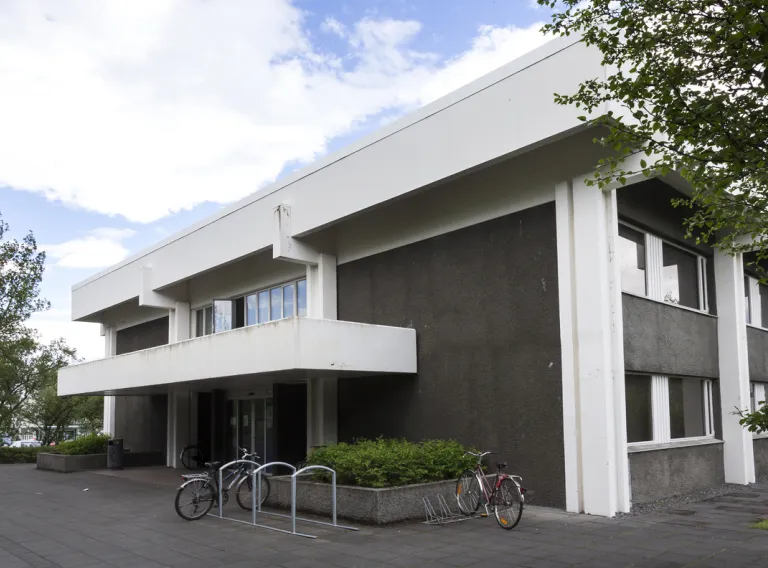
Applies to all clinical placements: As clinical placements take place in institutions and ambulatory clinical settings all over the country, it is assumed that some of the clinical placements take place outside the capital area. The capital area is defined as a 60 km radius from Stapi, the building of the Department of physiotherapy. Each student can expect that one placement, including the group training course, will take place outside that area. In some cases, students can take clinical placements in their place of origin, and sometimes institutions in the countryside have been able to provide students with housing free of charge. The general rule is that the Department provides students with a place in clinical education, but students bear the cost when applicable.
The aim of the placements overall shall be for each student to have an experience of physiotherapy in an emergency hospital, in an interdisciplinary rehabilitation in an institution, in private practice with an emphasis on the musculoskeletal system, and in an aging environment. Learning outcomes for each clinical period are based on the work of the physiotherapist at the relevant teaching location.
Adaptive equipment (SJÚ106F)
The course will provide an overview of assistive equipment used by various patient groups, including patients with neurological and chronic disorders, older individuals and children. It will also assist students with developing problem-solving skills, particularly in commonly used areas of assistive equipment, such as walking aids, wheelchairs, orthotics and prosthetics. Furthermore, the course will introduce students to service provision of assistive equipment in the Icelandic, including assessment, prescription, ordering, fitting, user training, and follow-up, and it will provide insights into the international context where relevant. The International Classification of Functioning, Disability and Health (ICF) will be used as a key framework for clinical reasoning.
Research methods (SJÚ201F)
Research ethics will be covered, including the Declaration of Helsinki. Writing a research proposal will be taught as well as applications to relevant agencies like The National Bioethics Committee etc.General work habits in research will be covered like litterature search, recording data, keeping log-books as well as woking with research equipment and in research labs like security issues. In the course the students will write their own research proposal for their MS projects and present it at a seminar at the end of the course. The student will get training to improve their skills to understand and interpret statistics in research and review papers.
Geriatric physical therapy (SJÚ202F)
This is the second of two courses focusing on geriatric physical therapy. In this part, students will address disabilities, health conditions, and contextual barriers commonly found in older adults and indicate the need for physiotherapy. A problem-based learning approach is used to have students explore standardized functional assessment methods in geriatrics, comprehensive geriatric assessment, and evidence-based interventions (treatments). Teaching also takes place in a simulation centre with emphasis on examination and assessment of older clients/patients at risk of falls. Advanced material is provided, pertinent to master's level clinical practice in geriatrics, across physiotherapy specialty areas and practice settings. By the end of the course, the student will be able to apply clinical reasoning and an evidence-based, person-centred approach to plan and implement appropriate physiotherapist patient/client management for older clients/patients. This management is based on the person’s goals, aims for optimal functioning and wellbeing, and takes into account contextual factors (including formal and informal caregivers) and health conditions.
Clinical Education II (SJÚ203F)
During clinical placements, students gain insight into the health system in Iceland and the position and role of physiotherapists within it. Clinical placement II-IV is taught in hospitals and other clinical settings. In clinical placements, students work under the guidance of clinical educator. Clinical educators assist students in practicing clinical reasoning, adopting a holistic approach based on the International Classification of Functioning, Disability and Health (ICF), and linking theoretical knowledge to real-life situations. Emphasis is placed on students gaining experience in examining, evaluating, and treating people with different types of diseases and symptoms. During the placements, clinics are often held where students present cases to fellow students, clinical teachers, and other physiotherapists. Clinical placements II-IV start with a meeting with the clinical education manager.
Applies to all clinical placements: As clinical placements take place in institutions and ambulatory clinical settings all over the country, it is assumed that some of the clinical placements take place outside the capital area. The capital area is defined as a 60 km radius from Stapi, the building of the Department of physiotherapy. Each student can expect that one placement, including the group training course, will take place outside that area. In some cases, students can take clinical placements in their place of origin, and sometimes institutions in the countryside have been able to provide students with housing free of charge. The general rule is that the Department provides students with a place in clinical education, but students bear the cost when applicable.
The aim of the placements overall shall be for each student to have an experience of physiotherapy in an emergency hospital, in an interdisciplinary rehabilitation in an institution, in private practice with an emphasis on the musculoskeletal system, and in an aging environment. Learning outcomes for each clinical period are based on the work of the physiotherapist at the relevant teaching location.
Pediatric physical therapy (SJÚ204F)
Conceptual frameworks of pediatric physical therapy will be described. That includes contemporary systems theories of motor development, the framework of International Classification of Functioning, Disability and Health (ICF), Family-centered practice and early intervention service (EI).
Characteristics and prognosis of the most common diseases, disorders and injuries in most body systems will be taught. The effects on body function and structure, activity and participation will be described.
The course will cover children with neurological disorders, juvenile idiopathic arthritis, cardiac disorders, and other medical disorders (such as oncology). Methods of examination, evaluation, diagnosis, clinical decision-making, prognosis and intervention will be taught in theory and practice. Various standardized assessment tools/tests will be introduced. Differential diagnosis and referral to other professional disciplines will be discussed. Emphasis is placed on evidence-based physiotherapy, i.e., integrating the best available scientific evidence with clinical experience and patient preferences. The importance of safeguarding children’s well-being and safety during assessment and treatment by a physiotherapist will be reviewed.
In the practical sessions, specific handling techniques to stimulate movement in infants are practiced, as well as how to interact with the child and the family when they come to a physiotherapist.
Motor Control (SJÚ205F)
The aim of the course is to enable students to deepen their knowledge in the field of movement science. The theoretical framework of the course is based on contemporary theories of motor control, motor learning, and the recovery of functional abilities following injury or disease. Core principles of motor control and motor learning, the clinical reasoning and treatment process of physiotherapists, the International Classification of Functioning, Disability and Health (ICF), and evidence-based clinical practice will be reviewed. Emphasis is placed on how these elements form a conceptual framework for physical therapy intervention across the lifespan in individuals with impairments in motor control. In addition, the course addresses how these principles and models are integrated into a specialized task-oriented approach to intervention.
At the beginning of the course, there will be a brief review of theories of motor control and methods of motor learning. Impairments in motor control may be related to posture and balance, mobility (including transfers and gait), upper extremity function, and various musculoskeletal symptoms. The main categories of research within these areas will be discussed, including both basic science research and clinical research.
The majority of the course consists of project-based work related to motor learning. Students will apply scientific knowledge from movement science as a theoretical foundation for an evidence-based approach to physiotherapy practice. Possible topics include various aspects of motor learning, such as attentional mechanisms, the effects of sensory input and sensory processing on motor control, and the roles of implicit memory and declarative/explicit memory in motor control.
Students will formulate research questions and seek answers through a review of scientific literature. Finally, they will discuss the implications of the findings for clinical physical therapy practice.
Motion Analysis - biomechanics (SJÚ206F)
Motion analysis is one of three elective courses that are offered during Spring semester in the first of two years of MS physical therapy program. Basic terms and concepts of biomechanics will be reviewed. Assessment methods relating to 3-d kinematics and kinetics as well as electromyography (EMG) will be introduced. The course focuses on practical training and relevant on-site visits. Assignments aim to provide students with the knowledge, skills and ability needed to utilize motion capture and EMG for assessing and interpreting data that reflect human movement.
Sport Physical Therapy (SJÚ207F)
Sports physical therapy is one of three elective courses that are offered during Spring semester in the first of two years of MS physical therapy program. Common sports related injuries and known risk factors will be reviewed, for both acute and overuse injuries, as well as key strategies during different phases of rehabilitation, as well as prevention. The course focuses on problem-based learning assignments, seminars as well as practical training. Assignments aim to provide students with knowledge and practical skills in the field of sports physical therapy.
Review Essay in Physical Therapy MS (SJÚ210F)
A reading course is one of four elective courses that are offered during Spring semester in the first of two years of MS physical therapy program. A reading course is under the guidance of a faculty instructor.
The aim of this course is to give the student the opportunity to review and deepen their knowledge of well-defined and specific topics. The reading course studies consist of reading journal papers and other sources selected in consultation with the instructor, and discussion on those papers with the instructor. Students must write an essay to complete a reading course. The essay will be evaluated by the instructor. NOTE: the reading course may not be part of a master's project in MS Physical Therapy or specifically related to it.
- Second year
- Fall
- Complicated cases
- Clinical Education III
- Final Project
- Spring 1
- Final Project
- Clinical Education IV
Complicated cases (SJÚ301F)
The course is taught via (online) lectures and modules, discussion groups, assignments, seminars, simulations, and clinical visits. The aim of the course is to train the students in scientific reasoning and effective communication with respect to complex clinical cases and challenging patiens. The emphasis is on clinical reasoning according to the system theory, clinical decision making, and evidence-based practice. The course will increase the students’ competency in integrated approach in clinical practice, emphasizing complex and/or multimodal diseases or situations. The course will further emphasize advanced differential diagnosis and prepare the students for independent decision making based on evidence. Students will present cases and take part in group discussions to emphasize appropriate screening of patients/clients for pathology and referral obligations for problems beyond the scope of physical therapy.
Clinical Education III (SJÚ302F)
During clinical placements, students gain insight into the health system in Iceland and the position and role of physiotherapists within it. Clinical placement II-IV is taught in hospitals and other clinical settings. In clinical placements, students work under the guidance of clinical educator. Clinical educators assist students in practicing clinical reasoning, adopting a holistic approach based on the International Classification of Functioning, Disability and Health (ICF), and linking theoretical knowledge to real-life situations. Emphasis is placed on students gaining experience in examining, evaluating, and treating people with different types of diseases and symptoms. During the placements, clinics are often held where students present cases to fellow students, clinical teachers, and other physiotherapists. Clinical placements II-IV start with a meeting with the clinical education manager.
Applies to all clinical placements: As clinical placements take place in institutions and ambulatory clinical settings all over the country, it is assumed that some of the clinical placements take place outside the capital area. The capital area is defined as a 60 km radius from Stapi, the building of the Department of physiotherapy. Each student can expect that one placement, including the group training course, will take place outside that area. In some cases, students can take clinical placements in their place of origin, and sometimes institutions in the countryside have been able to provide students with housing free of charge. The general rule is that the Department provides students with a place in clinical education, but students bear the cost when applicable.
The aim of the placements overall shall be for each student to have an experience of physiotherapy in an emergency hospital, in an interdisciplinary rehabilitation in an institution, in private practice with an emphasis on the musculoskeletal system, and in an aging environment. Learning outcomes for each clinical period are based on the work of the physiotherapist at the relevant teaching location.
Final Project (SJÚ401L)
The final project is a requirement for a MS degree in physical therapy, where students work independently, yet supervised by an academic staff. Students should consult the chair of their department on the choice of a project supervisor. The final project is divided in two modules. The students will conduct a research based on a proposal designed in the course Research Methods. The final product of the research is; 1) manuscript formatted for a selected journal, with an extra chapter on theoretical background, and 2) presentation at a seminar.
Final Project (SJÚ401L)
The final project is a requirement for a MS degree in physical therapy, where students work independently, yet supervised by an academic staff. Students should consult the chair of their department on the choice of a project supervisor. The final project is divided in two modules. The students will conduct a research based on a proposal designed in the course Research Methods. The final product of the research is; 1) manuscript formatted for a selected journal, with an extra chapter on theoretical background, and 2) presentation at a seminar.
Clinical Education IV (SJÚ402F)
During clinical placements, students gain insight into the health system in Iceland and the position and role of physiotherapists within it. Clinical placement II-IV is taught in hospitals and other clinical settings. In clinical placements, students work under the guidance of clinical educator. Clinical educators assist students in practicing clinical reasoning, adopting a holistic approach based on the International Classification of Functioning, Disability and Health (ICF), and linking theoretical knowledge to real-life situations. Emphasis is placed on students gaining experience in examining, evaluating, and treating people with different types of diseases and symptoms. During the placements, clinics are often held where students present cases to fellow students, clinical teachers, and other physiotherapists. Clinical placements II-IV start with a meeting with the clinical education manager.
Applies to all clinical placements: As clinical placements take place in institutions and ambulatory clinical settings all over the country, it is assumed that some of the clinical placements take place outside the capital area. The capital area is defined as a 60 km radius from Stapi, the building of the Department of physiotherapy. Each student can expect that one placement, including the group training course, will take place outside that area. In some cases, students can take clinical placements in their place of origin, and sometimes institutions in the countryside have been able to provide students with housing free of charge. The general rule is that the Department provides students with a place in clinical education, but students bear the cost when applicable.
The aim of the placements overall shall be for each student to have an experience of physiotherapy in an emergency hospital, in an interdisciplinary rehabilitation in an institution, in private practice with an emphasis on the musculoskeletal system, and in an aging environment. Learning outcomes for each clinical period are based on the work of the physiotherapist at the relevant teaching location.
- Fall
- SJÚ102FPhysical therapy of the musculoskeletal system IIAMandatory (required) course8A mandatory (required) course for the programme8 ECTS, creditsCourse Description
The course aim is to produce students capable of planning and performing a physical examination for clinical musculoskeletal problems, create a treatment plan, perform treatments, and follow-up on their results. The course heavily emphasises clinical reasoning and interwining basic knowledge and clinical skills.
During the course, students use all fundamental components of a musculoskeletal examination; general presentation, postural and movement assessment, palpation, assessment of strength, flexibility, mobility, stability, endurance, using special tests, and standardized assessment tools. Students also practice writing reports for their cases.
The course uses a case-based learning approach. Students get clinical cases from teachers, work on them independently, and discuss cases and practice relevant skills in class supported by the teachers. Independent and student-driven work is emphasized.
Face-to-face learningPrerequisitesSJÚ103FPhysical therapy of the musculoskeletal system IIBMandatory (required) course8A mandatory (required) course for the programme8 ECTS, creditsCourse DescriptionThe course aim is to produce students capable of planning and performing a physical examination for clinical musculoskeletal problems, create a treatment plan, perform treatments, and follow-up on their results. The course heavily emphasises clinical reasoning and interwining basic knowledge and clinical skills.
During the course, students use all fundamental components of a musculoskeletal examination; general presentation, postural and movement assessment, palpation, assessment of strength, flexibility, mobility, stability, endurance, using special tests, and standardized assessment tools. Students also practice writing reports for their cases.
The course uses a case-based learning approach. Students get clinical cases from teachers, work on them independently, and discuss cases and practice relevant skills in class supported by the teachers. Independent and student-driven work is emphasized.
Face-to-face learningPrerequisitesSJÚ104FMusculoskeletal physiotherapy IIIMandatory (required) course3A mandatory (required) course for the programme3 ECTS, creditsCourse DescriptionThe course is taught via lectures, discussion groups, assignments and clinical visits. Emphasis is placed on covering rheumatic and mixed connective tissue diseases as well as chronic pain. Physical therapy management strategies are used to implement clinical reasoning regarding diagnosis and treatment. Standard methods for physical therapy assessment are taught, as are ways to evaluate functional ability, symptoms and quality of life, and devising an appropriate treatment plan. The goal is that the student will gain knowledge in the area of multidisciplinary treatment approach for patients and skills in implementing functional testing and goal oriented treatment plans.
Face-to-face learningPrerequisitesCourse taught first half of the semesterSJÚ105FClinical Education IMandatory (required) course8A mandatory (required) course for the programme8 ECTS, creditsCourse DescriptionDuring clinical placements, students gain insight into the health system in Iceland and the position and role of physiotherapists within it. Clinical placement I is taught in hospitals or hospital-related institutions. It is expected that during this first clinical placement, students will gain insight into the work of physiotherapists, become acquainted with the activities of hospitals, and have the opportunity to observe and participate in a variety of work activities within them. In clinical placements, students work under the guidance of clinical educator. Clinical educators assist students in practicing clinical reasoning, adopting a holistic approach based on the International Classification of Functioning, Disability and Health (ICF), and linking theoretical knowledge to real-life situations. Emphasis is placed on students gaining experience in examining, evaluating, and treating people with different types of diseases and symptoms. In clinical placement I, special emphasis is placed on registration, teamwork, and professionalism. During the placements, clinics are often held where students present cases to fellow students, clinical teachers, and other physiotherapists. Clinical placement I begins with a meeting with the clinical education manager where preparation takes place.
Applies to all clinical placements: As clinical placements take place in institutions and ambulatory clinical settings all over the country, it is assumed that some of the clinical placements take place outside the capital area. The capital area is defined as a 60 km radius from Stapi, the building of the Department of physiotherapy. Each student can expect that one placement, including the group training course, will take place outside that area. In some cases, students can take clinical placements in their place of origin, and sometimes institutions in the countryside have been able to provide students with housing free of charge. The general rule is that the Department provides students with a place in clinical education, but students bear the cost when applicable.
The aim of the placements overall shall be for each student to have an experience of physiotherapy in an emergency hospital, in an interdisciplinary rehabilitation in an institution, in private practice with an emphasis on the musculoskeletal system, and in an aging environment. Learning outcomes for each clinical period are based on the work of the physiotherapist at the relevant teaching location.
Face-to-face learningPrerequisitesCourse taught second half of the semesterSJÚ106FAdaptive equipmentMandatory (required) course3A mandatory (required) course for the programme3 ECTS, creditsCourse DescriptionThe course will provide an overview of assistive equipment used by various patient groups, including patients with neurological and chronic disorders, older individuals and children. It will also assist students with developing problem-solving skills, particularly in commonly used areas of assistive equipment, such as walking aids, wheelchairs, orthotics and prosthetics. Furthermore, the course will introduce students to service provision of assistive equipment in the Icelandic, including assessment, prescription, ordering, fitting, user training, and follow-up, and it will provide insights into the international context where relevant. The International Classification of Functioning, Disability and Health (ICF) will be used as a key framework for clinical reasoning.
Face-to-face learningPrerequisitesCourse taught first half of the semester- Spring 2
SJÚ201FResearch methodsMandatory (required) course5A mandatory (required) course for the programme5 ECTS, creditsCourse DescriptionResearch ethics will be covered, including the Declaration of Helsinki. Writing a research proposal will be taught as well as applications to relevant agencies like The National Bioethics Committee etc.General work habits in research will be covered like litterature search, recording data, keeping log-books as well as woking with research equipment and in research labs like security issues. In the course the students will write their own research proposal for their MS projects and present it at a seminar at the end of the course. The student will get training to improve their skills to understand and interpret statistics in research and review papers.
Face-to-face learningPrerequisitesSJÚ202FGeriatric physical therapyMandatory (required) course4A mandatory (required) course for the programme4 ECTS, creditsCourse DescriptionThis is the second of two courses focusing on geriatric physical therapy. In this part, students will address disabilities, health conditions, and contextual barriers commonly found in older adults and indicate the need for physiotherapy. A problem-based learning approach is used to have students explore standardized functional assessment methods in geriatrics, comprehensive geriatric assessment, and evidence-based interventions (treatments). Teaching also takes place in a simulation centre with emphasis on examination and assessment of older clients/patients at risk of falls. Advanced material is provided, pertinent to master's level clinical practice in geriatrics, across physiotherapy specialty areas and practice settings. By the end of the course, the student will be able to apply clinical reasoning and an evidence-based, person-centred approach to plan and implement appropriate physiotherapist patient/client management for older clients/patients. This management is based on the person’s goals, aims for optimal functioning and wellbeing, and takes into account contextual factors (including formal and informal caregivers) and health conditions.
Face-to-face learningPrerequisitesCourse taught first half of the semesterSJÚ203FClinical Education IIMandatory (required) course12A mandatory (required) course for the programme12 ECTS, creditsCourse DescriptionDuring clinical placements, students gain insight into the health system in Iceland and the position and role of physiotherapists within it. Clinical placement II-IV is taught in hospitals and other clinical settings. In clinical placements, students work under the guidance of clinical educator. Clinical educators assist students in practicing clinical reasoning, adopting a holistic approach based on the International Classification of Functioning, Disability and Health (ICF), and linking theoretical knowledge to real-life situations. Emphasis is placed on students gaining experience in examining, evaluating, and treating people with different types of diseases and symptoms. During the placements, clinics are often held where students present cases to fellow students, clinical teachers, and other physiotherapists. Clinical placements II-IV start with a meeting with the clinical education manager.
Applies to all clinical placements: As clinical placements take place in institutions and ambulatory clinical settings all over the country, it is assumed that some of the clinical placements take place outside the capital area. The capital area is defined as a 60 km radius from Stapi, the building of the Department of physiotherapy. Each student can expect that one placement, including the group training course, will take place outside that area. In some cases, students can take clinical placements in their place of origin, and sometimes institutions in the countryside have been able to provide students with housing free of charge. The general rule is that the Department provides students with a place in clinical education, but students bear the cost when applicable.
The aim of the placements overall shall be for each student to have an experience of physiotherapy in an emergency hospital, in an interdisciplinary rehabilitation in an institution, in private practice with an emphasis on the musculoskeletal system, and in an aging environment. Learning outcomes for each clinical period are based on the work of the physiotherapist at the relevant teaching location.
Face-to-face learningPrerequisitesCourse taught second half of the semesterSJÚ204FPediatric physical therapyMandatory (required) course5A mandatory (required) course for the programme5 ECTS, creditsCourse DescriptionConceptual frameworks of pediatric physical therapy will be described. That includes contemporary systems theories of motor development, the framework of International Classification of Functioning, Disability and Health (ICF), Family-centered practice and early intervention service (EI).
Characteristics and prognosis of the most common diseases, disorders and injuries in most body systems will be taught. The effects on body function and structure, activity and participation will be described.
The course will cover children with neurological disorders, juvenile idiopathic arthritis, cardiac disorders, and other medical disorders (such as oncology). Methods of examination, evaluation, diagnosis, clinical decision-making, prognosis and intervention will be taught in theory and practice. Various standardized assessment tools/tests will be introduced. Differential diagnosis and referral to other professional disciplines will be discussed. Emphasis is placed on evidence-based physiotherapy, i.e., integrating the best available scientific evidence with clinical experience and patient preferences. The importance of safeguarding children’s well-being and safety during assessment and treatment by a physiotherapist will be reviewed.
In the practical sessions, specific handling techniques to stimulate movement in infants are practiced, as well as how to interact with the child and the family when they come to a physiotherapist.
Face-to-face learningPrerequisitesCourse taught first half of the semesterCourse DescriptionThe aim of the course is to enable students to deepen their knowledge in the field of movement science. The theoretical framework of the course is based on contemporary theories of motor control, motor learning, and the recovery of functional abilities following injury or disease. Core principles of motor control and motor learning, the clinical reasoning and treatment process of physiotherapists, the International Classification of Functioning, Disability and Health (ICF), and evidence-based clinical practice will be reviewed. Emphasis is placed on how these elements form a conceptual framework for physical therapy intervention across the lifespan in individuals with impairments in motor control. In addition, the course addresses how these principles and models are integrated into a specialized task-oriented approach to intervention.
At the beginning of the course, there will be a brief review of theories of motor control and methods of motor learning. Impairments in motor control may be related to posture and balance, mobility (including transfers and gait), upper extremity function, and various musculoskeletal symptoms. The main categories of research within these areas will be discussed, including both basic science research and clinical research.
The majority of the course consists of project-based work related to motor learning. Students will apply scientific knowledge from movement science as a theoretical foundation for an evidence-based approach to physiotherapy practice. Possible topics include various aspects of motor learning, such as attentional mechanisms, the effects of sensory input and sensory processing on motor control, and the roles of implicit memory and declarative/explicit memory in motor control.
Students will formulate research questions and seek answers through a review of scientific literature. Finally, they will discuss the implications of the findings for clinical physical therapy practice.
Face-to-face learningPrerequisitesSJÚ206FMotion Analysis - biomechanicsElective course4Free elective course within the programme4 ECTS, creditsCourse DescriptionMotion analysis is one of three elective courses that are offered during Spring semester in the first of two years of MS physical therapy program. Basic terms and concepts of biomechanics will be reviewed. Assessment methods relating to 3-d kinematics and kinetics as well as electromyography (EMG) will be introduced. The course focuses on practical training and relevant on-site visits. Assignments aim to provide students with the knowledge, skills and ability needed to utilize motion capture and EMG for assessing and interpreting data that reflect human movement.
Face-to-face learningPrerequisitesSJÚ207FSport Physical TherapyElective course4Free elective course within the programme4 ECTS, creditsCourse DescriptionSports physical therapy is one of three elective courses that are offered during Spring semester in the first of two years of MS physical therapy program. Common sports related injuries and known risk factors will be reviewed, for both acute and overuse injuries, as well as key strategies during different phases of rehabilitation, as well as prevention. The course focuses on problem-based learning assignments, seminars as well as practical training. Assignments aim to provide students with knowledge and practical skills in the field of sports physical therapy.
Face-to-face learningPrerequisitesSJÚ210FReview Essay in Physical Therapy MSElective course4Free elective course within the programme4 ECTS, creditsCourse DescriptionA reading course is one of four elective courses that are offered during Spring semester in the first of two years of MS physical therapy program. A reading course is under the guidance of a faculty instructor.
The aim of this course is to give the student the opportunity to review and deepen their knowledge of well-defined and specific topics. The reading course studies consist of reading journal papers and other sources selected in consultation with the instructor, and discussion on those papers with the instructor. Students must write an essay to complete a reading course. The essay will be evaluated by the instructor. NOTE: the reading course may not be part of a master's project in MS Physical Therapy or specifically related to it.
Self-studyPrerequisites- Fall
- SJÚ301FComplicated casesMandatory (required) course8A mandatory (required) course for the programme8 ECTS, creditsCourse Description
The course is taught via (online) lectures and modules, discussion groups, assignments, seminars, simulations, and clinical visits. The aim of the course is to train the students in scientific reasoning and effective communication with respect to complex clinical cases and challenging patiens. The emphasis is on clinical reasoning according to the system theory, clinical decision making, and evidence-based practice. The course will increase the students’ competency in integrated approach in clinical practice, emphasizing complex and/or multimodal diseases or situations. The course will further emphasize advanced differential diagnosis and prepare the students for independent decision making based on evidence. Students will present cases and take part in group discussions to emphasize appropriate screening of patients/clients for pathology and referral obligations for problems beyond the scope of physical therapy.
Face-to-face learningPrerequisitesCourse taught first half of the semesterSJÚ302FClinical Education IIIMandatory (required) course11A mandatory (required) course for the programme11 ECTS, creditsCourse DescriptionDuring clinical placements, students gain insight into the health system in Iceland and the position and role of physiotherapists within it. Clinical placement II-IV is taught in hospitals and other clinical settings. In clinical placements, students work under the guidance of clinical educator. Clinical educators assist students in practicing clinical reasoning, adopting a holistic approach based on the International Classification of Functioning, Disability and Health (ICF), and linking theoretical knowledge to real-life situations. Emphasis is placed on students gaining experience in examining, evaluating, and treating people with different types of diseases and symptoms. During the placements, clinics are often held where students present cases to fellow students, clinical teachers, and other physiotherapists. Clinical placements II-IV start with a meeting with the clinical education manager.
Applies to all clinical placements: As clinical placements take place in institutions and ambulatory clinical settings all over the country, it is assumed that some of the clinical placements take place outside the capital area. The capital area is defined as a 60 km radius from Stapi, the building of the Department of physiotherapy. Each student can expect that one placement, including the group training course, will take place outside that area. In some cases, students can take clinical placements in their place of origin, and sometimes institutions in the countryside have been able to provide students with housing free of charge. The general rule is that the Department provides students with a place in clinical education, but students bear the cost when applicable.
The aim of the placements overall shall be for each student to have an experience of physiotherapy in an emergency hospital, in an interdisciplinary rehabilitation in an institution, in private practice with an emphasis on the musculoskeletal system, and in an aging environment. Learning outcomes for each clinical period are based on the work of the physiotherapist at the relevant teaching location.
Face-to-face learningPrerequisitesSJÚ401LFinal ProjectMandatory (required) course19A mandatory (required) course for the programme19 ECTS, creditsCourse DescriptionThe final project is a requirement for a MS degree in physical therapy, where students work independently, yet supervised by an academic staff. Students should consult the chair of their department on the choice of a project supervisor. The final project is divided in two modules. The students will conduct a research based on a proposal designed in the course Research Methods. The final product of the research is; 1) manuscript formatted for a selected journal, with an extra chapter on theoretical background, and 2) presentation at a seminar.
Face-to-face learningPrerequisitesPart of the total project/thesis credits- Spring 2
SJÚ401LFinal ProjectMandatory (required) course19A mandatory (required) course for the programme19 ECTS, creditsCourse DescriptionThe final project is a requirement for a MS degree in physical therapy, where students work independently, yet supervised by an academic staff. Students should consult the chair of their department on the choice of a project supervisor. The final project is divided in two modules. The students will conduct a research based on a proposal designed in the course Research Methods. The final product of the research is; 1) manuscript formatted for a selected journal, with an extra chapter on theoretical background, and 2) presentation at a seminar.
Face-to-face learningPrerequisitesPart of the total project/thesis creditsSJÚ402FClinical Education IVMandatory (required) course11A mandatory (required) course for the programme11 ECTS, creditsCourse DescriptionDuring clinical placements, students gain insight into the health system in Iceland and the position and role of physiotherapists within it. Clinical placement II-IV is taught in hospitals and other clinical settings. In clinical placements, students work under the guidance of clinical educator. Clinical educators assist students in practicing clinical reasoning, adopting a holistic approach based on the International Classification of Functioning, Disability and Health (ICF), and linking theoretical knowledge to real-life situations. Emphasis is placed on students gaining experience in examining, evaluating, and treating people with different types of diseases and symptoms. During the placements, clinics are often held where students present cases to fellow students, clinical teachers, and other physiotherapists. Clinical placements II-IV start with a meeting with the clinical education manager.
Applies to all clinical placements: As clinical placements take place in institutions and ambulatory clinical settings all over the country, it is assumed that some of the clinical placements take place outside the capital area. The capital area is defined as a 60 km radius from Stapi, the building of the Department of physiotherapy. Each student can expect that one placement, including the group training course, will take place outside that area. In some cases, students can take clinical placements in their place of origin, and sometimes institutions in the countryside have been able to provide students with housing free of charge. The general rule is that the Department provides students with a place in clinical education, but students bear the cost when applicable.
The aim of the placements overall shall be for each student to have an experience of physiotherapy in an emergency hospital, in an interdisciplinary rehabilitation in an institution, in private practice with an emphasis on the musculoskeletal system, and in an aging environment. Learning outcomes for each clinical period are based on the work of the physiotherapist at the relevant teaching location.
Face-to-face learningPrerequisitesCourse taught first half of the semesterSecond year- Fall
- SJÚ102FPhysical therapy of the musculoskeletal system IIAMandatory (required) course8A mandatory (required) course for the programme8 ECTS, creditsCourse Description
The course aim is to produce students capable of planning and performing a physical examination for clinical musculoskeletal problems, create a treatment plan, perform treatments, and follow-up on their results. The course heavily emphasises clinical reasoning and interwining basic knowledge and clinical skills.
During the course, students use all fundamental components of a musculoskeletal examination; general presentation, postural and movement assessment, palpation, assessment of strength, flexibility, mobility, stability, endurance, using special tests, and standardized assessment tools. Students also practice writing reports for their cases.
The course uses a case-based learning approach. Students get clinical cases from teachers, work on them independently, and discuss cases and practice relevant skills in class supported by the teachers. Independent and student-driven work is emphasized.
Face-to-face learningPrerequisitesSJÚ103FPhysical therapy of the musculoskeletal system IIBMandatory (required) course8A mandatory (required) course for the programme8 ECTS, creditsCourse DescriptionThe course aim is to produce students capable of planning and performing a physical examination for clinical musculoskeletal problems, create a treatment plan, perform treatments, and follow-up on their results. The course heavily emphasises clinical reasoning and interwining basic knowledge and clinical skills.
During the course, students use all fundamental components of a musculoskeletal examination; general presentation, postural and movement assessment, palpation, assessment of strength, flexibility, mobility, stability, endurance, using special tests, and standardized assessment tools. Students also practice writing reports for their cases.
The course uses a case-based learning approach. Students get clinical cases from teachers, work on them independently, and discuss cases and practice relevant skills in class supported by the teachers. Independent and student-driven work is emphasized.
Face-to-face learningPrerequisitesSJÚ104FMusculoskeletal physiotherapy IIIMandatory (required) course3A mandatory (required) course for the programme3 ECTS, creditsCourse DescriptionThe course is taught via lectures, discussion groups, assignments and clinical visits. Emphasis is placed on covering rheumatic and mixed connective tissue diseases as well as chronic pain. Physical therapy management strategies are used to implement clinical reasoning regarding diagnosis and treatment. Standard methods for physical therapy assessment are taught, as are ways to evaluate functional ability, symptoms and quality of life, and devising an appropriate treatment plan. The goal is that the student will gain knowledge in the area of multidisciplinary treatment approach for patients and skills in implementing functional testing and goal oriented treatment plans.
Face-to-face learningPrerequisitesCourse taught first half of the semesterSJÚ105FClinical Education IMandatory (required) course8A mandatory (required) course for the programme8 ECTS, creditsCourse DescriptionDuring clinical placements, students gain insight into the health system in Iceland and the position and role of physiotherapists within it. Clinical placement I is taught in hospitals or hospital-related institutions. It is expected that during this first clinical placement, students will gain insight into the work of physiotherapists, become acquainted with the activities of hospitals, and have the opportunity to observe and participate in a variety of work activities within them. In clinical placements, students work under the guidance of clinical educator. Clinical educators assist students in practicing clinical reasoning, adopting a holistic approach based on the International Classification of Functioning, Disability and Health (ICF), and linking theoretical knowledge to real-life situations. Emphasis is placed on students gaining experience in examining, evaluating, and treating people with different types of diseases and symptoms. In clinical placement I, special emphasis is placed on registration, teamwork, and professionalism. During the placements, clinics are often held where students present cases to fellow students, clinical teachers, and other physiotherapists. Clinical placement I begins with a meeting with the clinical education manager where preparation takes place.
Applies to all clinical placements: As clinical placements take place in institutions and ambulatory clinical settings all over the country, it is assumed that some of the clinical placements take place outside the capital area. The capital area is defined as a 60 km radius from Stapi, the building of the Department of physiotherapy. Each student can expect that one placement, including the group training course, will take place outside that area. In some cases, students can take clinical placements in their place of origin, and sometimes institutions in the countryside have been able to provide students with housing free of charge. The general rule is that the Department provides students with a place in clinical education, but students bear the cost when applicable.
The aim of the placements overall shall be for each student to have an experience of physiotherapy in an emergency hospital, in an interdisciplinary rehabilitation in an institution, in private practice with an emphasis on the musculoskeletal system, and in an aging environment. Learning outcomes for each clinical period are based on the work of the physiotherapist at the relevant teaching location.
Face-to-face learningPrerequisitesCourse taught second half of the semesterSJÚ106FAdaptive equipmentMandatory (required) course3A mandatory (required) course for the programme3 ECTS, creditsCourse DescriptionThe course will provide an overview of assistive equipment used by various patient groups, including patients with neurological and chronic disorders, older individuals and children. It will also assist students with developing problem-solving skills, particularly in commonly used areas of assistive equipment, such as walking aids, wheelchairs, orthotics and prosthetics. Furthermore, the course will introduce students to service provision of assistive equipment in the Icelandic, including assessment, prescription, ordering, fitting, user training, and follow-up, and it will provide insights into the international context where relevant. The International Classification of Functioning, Disability and Health (ICF) will be used as a key framework for clinical reasoning.
Face-to-face learningPrerequisitesCourse taught first half of the semester- Spring 2
SJÚ201FResearch methodsMandatory (required) course5A mandatory (required) course for the programme5 ECTS, creditsCourse DescriptionResearch ethics will be covered, including the Declaration of Helsinki. Writing a research proposal will be taught as well as applications to relevant agencies like The National Bioethics Committee etc.General work habits in research will be covered like litterature search, recording data, keeping log-books as well as woking with research equipment and in research labs like security issues. In the course the students will write their own research proposal for their MS projects and present it at a seminar at the end of the course. The student will get training to improve their skills to understand and interpret statistics in research and review papers.
Face-to-face learningPrerequisitesSJÚ202FGeriatric physical therapyMandatory (required) course4A mandatory (required) course for the programme4 ECTS, creditsCourse DescriptionThis is the second of two courses focusing on geriatric physical therapy. In this part, students will address disabilities, health conditions, and contextual barriers commonly found in older adults and indicate the need for physiotherapy. A problem-based learning approach is used to have students explore standardized functional assessment methods in geriatrics, comprehensive geriatric assessment, and evidence-based interventions (treatments). Teaching also takes place in a simulation centre with emphasis on examination and assessment of older clients/patients at risk of falls. Advanced material is provided, pertinent to master's level clinical practice in geriatrics, across physiotherapy specialty areas and practice settings. By the end of the course, the student will be able to apply clinical reasoning and an evidence-based, person-centred approach to plan and implement appropriate physiotherapist patient/client management for older clients/patients. This management is based on the person’s goals, aims for optimal functioning and wellbeing, and takes into account contextual factors (including formal and informal caregivers) and health conditions.
Face-to-face learningPrerequisitesCourse taught first half of the semesterSJÚ203FClinical Education IIMandatory (required) course12A mandatory (required) course for the programme12 ECTS, creditsCourse DescriptionDuring clinical placements, students gain insight into the health system in Iceland and the position and role of physiotherapists within it. Clinical placement II-IV is taught in hospitals and other clinical settings. In clinical placements, students work under the guidance of clinical educator. Clinical educators assist students in practicing clinical reasoning, adopting a holistic approach based on the International Classification of Functioning, Disability and Health (ICF), and linking theoretical knowledge to real-life situations. Emphasis is placed on students gaining experience in examining, evaluating, and treating people with different types of diseases and symptoms. During the placements, clinics are often held where students present cases to fellow students, clinical teachers, and other physiotherapists. Clinical placements II-IV start with a meeting with the clinical education manager.
Applies to all clinical placements: As clinical placements take place in institutions and ambulatory clinical settings all over the country, it is assumed that some of the clinical placements take place outside the capital area. The capital area is defined as a 60 km radius from Stapi, the building of the Department of physiotherapy. Each student can expect that one placement, including the group training course, will take place outside that area. In some cases, students can take clinical placements in their place of origin, and sometimes institutions in the countryside have been able to provide students with housing free of charge. The general rule is that the Department provides students with a place in clinical education, but students bear the cost when applicable.
The aim of the placements overall shall be for each student to have an experience of physiotherapy in an emergency hospital, in an interdisciplinary rehabilitation in an institution, in private practice with an emphasis on the musculoskeletal system, and in an aging environment. Learning outcomes for each clinical period are based on the work of the physiotherapist at the relevant teaching location.
Face-to-face learningPrerequisitesCourse taught second half of the semesterSJÚ204FPediatric physical therapyMandatory (required) course5A mandatory (required) course for the programme5 ECTS, creditsCourse DescriptionConceptual frameworks of pediatric physical therapy will be described. That includes contemporary systems theories of motor development, the framework of International Classification of Functioning, Disability and Health (ICF), Family-centered practice and early intervention service (EI).
Characteristics and prognosis of the most common diseases, disorders and injuries in most body systems will be taught. The effects on body function and structure, activity and participation will be described.
The course will cover children with neurological disorders, juvenile idiopathic arthritis, cardiac disorders, and other medical disorders (such as oncology). Methods of examination, evaluation, diagnosis, clinical decision-making, prognosis and intervention will be taught in theory and practice. Various standardized assessment tools/tests will be introduced. Differential diagnosis and referral to other professional disciplines will be discussed. Emphasis is placed on evidence-based physiotherapy, i.e., integrating the best available scientific evidence with clinical experience and patient preferences. The importance of safeguarding children’s well-being and safety during assessment and treatment by a physiotherapist will be reviewed.
In the practical sessions, specific handling techniques to stimulate movement in infants are practiced, as well as how to interact with the child and the family when they come to a physiotherapist.
Face-to-face learningPrerequisitesCourse taught first half of the semesterCourse DescriptionThe aim of the course is to enable students to deepen their knowledge in the field of movement science. The theoretical framework of the course is based on contemporary theories of motor control, motor learning, and the recovery of functional abilities following injury or disease. Core principles of motor control and motor learning, the clinical reasoning and treatment process of physiotherapists, the International Classification of Functioning, Disability and Health (ICF), and evidence-based clinical practice will be reviewed. Emphasis is placed on how these elements form a conceptual framework for physical therapy intervention across the lifespan in individuals with impairments in motor control. In addition, the course addresses how these principles and models are integrated into a specialized task-oriented approach to intervention.
At the beginning of the course, there will be a brief review of theories of motor control and methods of motor learning. Impairments in motor control may be related to posture and balance, mobility (including transfers and gait), upper extremity function, and various musculoskeletal symptoms. The main categories of research within these areas will be discussed, including both basic science research and clinical research.
The majority of the course consists of project-based work related to motor learning. Students will apply scientific knowledge from movement science as a theoretical foundation for an evidence-based approach to physiotherapy practice. Possible topics include various aspects of motor learning, such as attentional mechanisms, the effects of sensory input and sensory processing on motor control, and the roles of implicit memory and declarative/explicit memory in motor control.
Students will formulate research questions and seek answers through a review of scientific literature. Finally, they will discuss the implications of the findings for clinical physical therapy practice.
Face-to-face learningPrerequisitesSJÚ206FMotion Analysis - biomechanicsElective course4Free elective course within the programme4 ECTS, creditsCourse DescriptionMotion analysis is one of three elective courses that are offered during Spring semester in the first of two years of MS physical therapy program. Basic terms and concepts of biomechanics will be reviewed. Assessment methods relating to 3-d kinematics and kinetics as well as electromyography (EMG) will be introduced. The course focuses on practical training and relevant on-site visits. Assignments aim to provide students with the knowledge, skills and ability needed to utilize motion capture and EMG for assessing and interpreting data that reflect human movement.
Face-to-face learningPrerequisitesSJÚ207FSport Physical TherapyElective course4Free elective course within the programme4 ECTS, creditsCourse DescriptionSports physical therapy is one of three elective courses that are offered during Spring semester in the first of two years of MS physical therapy program. Common sports related injuries and known risk factors will be reviewed, for both acute and overuse injuries, as well as key strategies during different phases of rehabilitation, as well as prevention. The course focuses on problem-based learning assignments, seminars as well as practical training. Assignments aim to provide students with knowledge and practical skills in the field of sports physical therapy.
Face-to-face learningPrerequisitesSJÚ210FReview Essay in Physical Therapy MSElective course4Free elective course within the programme4 ECTS, creditsCourse DescriptionA reading course is one of four elective courses that are offered during Spring semester in the first of two years of MS physical therapy program. A reading course is under the guidance of a faculty instructor.
The aim of this course is to give the student the opportunity to review and deepen their knowledge of well-defined and specific topics. The reading course studies consist of reading journal papers and other sources selected in consultation with the instructor, and discussion on those papers with the instructor. Students must write an essay to complete a reading course. The essay will be evaluated by the instructor. NOTE: the reading course may not be part of a master's project in MS Physical Therapy or specifically related to it.
Self-studyPrerequisites- Fall
- SJÚ301FComplicated casesMandatory (required) course8A mandatory (required) course for the programme8 ECTS, creditsCourse Description
The course is taught via (online) lectures and modules, discussion groups, assignments, seminars, simulations, and clinical visits. The aim of the course is to train the students in scientific reasoning and effective communication with respect to complex clinical cases and challenging patiens. The emphasis is on clinical reasoning according to the system theory, clinical decision making, and evidence-based practice. The course will increase the students’ competency in integrated approach in clinical practice, emphasizing complex and/or multimodal diseases or situations. The course will further emphasize advanced differential diagnosis and prepare the students for independent decision making based on evidence. Students will present cases and take part in group discussions to emphasize appropriate screening of patients/clients for pathology and referral obligations for problems beyond the scope of physical therapy.
Face-to-face learningPrerequisitesCourse taught first half of the semesterSJÚ302FClinical Education IIIMandatory (required) course11A mandatory (required) course for the programme11 ECTS, creditsCourse DescriptionDuring clinical placements, students gain insight into the health system in Iceland and the position and role of physiotherapists within it. Clinical placement II-IV is taught in hospitals and other clinical settings. In clinical placements, students work under the guidance of clinical educator. Clinical educators assist students in practicing clinical reasoning, adopting a holistic approach based on the International Classification of Functioning, Disability and Health (ICF), and linking theoretical knowledge to real-life situations. Emphasis is placed on students gaining experience in examining, evaluating, and treating people with different types of diseases and symptoms. During the placements, clinics are often held where students present cases to fellow students, clinical teachers, and other physiotherapists. Clinical placements II-IV start with a meeting with the clinical education manager.
Applies to all clinical placements: As clinical placements take place in institutions and ambulatory clinical settings all over the country, it is assumed that some of the clinical placements take place outside the capital area. The capital area is defined as a 60 km radius from Stapi, the building of the Department of physiotherapy. Each student can expect that one placement, including the group training course, will take place outside that area. In some cases, students can take clinical placements in their place of origin, and sometimes institutions in the countryside have been able to provide students with housing free of charge. The general rule is that the Department provides students with a place in clinical education, but students bear the cost when applicable.
The aim of the placements overall shall be for each student to have an experience of physiotherapy in an emergency hospital, in an interdisciplinary rehabilitation in an institution, in private practice with an emphasis on the musculoskeletal system, and in an aging environment. Learning outcomes for each clinical period are based on the work of the physiotherapist at the relevant teaching location.
Face-to-face learningPrerequisitesSJÚ401LFinal ProjectMandatory (required) course19A mandatory (required) course for the programme19 ECTS, creditsCourse DescriptionThe final project is a requirement for a MS degree in physical therapy, where students work independently, yet supervised by an academic staff. Students should consult the chair of their department on the choice of a project supervisor. The final project is divided in two modules. The students will conduct a research based on a proposal designed in the course Research Methods. The final product of the research is; 1) manuscript formatted for a selected journal, with an extra chapter on theoretical background, and 2) presentation at a seminar.
Face-to-face learningPrerequisitesPart of the total project/thesis credits- Spring 2
SJÚ401LFinal ProjectMandatory (required) course19A mandatory (required) course for the programme19 ECTS, creditsCourse DescriptionThe final project is a requirement for a MS degree in physical therapy, where students work independently, yet supervised by an academic staff. Students should consult the chair of their department on the choice of a project supervisor. The final project is divided in two modules. The students will conduct a research based on a proposal designed in the course Research Methods. The final product of the research is; 1) manuscript formatted for a selected journal, with an extra chapter on theoretical background, and 2) presentation at a seminar.
Face-to-face learningPrerequisitesPart of the total project/thesis creditsSJÚ402FClinical Education IVMandatory (required) course11A mandatory (required) course for the programme11 ECTS, creditsCourse DescriptionDuring clinical placements, students gain insight into the health system in Iceland and the position and role of physiotherapists within it. Clinical placement II-IV is taught in hospitals and other clinical settings. In clinical placements, students work under the guidance of clinical educator. Clinical educators assist students in practicing clinical reasoning, adopting a holistic approach based on the International Classification of Functioning, Disability and Health (ICF), and linking theoretical knowledge to real-life situations. Emphasis is placed on students gaining experience in examining, evaluating, and treating people with different types of diseases and symptoms. During the placements, clinics are often held where students present cases to fellow students, clinical teachers, and other physiotherapists. Clinical placements II-IV start with a meeting with the clinical education manager.
Applies to all clinical placements: As clinical placements take place in institutions and ambulatory clinical settings all over the country, it is assumed that some of the clinical placements take place outside the capital area. The capital area is defined as a 60 km radius from Stapi, the building of the Department of physiotherapy. Each student can expect that one placement, including the group training course, will take place outside that area. In some cases, students can take clinical placements in their place of origin, and sometimes institutions in the countryside have been able to provide students with housing free of charge. The general rule is that the Department provides students with a place in clinical education, but students bear the cost when applicable.
The aim of the placements overall shall be for each student to have an experience of physiotherapy in an emergency hospital, in an interdisciplinary rehabilitation in an institution, in private practice with an emphasis on the musculoskeletal system, and in an aging environment. Learning outcomes for each clinical period are based on the work of the physiotherapist at the relevant teaching location.
Face-to-face learningPrerequisitesCourse taught first half of the semester
Additional information The University of Iceland collaborates with over 400 universities worldwide. This provides a unique opportunity to pursue part of your studies at an international university thus gaining added experience and fresh insight into your field of study.
Students generally have the opportunity to join an exchange programme, internship, or summer courses. However, exchanges are always subject to faculty approval.
Students have the opportunity to have courses evaluated as part of their studies at the University of Iceland, so their stay does not have to affect the duration of their studies.
Physiotherapists work in a wide range of areas related to supporting health, mobility and functioning in people of all ages. Physiotherapists diagnose the causes of mobility problems and reduced functioning and provide treatment. They also work in prevention or to minimise the impact of pain, stress, disease, ageing and lifestyle factors. Consulting and education is part of the job of a physiotherapist.
An education in this area can open up opportunities in:
- Rehabilitation centres
- Private physical therapy clinics
- Hospitals
- Nursing homes
- Fitness centres
- Sports organisations
- Occupational health and safety
- Teaching and research, e.g. in universities
- Consulting on prevention and health promotion
This list is not exhaustive
The organisation for physical therapy students is called VIRTUS. It advocates for student interests and organises a social calendar. VIRTUS page on Facebook.
Students' comments
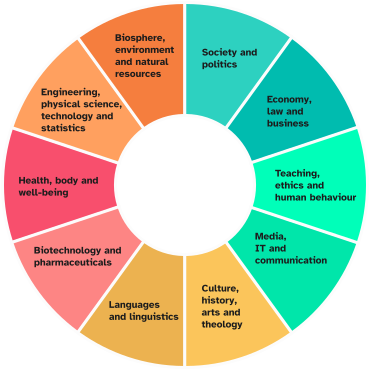
Students appreciate the University of Iceland for its strong academic reputation, modern campus facilities, close-knit community, and affordable tuition.Helpful content Study wheel
What interests you?
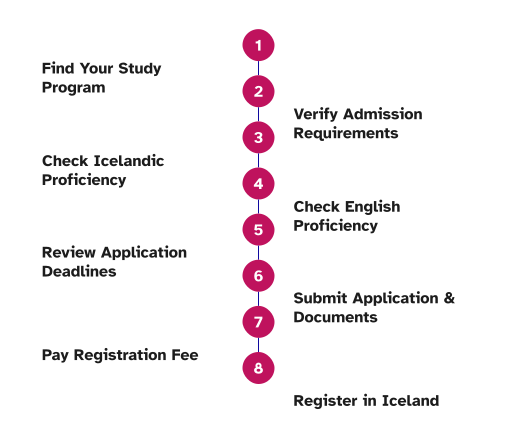
How to apply
Follow the path
Contact us If you still have questions, feel free to contact us.
Department of Physical TherapyWeekdays 10 am-12 pm and 1-3 pmGeneral ServiceThe Service Desk is a point of access for all services. You can drop in at the University Centre or use the WebChat at the bottom right of this page.
Share