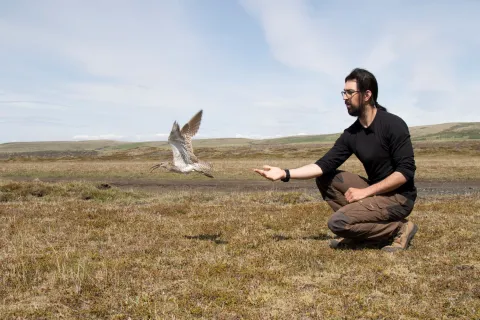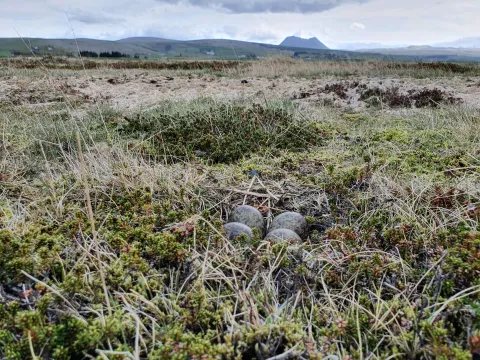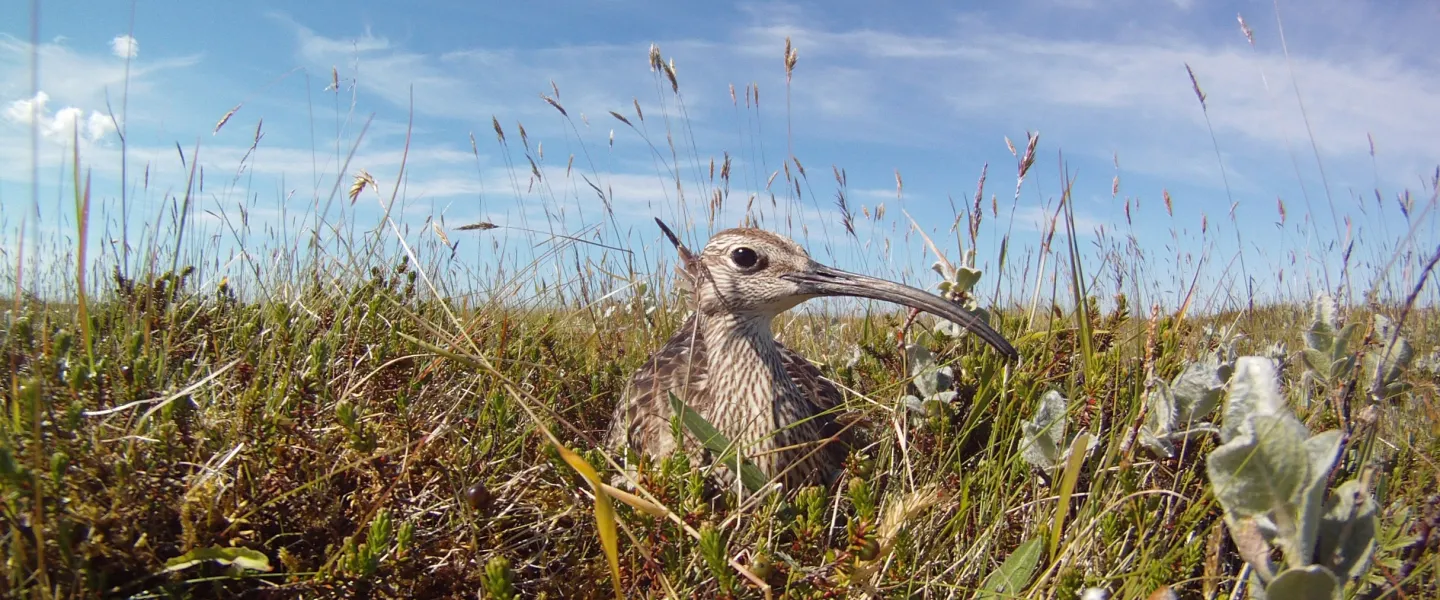
The Icelandic whimbrel migrates faster than any other whimbrel subspecies between its breeding and wintering grounds and is also the subspecies most threatened by human activities that reduce breeding habitat. These are among the findings of an extensive global study led by Camilo Carneiro, a postdoctoral researcher at the University of Iceland's South Iceland Research Centre, comparing the annual cycle and threats faced by different whimbrel subspecies.
The whimbrel is divided into two species and seven subspecies that live and migrate on all continents except Antarctica. All subspecies are long-distance migrants, breeding mainly in Arctic and boreal regions in North America, Europe, and Asia and wintering in areas closer to the equator.
Scientists have for some time used GPS equipment to track the migration of different bird species between their breeding and wintering grounds. Among those employing this technology are researchers at the University of Iceland's South Iceland Research Centre, who have conducted extensive research on various migratory bird species, including whimbrels. They have dedicated more than a decade studying this species, and as a result, the breeding grounds of the Icelandic whimbrel are among the best monitored of all whimbrel subspecies. Tómas Grétar Gunnarsson, research professor and director of the centre, and José Alves, guest researcher at the centre, have led much of the whimbrel research there and are also among the authors of the new study.
Research conducted at the centre has, for example, revealed that Icelandic whimbrels almost always fly south to their wintering grounds in a single, non-stop flight. On their return journey to Iceland, they either do the reverse or, more commonly, make a stopover of one to two weeks before completing the journey.
“Our research has also shown that the date of departure from the wintering grounds is an important predictor of migration behaviour, with whimbrels departing later being more likely to fly directly to Iceland, as if they are speeding to make up for lost time,” says Camilo, who completed his PhD under the supervision of José and Tómas.