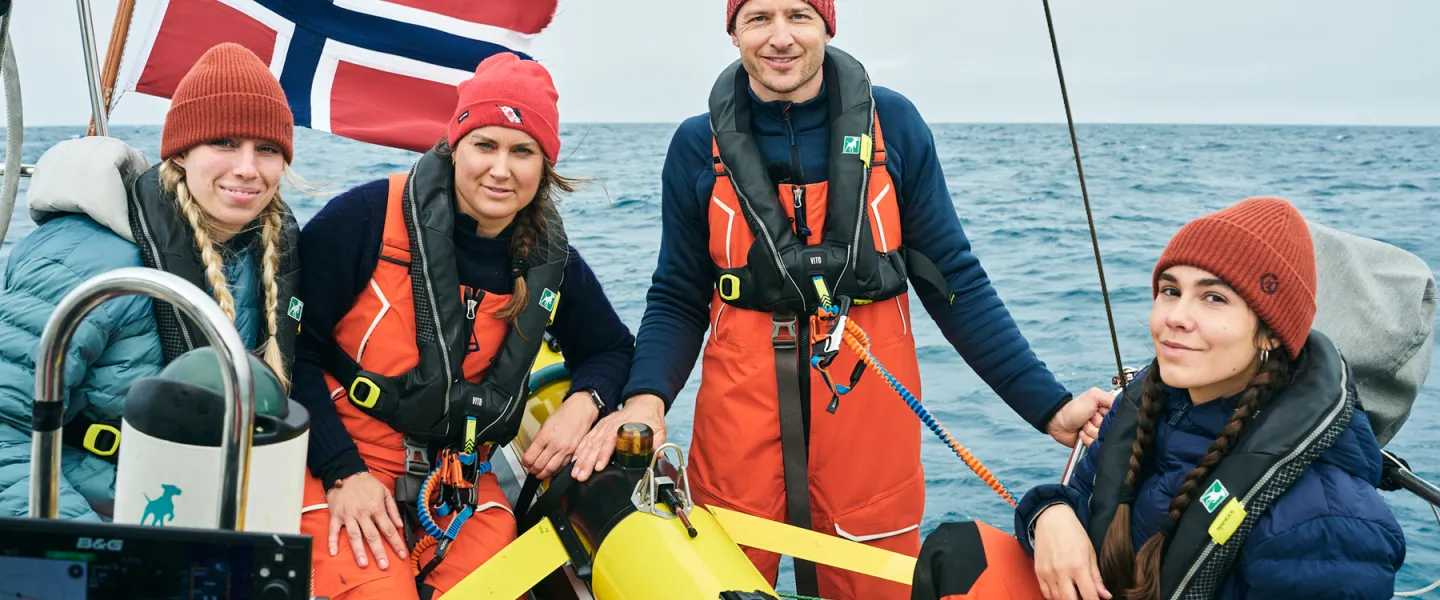
People on a boat with the Norwegian flag

Scientists from the University of Iceland are participating this summer in an international research project that uses the latest technology to observe right whales and other great whales in the waters between Iceland and Greenland. The objective of the project is to increase knowledge on whale populations in one of the most important feeding grounds in the North Atlantic and thus strengthen the protection for one of the rarest whale species in the world, the right whale.

The project was launched in July and ends in September. The area under scrutiny is the Irmiger Sea, off Cape Farewell on the southeast coast of Greenland, known to whalers as Cape Farewell Grounds.
""
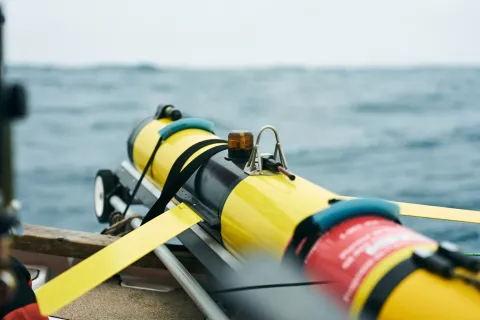
Autonomous underwater vehicle used for the research. PHOTO/Stefan Leitner

The research utilises an autonomous underwater vehicle (a Slocum glider), equipped with an underwater microphone and measurement tools that record temperature, salinity and sea depth. The vehicle listens constantly for sounds from great whales and can recognise right whales, sei whales, humpback whales and blue whales.

The North Atlantic right whale (Eubalaena glacialis) is in imminent danger of extinction. There are currently an estimated 380 individuals remaining, of whom only 70 are female and can breed. In the last fifteen years, the population has changed significantly, and it is therefore important to study its historical habitats and new areas where these animals might be found.

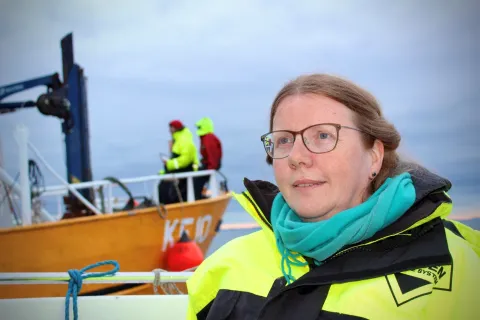
Marianne Helene Rasmussen
Marianne Helene Rasmussen. PHOTO/Jón Örn Guðbjartsson

“By mapping where the right whale and other great whales are found today, we get important information that can be used to protect the species and also provide important data for decisions on shipping routes, fishing and other marine operations,” says Marianne Helene Rasmussen, Professor at the University of Iceland Research Centre in Húsavík and one of the project’s managers.

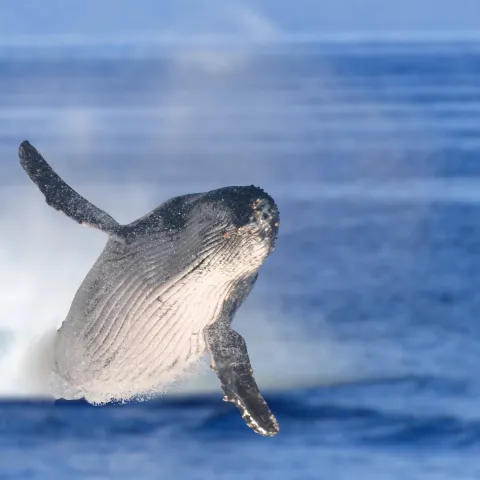
a whale jumping
The right whale used to be common in Iceland but was hunted to the extent that it all but disappeared from the North Atlantic. PHOTO/Shutterstock

One of the rarest great whales

The right whale is a large and powerful baleen whale that can be recognised by the absence of a dorsal fin and light scab patterns on its head, unique to each individual. The head is about one fourth of the body length, and in its mouth, there are baleen plates that can reach a length of three metres that sieve microscopic plankton from the sea. The whale used to be common in Iceland but was hunted to the extent that it all but disappeared from the North Atlantic. Now the right whale is one of the rarest great whales on Earth, and its slow reproductive rate makes it hard for the species to recover after centuries of whaling.

The project is an international collaboration between American, Canadian, Norwegian and Icelandic research institutions. From Iceland, the project is led by Marianne Helene Rasmussen from the University of Iceland Research Centre in Húsavík, Edda Elísabet Magnúsdóttir, Assistant Professor at the School of Education, and Joe Roman, Professor at the University of Vermont and the University of Iceland.

Besides the University of Iceland, scientists from NOAA Northeast Fisheries Science Centre, the Ocean Tracking Network at Dalhousie University, the University of New Brunswick, Oregon State University, and the Woods Hole Oceanographic Institution are involved in the project.

The project is funded by the International Fund for Animal Welfare (IFAW), the National Marine Sanctuary Foundation, the Canada Foundation for Innovation, and other sources.

Share

Tags
Did this help?

Why wasn't this information helpful

Limit to 250 characters.