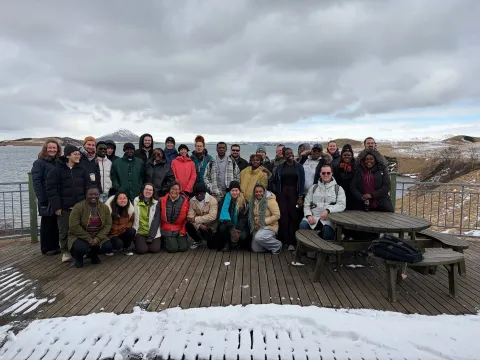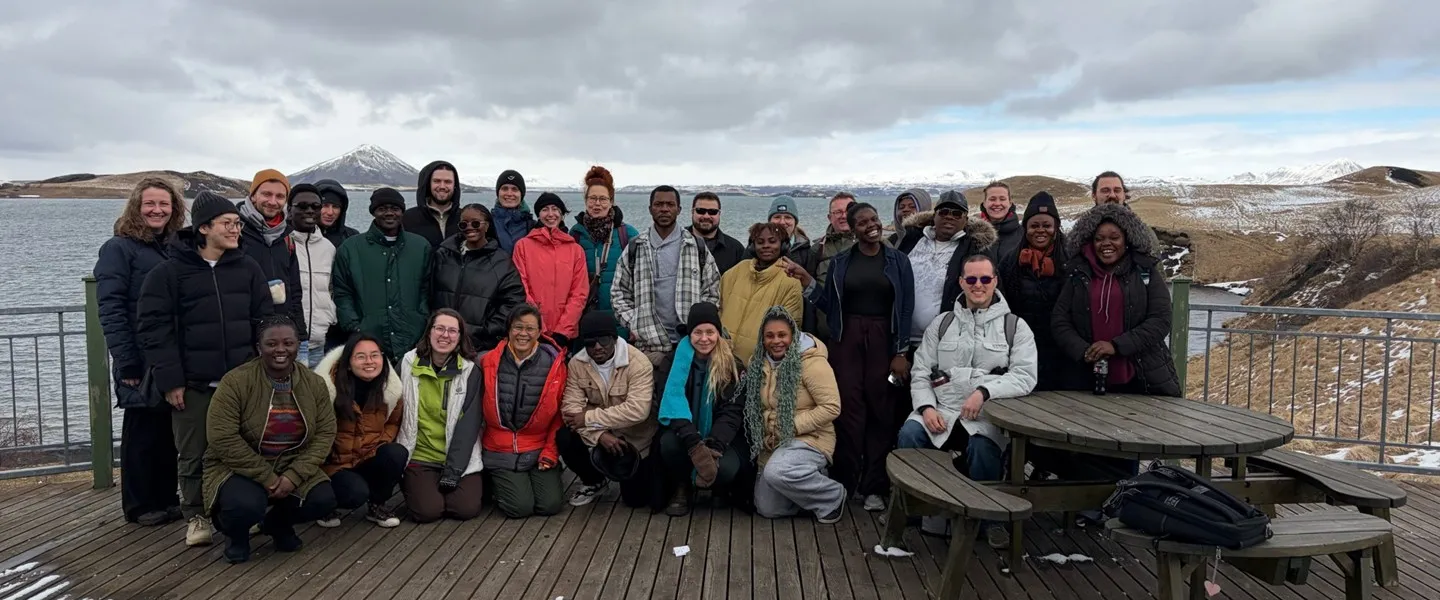
In a collaborative interdisciplinary effort between the University of Akureyri’s Polar Law Programme and the University of Iceland's Research Centre in Þingeyjarsveit, thirty international master students visited the Research Centre’s headquarters in Gígur, Þingeyjarsveit, on the 8th of May 2026. The overall purpose was to develop cross-academic collaboration between the two institutions at the faculty and programme level and to initiate interdisciplinary research in the long term.
“Since Polar Law is strongly multi- and interdisciplinary, these kind of common efforts in studying and learning from each other are becoming increasingly important,” says Antje Neumann, current director of the Polar Law Programme at the University of Akureyri.
The students were finishing their first year in polar law studies, and the trip was part of a course in Environmental Law and Biodiversity. They came from fifteen different nationalities comprising Canada, China, Estonia, France, Germany, Ghana, Japan, Kameroon, Kenya, Nigeria, Pakistan, Sweden, Switzerland, Uganda and the US. Besides law, their academic background is in various disciplines, such as natural and social sciences, environmental studies, international relations, philosophy, tourism, business and administration.
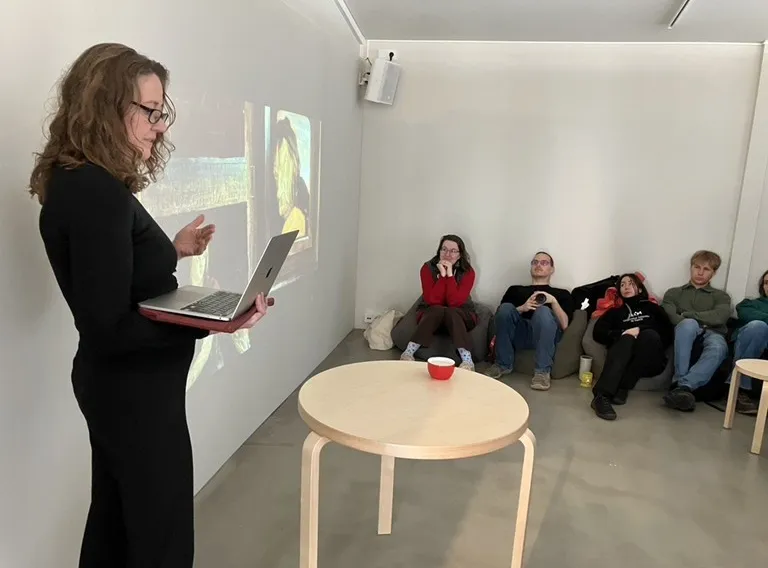
The aim of the visit was to learn about environmental humanities conducted at the research centre and the management of Vatnajökull National Park and the Mývatn lake and Laxá Nature Reserve which are also based at Gígur. The students listened to presentations about the legal framework and other particularities of managing protected areas in Iceland. They also learned about the interconnection between culture, art and nature in these areas. The group visited the newly established exhibition at Gígur and experienced the nature themselves as they braved the cold and snowy conditions in an educational walk through the area with a ranger from the Vatnajökull National Park. For most of the students, this was their first excursion to the area. They also visited one of Iceland’s most important archaeological sites, at Hofstaðir in Mývatnssveit. There they had a lively introduction of the history of the place, its discoveries, and its remaining mysteries given by the local archaeology enthusiast Unnsteinn Ingason, who has been following excavations at the site for decades.