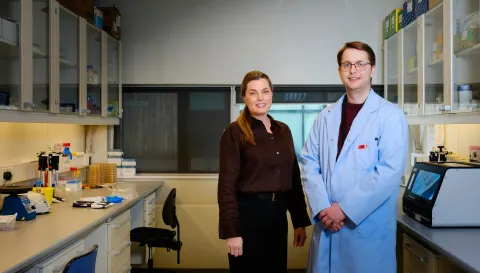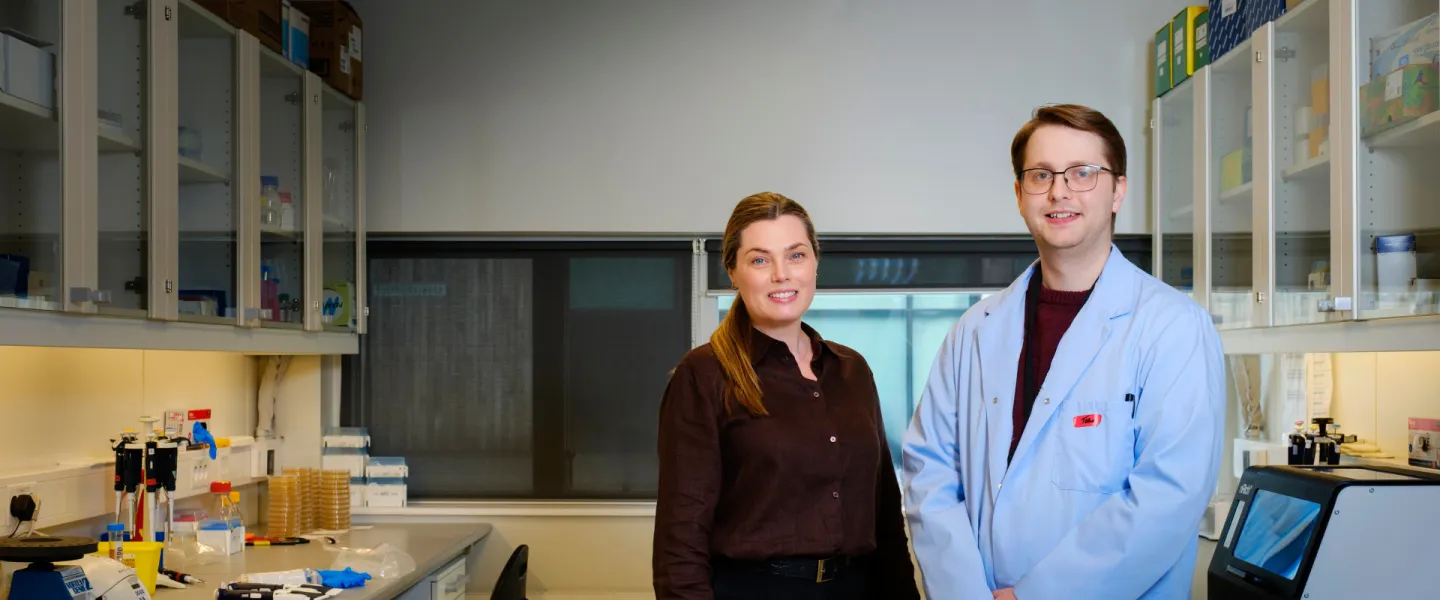
An interdisciplinary team of scientists at the University of Iceland, Landspítali University Hospital and the University of Oslo have conducted a study that improves our understanding of how cancer cells avoid being killed by immune cells. The research is specifically focused on melanoma cells and has demonstrated the processes they use to defend themselves against the body’s immune response. The team has published three papers and their findings could improve the methods used to evaluate which patients are likely to respond to certain cancer treatments. The research is part of the doctoral project of Teitur Sævarsson, a PhD student in medical life sciences at the UI Faculty of Medicine. His supervisor is Berglind Ósk Einarsdóttir, senior lecturer at the same Faculty.
“The immune system is the body’s first line of defence against malignant cancer cells forming tumours. It is likely that malignant cells form in all our bodies many times over the course of our lives, but thanks to our immune cells they generally don’t survive to form tumours. Still, one in three people will be diagnosed with cancer at some point in their lives and this led us to think about why our immune cells don’t successfully recognise and kill all cancer cells,” explains Berglind.
Cancer cells are able to adapt and change their phenotypes to survive in hostile environments, for example when attacked by immune cells. “This adaptability is due to the large number of mutations that have accumulated in the DNA of the cancer cells. Natural selection means that the cells that are most successful in evading the immune response are the ones that survive and form tumours. So we can conclude that in cases where cancer cells do form tumours, they have found a way to get past the immune response and that is the process we are studying,” says Teitur.
Watching the fight between cancer cells and T-cells live
The study looks at melanoma cell lines from both humans and mice, cultured in plastic dishes in an incubator. “We genetically modify these cells to induce phenotypic changes similar to those that occur in real tumours. Then we use specific methods from molecular biology to analyse changes in the cells’ gene and protein expression. Finally we culture these melanoma cells together with immune cells, specifically T-cells. These co-cultures are carried out in a special imaging device that takes pictures of the cells every few hours. This enables us to watch the immune cells killing cancer cells in real time, so we can analyse which phenotypic changes affect the T-cells’ ability to kill cancer cells,” says Berglind.