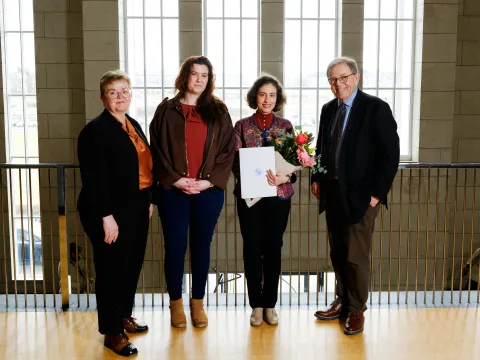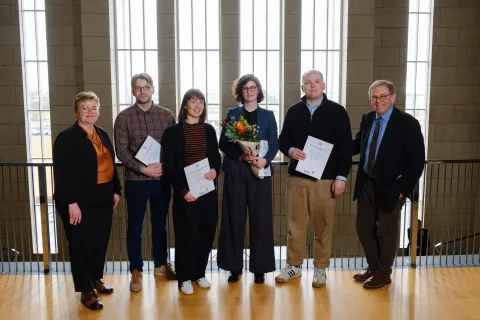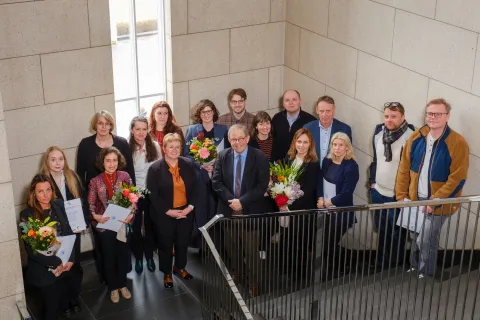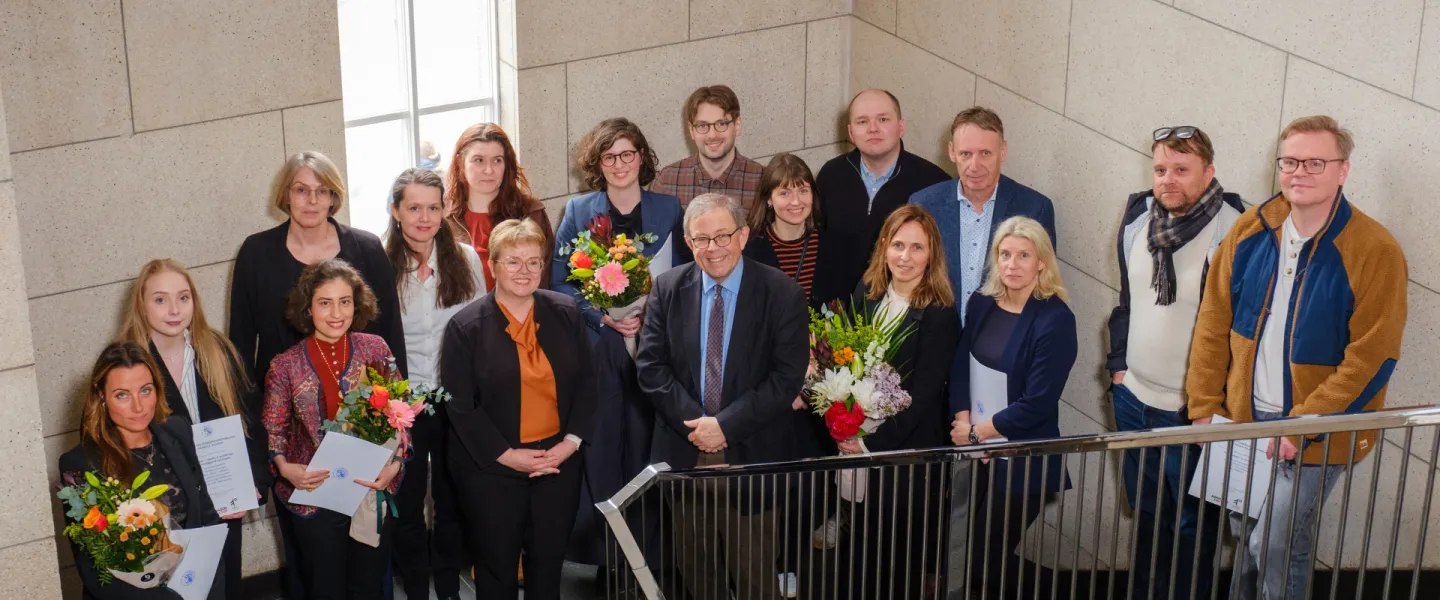
A project developing tissue scaffold from brown algae instead of animal-derived tissue, used to treat chronic wounds, burns, injuries, and other tissue damage, received the annual University of Iceland Science and Innovation Prize. The prize was awarded on Monday, 27 April, in the Main Building’s Ceremonial Hall. In addition to the main prize, prizes were awarded to three other projects that focus on a search and rescue system that can respond automatically to emergencies at sea, a clinical language technology solution that automatically analyses Icelandic language samples to detect linguistic impairments in people, and a predictive model that predicts the risk of malnutrition in hospitalised patients.
The University of Iceland’s Science and Innovation Prize has a long history and has gone by a few names over the years. The aim of the prize, now held for the 28th time, is to highlight practical ideas from students and staff at all UI schools which could deliver commercial and societal benefits.
Research and innovation have been thriving at the university recently, as reflected in the 20 submitted ideas for the award this year. The selection committee looked in particular for novelty and originality, implementation, societal impact, e.g., in terms of the UN Sustainable Development Goals, and projects that were consistent with the University's strategy and supported its mission.
As in previous years, prizes were awarded for the best ideas in four categories: Health, Technology and Progress, Society, and the Motivational Prize. An overall competition winner was also selected from among the prize recipients in the four categories.