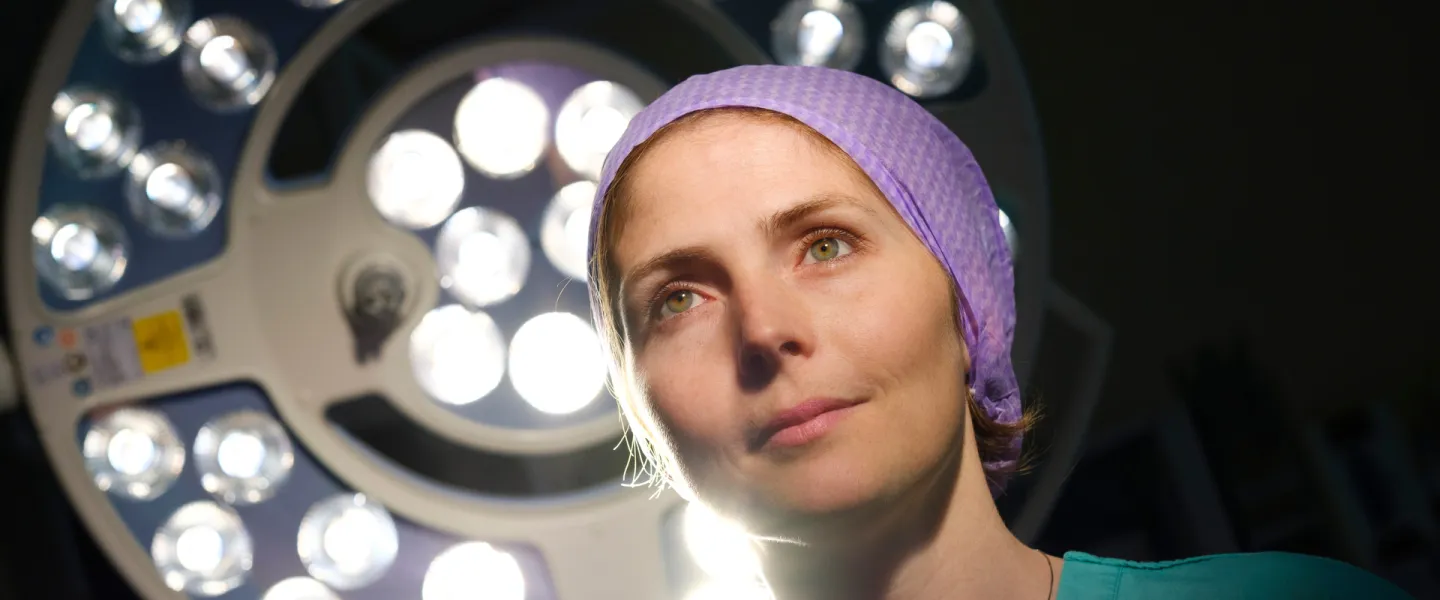
Inga Lára Ingvarsdóttir, PhD student in medicine at the University of Iceland.

ECMO treatment – extracorporeal membrane oxygenation – at Landspítali University Hospital has saved dozens of lives this century, but a high proportion of patients who survive this form of intensive care struggle with anxiety and depression, and even post-traumatic stress disorder in the long term. These are the findings of a study by Icelandic scientists recently published in the Journal of Cardiothoracic Surgery. The study is the first of its kind in Iceland, looking at both the long-term outcomes and health-related quality of life of patients treated with ECMO.

ECMO treatment has been available in Iceland for the past three decades. The machine provides life support by temporarily taking over the functions of the heart and lungs. ECMO is only provided as a life-saving measure, often for patients with end stage heart or respiratory failure when other options have been exhausted. It is an extremely complex and costly treatment that is not often offered at smaller hospitals. Because of how specialised the treatment is, international guidelines recommend that it should only be available at hospitals that handle at least six cases per year. However, these guidelines do not take the geographical location of the hospital into account.

Previous research has almost exclusively looked at the short-term success of ECMO, i.e. for hospitalised patients. The aim of this study was to learn about the long-term outcomes, measuring health-related quality of life and the rate of PTSD.

Survival rates

The study included a total of 93 patients who received ECMO at Landspítali University Hospital between 2002 and 2022, an average of 5.2 patients per year since 2006. 66 patients received venoarterial (VA) ECMO, which replaces heart and lung function, e.g. following heart surgery or after a cardiac arrest or coronary thrombosis when conventional drugs are not sufficient. The treatment time was around four days. 47% of patients could be weaned and 32% (21 patients) survived to discharge.

There were also 27 patients who received venovenous (VV) ECMO, which replaces lung function only. All except one had acute respiratory distress syndrome (ARDS). The treatment time was around 9 days and 64.7% of patients could be weaned, with 58.8% surviving to discharge.
Inga Lára Ingvarsdóttir, PhD student in medicine at the University of Iceland.

Worse outcomes for VA-ECMO patients 

24 out of 30 living patients completed questionnaires about health-related quality of life (EQ-5D-5 L, LEC and PLC-5 check lists). Results showed a significant difference between VV ECMO patients and VA ECMO patients. Most of the former group reported no impairment of quality of life while most of the latter group did experience problems. A quarter of patients met screening criteria for post-traumatic stress disorder and three out of four reported problems with anxiety or depression. At a median follow-up time of 6.5 years, 10 out of 24 patients had returned to work, eight from the VV ECMO group but just two from the VA ECMO group.

The findings show that ECMO treatment can be successfully provided in a low-volume unit such as the cardiothoracic centre at Landspítali University Hospital, especially VV ECMO. It is clear that most of the patients who required the treatment would not have survived transfer to a larger hospital abroad. The findings also show that there are opportunities for improvement, particularly regarding VA ECMO after cardiac arrest, which only one patient survived.

Although health-related quality of life seems comparable to other survivors of intensive care, it is clear that a high proportion of patients struggle with anxiety and depression and a quarter meet criteria for post-traumatic stress disorder. The percentage of VV ECMO patients who returned to work was high, but only two VA ECMO patients achieved the same, which highlights the importance of monitoring these patients closely. 

The first author of article is Inga Lára Ingvarsdóttir, anaesthetist and critical care doctor at Landspítali University Hospital. The article is part of her PhD project at UI. The study was overseen by Tómas Guðbjartsson, professor at the UI Faculty of Medicine and senior consultant at Landspítali University Hospital. The other authors are doctors Sólveig Helgadóttir, Líney Símonardóttir and Göran Dellgren.

You can read the article here.

Inga Lára Ingvarsdóttir, PhD student in medicine at the University of Iceland.
Inga Lára Ingvarsdóttir, anaesthetist and critical care doctor at Landspítali University Hospital. IMAGE / Kristinn Ingvarsson

Share

Tags
Did this help?

Why wasn't this information helpful

Limit to 250 characters.