A new paper published yesterday in the science journal Nature marks an important development of carbon capture and storage and shows clearly how fundamental research can evolve into solutions that have a significant impact on business, the environment and society.
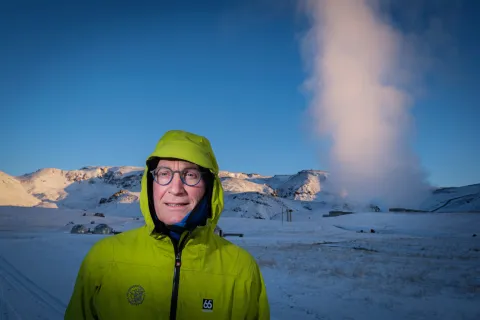
Among the authors of the article in Nature are Eric Oelkers, the lead author who has served for years as a Guest Professor at the Institute of Earth Sciences at the University of Iceland, and Sigurður Reynir Gíslason, Professor at the Institute of Earth Sciences. Both have been at the forefront of research on water rock interactions and storing carbon dioxide as minerals in reactive rocks.
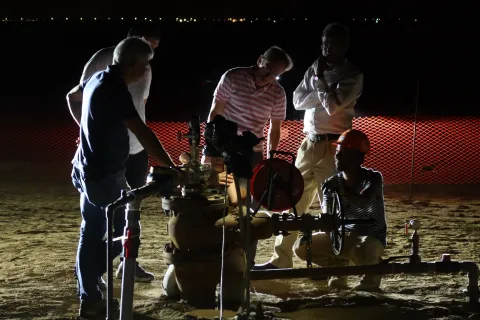
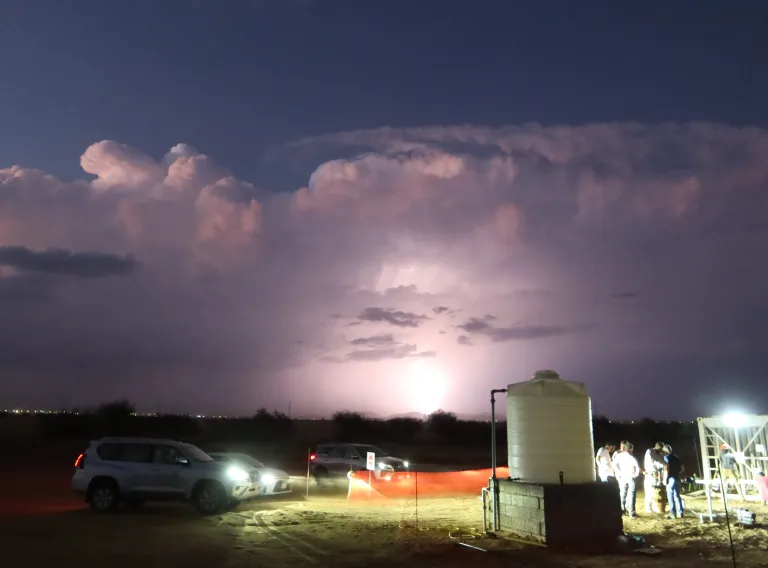
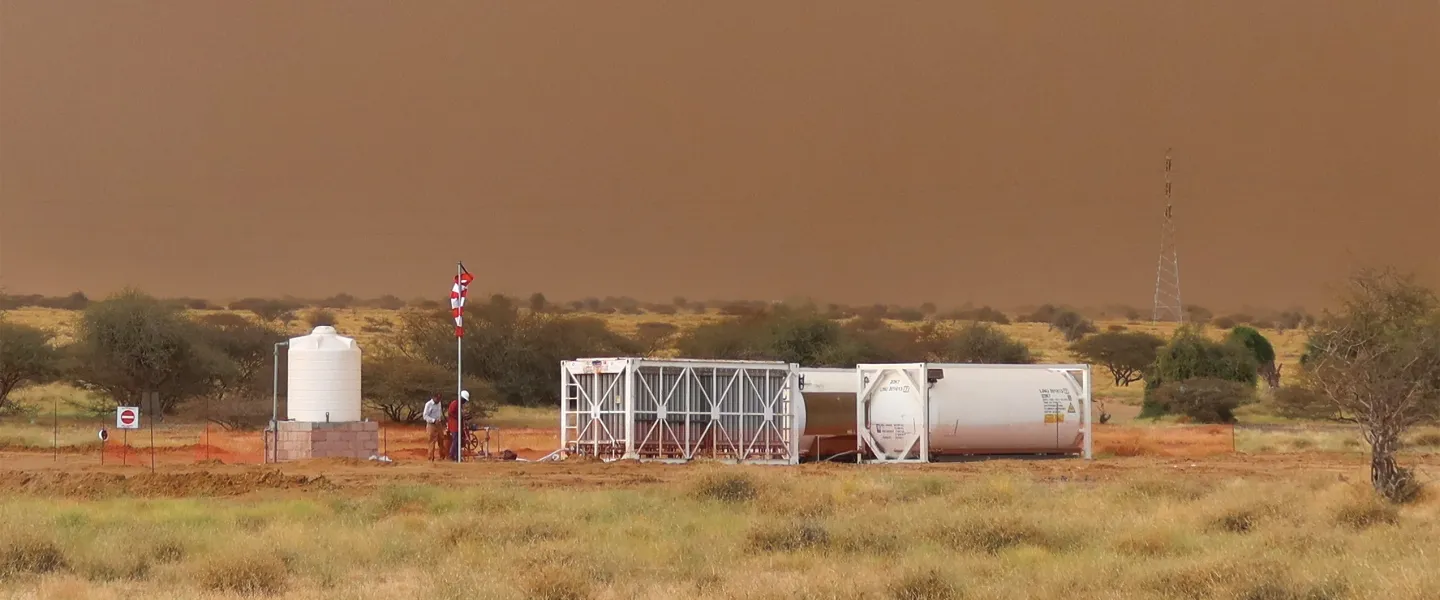
The article, entitled “CO₂ subsurface mineral storage by its co-injection with recirculating water” establishes that carbon dioxide can be permanently stored in the Earth’s subsurface without using external water in addition to that which is found in the injection area’s subsurface.
This project is based on the Carbfix method which was developed in Iceland. Carbon dioxide gas is dissolved in water and transformed into stable carbonate minerals. This method has already gained international attention for its speed and safety, where carbon dioxide becomes a solid part of the rock.
Another Icelander, Grímur Björnsson, geophysicist and geothermal reservoir engineer, is also part of the research group. He was one of the innovators behind the Carbfix project in its early days. Several authors are from two research groups from Saudi Arabia, where the new injection project took place. One is from King Abdullah University of Science and Technology (KAUST), and the other is from the company ARAMCO.