Mohammed Hamdallah at the Startup Supernova

“I strongly believe in ethical and impact-driven entrepreneurship and building solutions that benefit society and the environment, instead of only focusing on profit. I hope entrepreneurs will remain mindful of the value they contribute to the world and will strive to build ventures that create shared success and collective progress, not just individual gain,” says Mohammed Hamdallah, an entrepreneur and a PhD Researcher in Civil Engineering at the University of Iceland. In less than a year, he has established a startup in Iceland that develops an AI-driven design solution to help architects and engineers make smarter, faster, and more environmentally friendly decisions in construction design. At the same time, he is working on a doctoral project aimed at determining whether volcanic ash can serve as a partial replacement for cement in concrete.

Mohammed is from Qena in Egypt, and began his doctoral studies in May last year. It is safe to say that entrepreneurial thinking has been a part of his academic journey from the start. Even during his BSc studies in Construction and Building Engineering at the Arab Academy for Science, Technology, and Maritime Transport, he started working on his own ideas. “I developed a startup idea called MTS, which focused on promoting timber as a construction material in Egypt to address climate change and desertification. The vision was to encourage local timber production through afforestation initiatives, which Egypt has already begun investing in. By creating market demand for timber construction, we aimed to support afforestation economically while reducing the environmental impact of conventional construction materials.  MTS proposed three timber-based products: movable partitions, retractable caravans, and modular timber homes,” says Mohammed, who participated in several entrepreneurship competitions with the idea with considerable success.
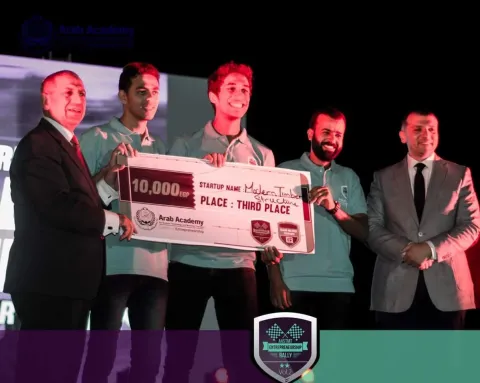
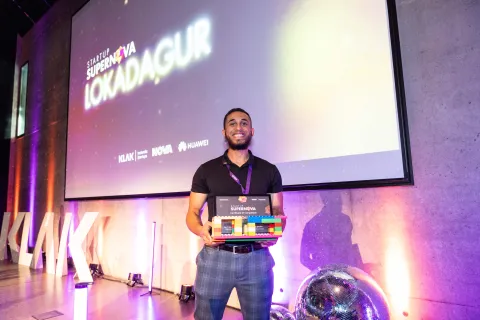
Mohammed Hamdallah and his colleagues receiving a prize.
Mohammed, in the middle, receiving an award for his idea behind MTS. IMAGE/From a private collection

A master’s thesis with clear potential as a startup

According to Mohammed, this experience was transformative, as it shaped his entrepreneurial mindset and his ambition to bridge engineering, sustainability, and innovation. Further opportunities to follow this path came during his master´s studies, but Mohammed completed a joint degree between the University of Porto, Technische Hochschule Mittelhessen, and the University of Cantabria in a programme called MBUILD. ”I had envisioned pursuing an academic BSc, MSc, and PhD since my early studies. This vision grew stronger after completing my MSc thesis, which had clear potential to evolve into a startup. This reinforced my view that academia offers a powerful synergy with innovation and entrepreneurship.”

But why did he choose Iceland for his doctoral studies? According to Mohammed, the choice was between two PhD opportunities at different universities, and after thoroughly analysing both options based on such criteria as passion, opportunity, earning, and purpose, and taking into account the research project itself, the entrepreneurship ecosystem, and flexibility, Iceland came out on top.

Volcanic ash as an ingredient in concrete?

Mohammed´s doctoral research project is definitely connected to innovation, but also to Icelandic natural forces. “The project is titled “Volcanic pozzolans from Iceland save the world,” and it focuses on utilising Icelandic volcanic ash as a partial replacement for cement in concrete. Since cement production is one of the largest sources of global carbon dioxide emissions, this research aims to develop more sustainable concrete solutions by reducing cement consumption while maintaining structural performance,” says Mohammed, who is working on the project under the supervision of Jukka Heinonen, professor in the Faculty of Civil and Environmental Engineering.

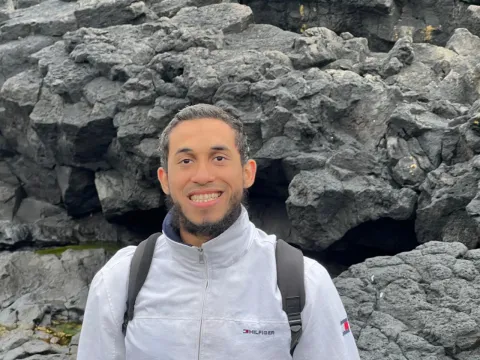
Mohammed Hamdallah, a doctoral student at the University of Iceland.
Mohammed is working on a doctoral project where volcanic ash plays a role. IMAGE/From a private collection

A solution based on environmental, economic, and performance-based considerations

Mohammed came here last spring and has already been highly involved in Iceland's innovation scene. In addition to his doctoral studies, he is currently working on a startup, which, as previously stated, originated directly from his MSc thesis.

The thesis was conducted in collaboration with the international engineering company SENER, where Mohammed was also involved in several R&D projects. “The company needed a fast and reliable way to evaluate the carbon footprint of its structural designs. At the same time, I noticed that design decisions were still driven primarily by cost, while sustainability was often assessed separately, making it difficult to implement in practice. This realisation shaped my view that practical sustainability cannot be achieved by focusing on environmental impact alone, but through a balanced integration of environmental, economic, and performance-based considerations,” says Mohammed.

This led him to develop a decision-support framework for design decision-making that goes beyond carbon assessment, integrating these factors into a unified, financially based sustainability score. “OptiDesign is an AI co-pilot for engineers and architects that optimises the early stages of building design. It automatically generates and evaluates multiple design alternatives, then ranks them based on sustainability performance, expressed as a normalised financial score. This allows designers to quickly identify the optimal design solution while balancing environmental and economic objectives,“ says Mohammed about the solution, which can evaluate thousands of design options based on cost, carbon footprint, and energy use.

Behind OptiDesign is a small but highly specialised team, according to Mohammed. He leads the venture as a sustainability specialist in the built environment, and works with Ashraf Abass, an experienced specialist in developing software solutions. They are supported by Ermir Pellumbi, a senior software specialist at Advania, who provides advisory support.

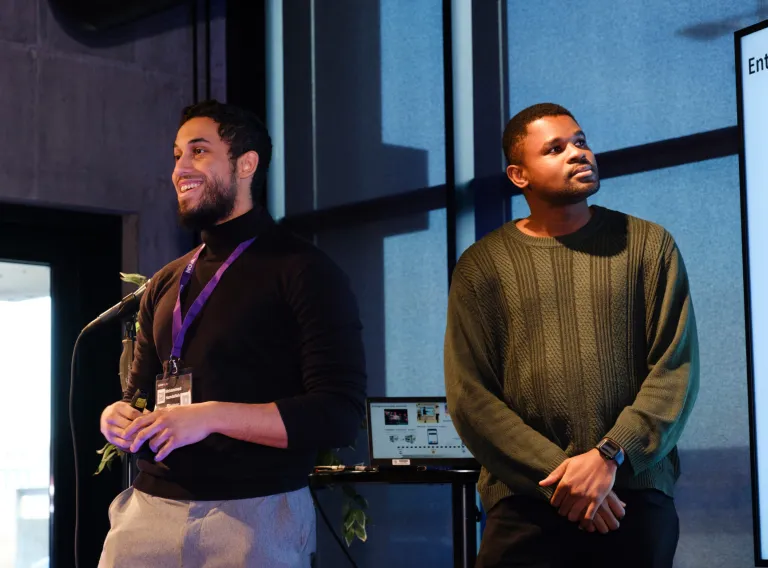
Mohammed Hamdallah at UI Career Days in 2026.

An entrepreneurial ecosystem which supports a fast transition of projects

Mohammed speaks highly of Iceland's entrepreneurship ecosystem and has used the various support options available to entrepreneurs at the University of Iceland’s Science Park. OptiDesign was one of 10 projects selected for Startup Supernova, an acceleration programme that supports entrepreneurs building business solutions for international markets. The startup was also awarded a Sproti grant from Rannís’ Technology Development Fund last autumn, and Mohammed and his colleagues are now part of the DAFNA programme, which supports startups that have received a Sproti grant.

Mohammed says he really likes the speed of transition within the entrepreneurial ecosystem, from research to founding a company and developing the first version of OptiDesign. “The main strengths of the ecosystem are the acceleration programs, such as Startup Supernova, and the grant funding opportunities, particularly from organisations such as RANNÍS, which provide critical support for early-stage deep-tech ventures. The infrastructure and facilities are also good, including Sprotamýri in the Science Park and access to high-performance computing resources, which have also been valuable,” says Mohammed.

Mohammed and his colleagues have officially established a company based on the idea behind OptiDesign, and he says their product’s roadmap consists of three phases. They have completed the first one, and the goal is to complete all phases by the end of 2027. „We currently have 9 Icelandic design companies in our loop of potential customers, 12 professionals, including engineers and architects, in our validation pilot program, and 4 interested investors in our work. We plan to expand these loops, especially for potential customers and professional validators, to align the product with market demand,” says Mohammed.

They are also working to expand the project’s research component by collaborating with academic partners and hiring researchers through funded projects. In addition, they are planning to present OptiDesign at international conferences in 2026. „Our long-term vision is to establish OptiDesign as a global design intelligence platform for sustainable construction,“ Mohammed explains.

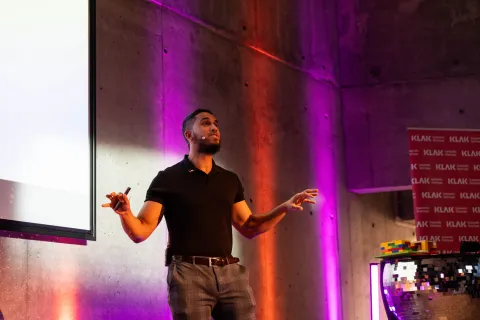
Mohammed Hamdallah the Startup Supernova.
„Our long-term vision is to establish OptiDesign as a global design intelligence platform for sustainable construction,“ Mohammed says. IMAGE/From a private collection

Innovation is the most powerful tool for creating real impact

Asked for advice for students at the university who want to become involved in innovation and entrepreneurship, Mohammed points out that innovation is the most powerful tool for creating real impact. “For example, if we want to fight climate change, one effective way is to transform the industries responsible for emissions by introducing better solutions.”

According to Mohammed, the most valuable outcome of entrepreneurship is not necessarily building a successful company; it is developing an entrepreneurial mindset. “Even though most startups fail, the experience teaches you how to identify problems, create solutions, and take initiative,” he concludes.

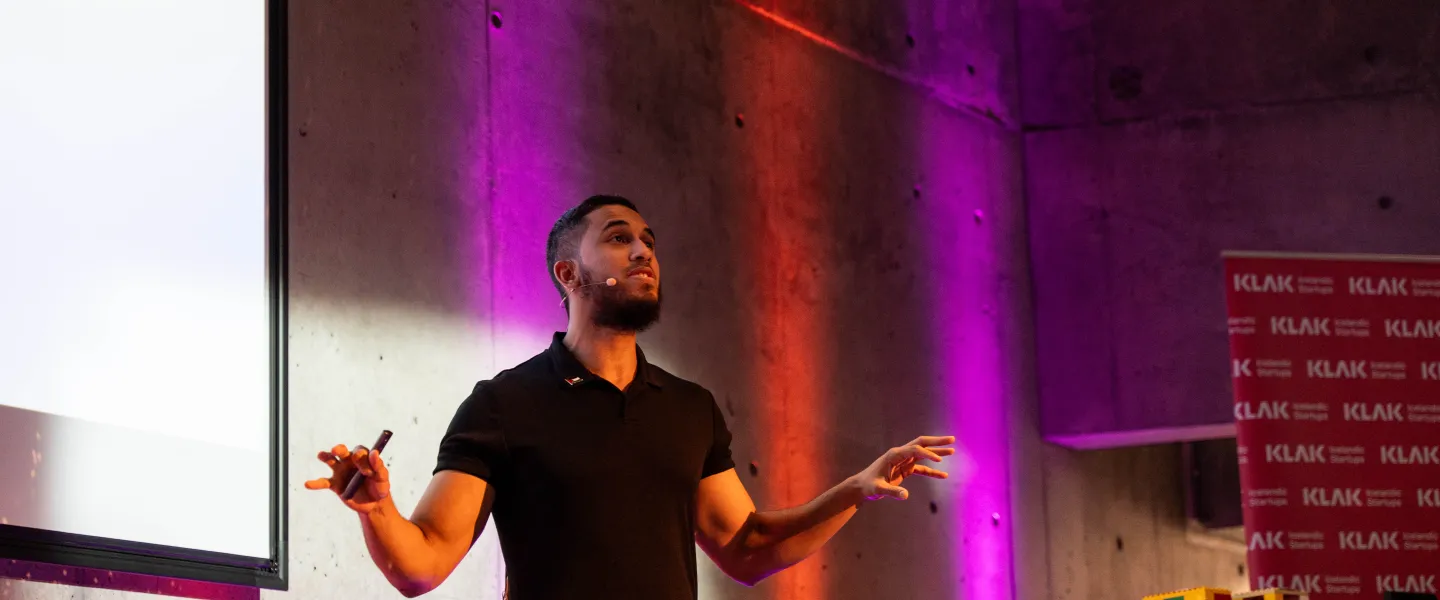
Mohammed Hamdallah at the Startup Supernova
Mohammed promoting OptiDesign at the Startup Supernova acceleration programme last year. IMAGE/From a private collection.

Share

Tags
Did this help?

Why wasn't this information helpful

Limit to 250 characters.