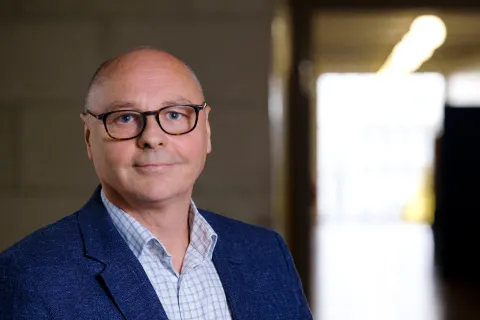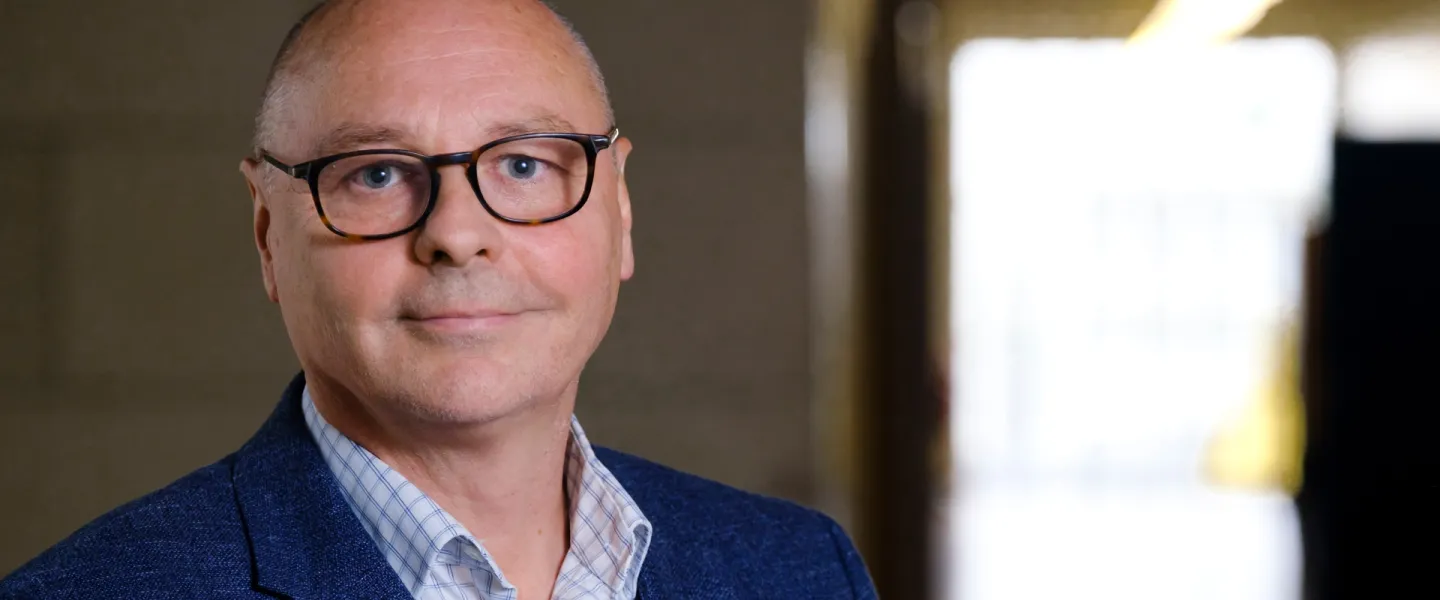
It has been announced that Gavin Lucas, professor of archaeology in the Faculty of Philosophy, History and Archaeology at the University of Iceland, will receive the Gad Rausing Prize this year for his outstanding contribution to research in the humanities. A press release from the Royal Swedish Academy of Letters, History and Antiquities (Kungliga vitterhetsakademien) states that Gavin receives the prize for his research on the theoretical foundations of archaeology. Quoting Lars Berglund, Chair of the selection committee, Gavin has been at the forefront of a systematic development of the scientific theoretical foundations of archaeology for two decades, and has developed new ideas on how we understand time and the connection between narratives and archaeological remains. Gavin’s theories are based on years of archaeological excavations in England, South Africa, Turkey, and, not least, in Iceland.
The prize will be presented at a ceremony on March 20. The Gad Rausing prize is awarded annually to a Nordic researcher in any field of the humanities. The prize was established in 2002 by Gad Rausing’s children in their father’s memory. Gad Rausing had a PhD in archaeology and was a patron of scholars in the fields of archaeology and cultural research.
Gavin Lucas completed a PhD at the University of Cambridge and has held a position at the University of Iceland since 2006, where his research has focused on contemporary archaeology and archaeological research. He has conducted many research projects in Iceland, including in Skálholt, Viðey and Seltjarnarnes, in addition to working on archaeological research around the world, e.g. in Italy and South Africa. Gavin has published numerous articles on archaeological theory and has authored several books, including Understanding the Archaeological Record (Cambridge University Press, 2012), Writing the Past (Routledge, 2019), Making Time (Routledge, 2021) og Archaeological Situations (Routledge, 2022). He received the Rivers Memorial Medal from the British Royal Anthropological Institute in 2022.
For further information, please visit the Royal Swedish Academy of Letters, History and Antiquities’ website.