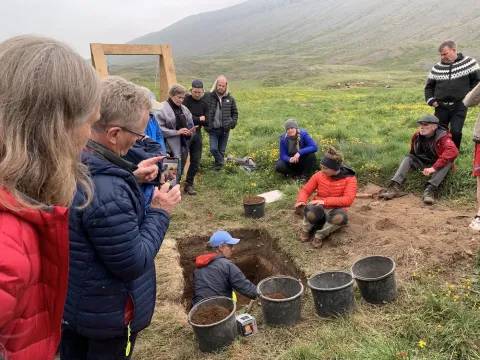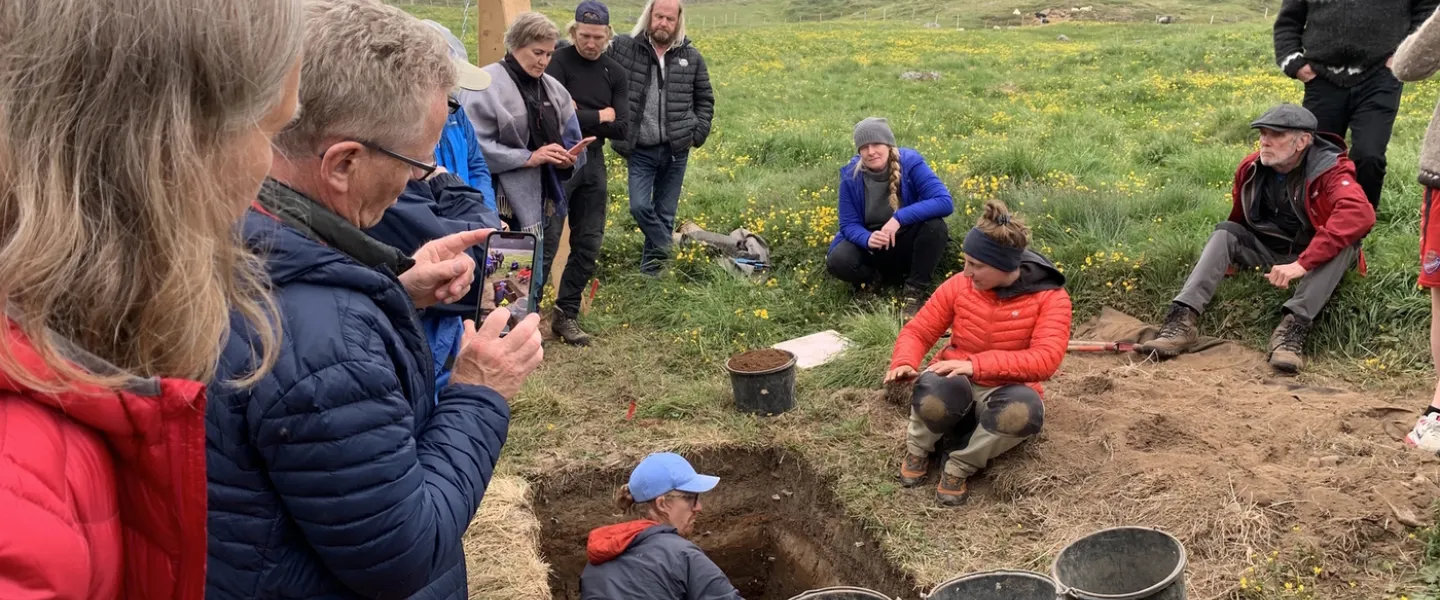
From an open day of the Two Valley project in Svarfaðardalur

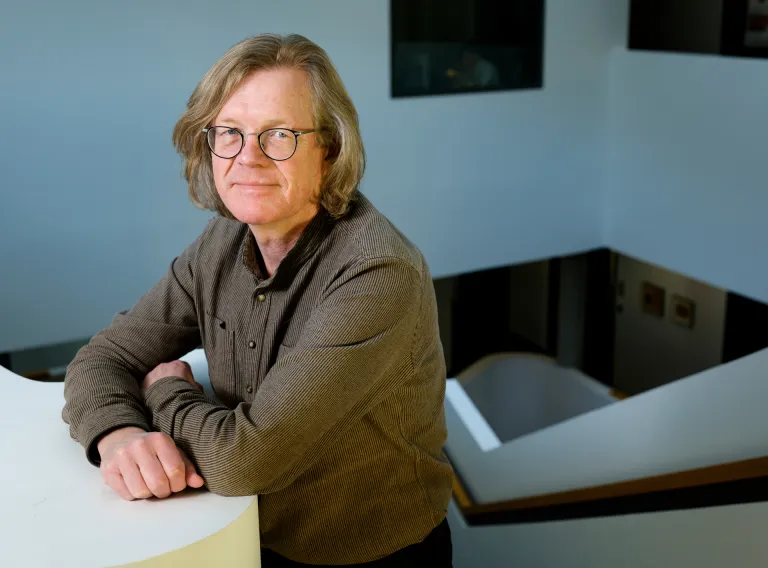
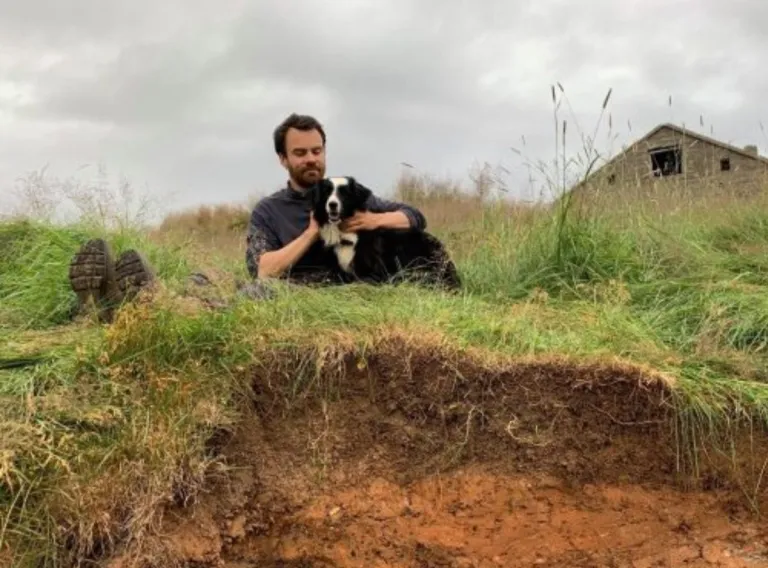
Árni Daníel Júlíusson, a research specialist at the Institute of History at the University of Iceland, and Gylfi Helgason, archaeologist at the Institute of Archaeology, Iceland, are now, along with a group of specialists, conducting an extensive study called The Icelandic Deserted Medieval Settlement Project, IceDes for short. Together, they’re conducting an interdisciplinary research project to shed light on how society and settlements developed in Iceland between 1100 and 1400.

“We’re always bickering, that’s how we reach conclusions between articles.”

Around five thousand registered homesteads

Árni and Gylfi work extensively with files from the Institute of Archaeology, Iceland, that contain information on 5,000 homesteads dating back to the beginning of settlement in Iceland. They’re focusing on the Middle Ages, the period of 1100 to 1400, with an emphasis on abandoned settlements, an umbrella term that covers deserted farms, i.e., dwellings, homefield boundaries, and outbuildings.

“Every municipality must register archaeological finds in their area, and those records often exist, but in some municipalities they remain unregistered,” Gylfi says. “The registration is made to prevent new structures from being built in areas where there are archaeological remains, or so that at least something will be done to protect them before construction begins.”

The project is a continuation of Tvídæla, or Two Valleys, which centred on the development of class distinction in Eyjafjörður from 900 to 1500. For the project, attention is focused on homesteads, including their size and wealth.
""

Using data from an archaeologist and former president of Iceland

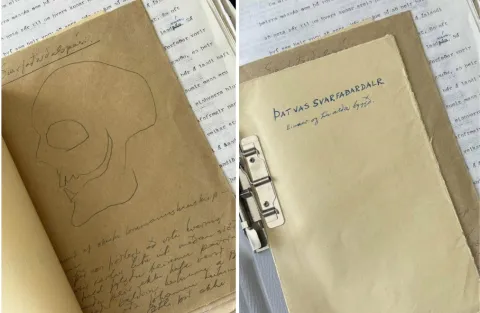
The idea for the project can be traced back to Kristján Eldjárn, the archaeologist and former president of Iceland, who was born on the farm Tjörn in Svarfaðardalur in Eyjafjörður. His son, the writer Þórarinn Eldjárn, gave Árni files containing a registry of abandoned farms in the valley, along with an introduction to a publication that Kristján meant to write.

“I’m always a bit nervous when handling these files,” Árni says and leafs through them carefully.

“Here’s a drawing by Kristján, and here’s his handwriting. I felt such a drive getting these files, but they’ll probably be handed to the National Museum of Iceland soon.”


Papers from Kristján Eldjárn.
Papers from Kristján Eldjárn, an archaeologist and former president of Iceland

Archaeology supports history

Historical and archaeological methods are used interchangeably for the study. Gylfi emphasises that digging isn’t necessarily meant to confirm points that historians contend. Rather, digging is about adding and explaining better speculations and sources.

“History can thus say that a farmer was rich, but archaeologists can then ask what that really meant during that period.”

Árni points out that based on data they’ve collected, it is possible to see when people started building in infertile and inconvenient places around 1100. There was a period of rapid expansion in Icelandic society, with corresponding development, like the pre-2008 boom leading up to the financial collapse. Then the plague swept over the country around 1400, and because so many people died of it, numerous farms were abandoned or fell into ruin. The people who survived moved to farms on more fertile lands. This information can be found in historical sources and confirmed through archaeological excavation.

Using tephra layers to estimate the timing of events

Tephra layers are often used to determine the exact date of events. Volcanic eruptions, such as the 1104 eruption of Mount Hekla, often leave traces across the country, including in Svarfaðardalur, which can still be analysed. Thus, you can determine with much precision when dwellings were abandoned.

Syðra-Tungukot is an abandoned farm in Svarfaðardalur, believed to have been built after 1104 but to have fallen into ruin before 1477. Árni has a special interest in that farm.

“I’m so fond of some of these farms. You can just picture it; cosy little huts on small plots of land where a young farmer is settling down with his wife and they’re having their first child there.”

""

The Pope in Rome was not amused

Historical records show that the Pope in Rome himself intervened in power disputes among chieftains, including disputes over landholding. There is a letter from 1197 in which the Pope seems to scold Icelandic chieftains for burning one another alive in their houses, but he must have heard of it from the bishop in Hólar.

Árni and Gylfi say that as a result of excavations, remains of human activity were found to the south of the farm Skriða in Hörgárdalur. Skriða was named Langahlíð before. Guðmundur dýri Þorvaldsson from Bakki in Öxnadalur and his men set fire to chieftain Önundur’s house in Langahlíð, burning him and a few of his men alive in 1197, and that must have been the reason for the Pope’s letter. It has been confirmed that the place was inhabited in 1390 when the house was buried by a landslide. It was unclear where the house was, but some clues have now been found about its location.

Moving east

Árni and Gylfi are planning to move out of Eyjafjörður next summer and go further east to Hjaltastaðarþinghá. According to Árni and Gylfi, their research is in large part governed by where they find ample archaeological records. They cover a specific part of the country each time; they nestle in, examine an area over the summer months, and then process the collected data during the winter months.
 

From an open day of the Two Valley project in Svarfaðardalur
From an open day of the Two Valleys project in Svarfaðardalur. Ramona Harrisson, a professor of archaeology in Bergen, Norway, and Jack, her assistant, show guests a trial trench in a midden at Kóngsstaðir in Skíðadalur.

The project has made dreams come true

Árni’s future dream is to reconstruct a replica house. It would be a replica of how medieval farmsteads may have looked. Today, there are a few of those in the country, but none in Svarfaðardalur. People in the area have been very positive towards the research, and who knows, maybe a replica house will rise on a beautiful plot of land in Eyjafjörður in the coming years?

“The snag is that there are so many good things about this, so many dreams have come true from this project.”

You can follow the project’s development at transice.hi.is. You can also read more about Two Valleys on its website.

Árni has also published a book on the subject, available at Bóksala Stúdenta.
 

Author: Freyja Þórisdóttir, journalism student. 

""
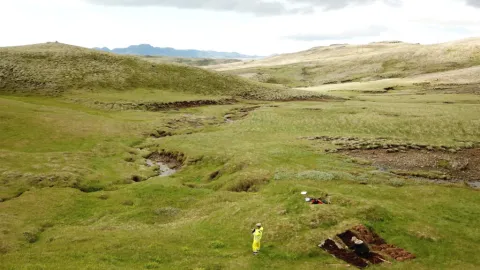
Archaeologists at work in Nessel. Image from the project's website.

Share

Tags
Did this help?

Why wasn't this information helpful

Limit to 250 characters.