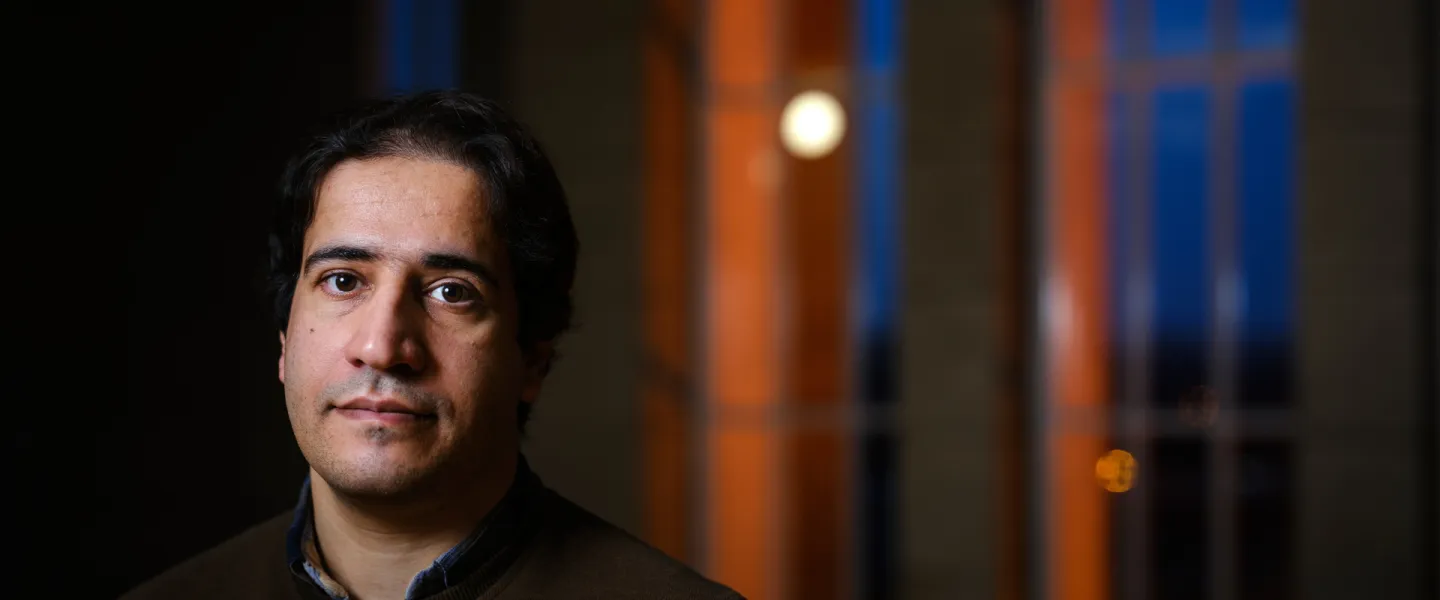
Farzad Alizadeh


„Right now, underwater wireless communication is inefficient. Signals fade, data rates are low, and everything eats up a lot of power. This makes it hard to operate things like large-scale environmental monitoring, offshore energy operations, or advanced underwater robots,“ says  Farzad Alizadeh, a doctoral student at the University of Iceland. He recently received the Best Full Paper Award at the 19th International Conference on Underwater Networks and Systems (WUWNet) in China, and his mission, along with his colleagues, is to make underwater wireless communication much more reliable and energy efficient.

Farzad is one of three doctoral students working within the international and multidisciplinary research project HAF: Underwater Robotics Sensor Networks with Multi-Mode Devices and Remote Power Charging Capabilities, which received a grant of Excellence from the Icelandic Research Fund in 2023. The project aims to develop technologies for challenging and harsh environments, such as underwater communications, in Arctic regions, and locations with limited accessibility.

A project very well aligned with Iceland´s focus on the ocean

Farzad points out that this work aligns particularly well with Iceland’s strong focus on the ocean and marine environment, renewable energy, fisheries, and high-tech innovation. „The methods and technologies developed in my PhD can feed directly into Icelandic marine technology, supporting smarter monitoring of marine resources, safer offshore operations, and new high-value technologies for local companies and research centres.“

According to Farzad, the focus in Iceland aligns perfectly with his own interests. „I was especially excited about the chance to work with Professor Ian F. Akyildiz, Professor Kristinn Andersen, Assistant Professor Sæmundur E. Þorsteinsson, and the rest of the underwater communication team at the University of Iceland,“ says Farzad, speaking about his doctoral committee. „With such strong supervisors, an ambitious project, and the opportunity to live in a unique place like Reykjavík, choosing to do my PhD here felt like a very natural decision,“ says Farzad.

Trying to “engineer the underwater channel”

Asked about what sparked his interest in the topic, Farzad points out that he has always been fascinated by how we manage to communicate and sense things in places that are hard to reach or, essentially, “invisible” to us, such as the deep ocean. “Underwater, radio waves don’t work well, so we rely on other methods such as sound to send information; however, that’s anything but simple. The physics of sound in water are tricky, which makes the engineering challenging, but also really exciting,” he says. 
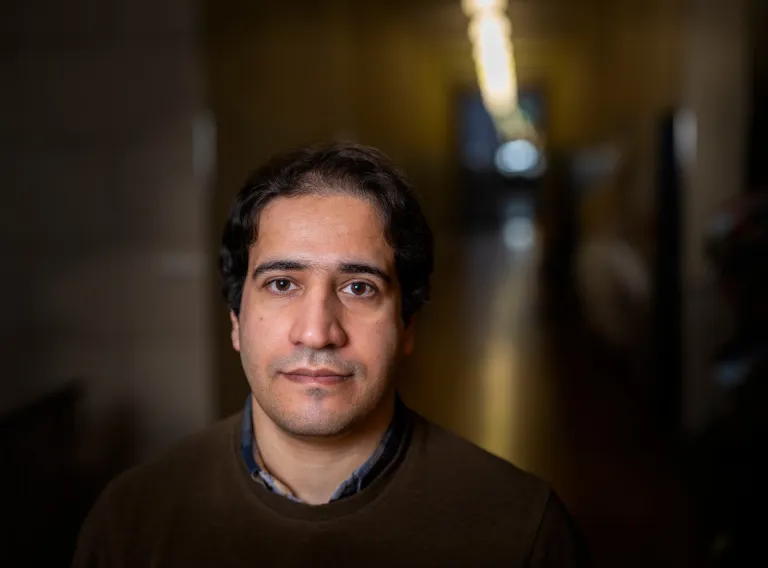
""

According to Farzad, his work does not simply involve improving transmitters and receivers; instead, he is trying to “engineer the underwater channel” itself. “In practice, that means using smart, reconfigurable underwater structures known as Reconfigurable Intelligent Surfaces (RIS) and advanced signal processing to actively control how waves travel between devices. By shaping the paths that the signals take, we can boost the useful signals, soften the impact of harsh underwater conditions, and communicate over longer distances with much less power and more bandwidth,” says Farzad about his doctoral project.

Farzad points out that so-called Tonpilz transducers are traditional building blocks for underwater communication. This equipment has significant drawbacks, including being bulky, expensive, and impractical for small or mid-sized autonomous underwater vehicles (AUVs). „So, we decided to take things a step further and ask: how can we push underwater communication beyond these limitations? That’s when we turned to metasurfaces, which are engineered structures that can shape sound waves in very flexible ways, and began exploring how they could offer a more compact, scalable, and energy-efficient alternative.”

Introducing a “smart wall” to shape underwater sound waves

In his doctoral project, Farzad combines theory, computer simulation, and experiments. „The final goal is to move from theory and simulation towards prototypes and laboratory tests in controlled water tanks, and eventually to tests in real ocean environments.“

As mentioned earlier, Farzad received the Best Full Paper Award at the 19th International Conference on Underwater Networks and Systems (WUWNet), the leading international venue in this field. The paper introduces a “smart wall”—a tunable active metasurface that can steer and reshape sound waves underwater. “It can adapt to the environment, strengthen useful signal paths, suppress echoes, and extend communication range while using much less power,” Farzad explains. 

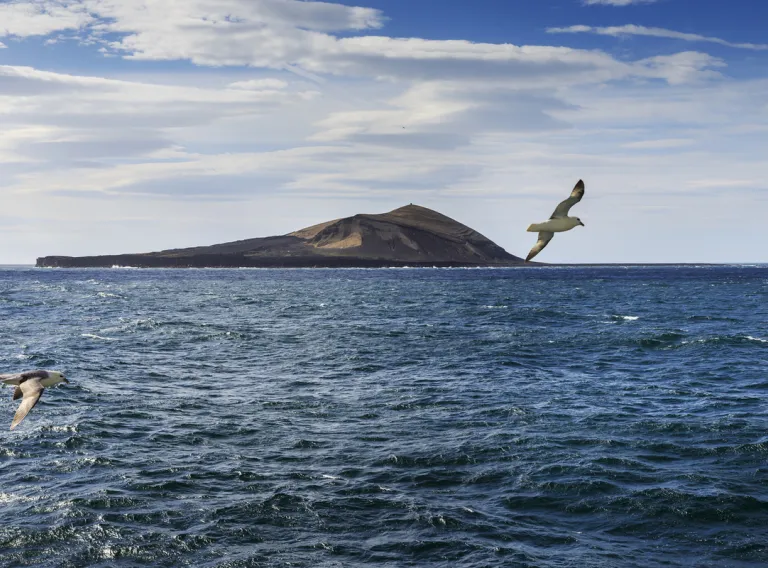
Surtsey. Seagulls flying above the sea

New technology to monitor the marine environment, pipelines and harsh ocean environments

Farzad expects his research to deliver a toolbox for intelligent underwater networks, including validated models, design methods, simulation tools and design guidelines that other researchers and engineers can use when they want to add an intelligent surface to an underwater link. “If we succeed, it should make things like real-time video from underwater robots, long-lived dense sensor networks, and coordinated fleets of AUVs much more feasible in practice.” 

The HAF project, therefore, not only opens a new research direction in underwater acoustics and communication but also makes way for more reliable and energy-efficient underwater communication. That influences various parts of our society and the environment.

Share

Tags
Did this help?

Why wasn't this information helpful

Limit to 250 characters.