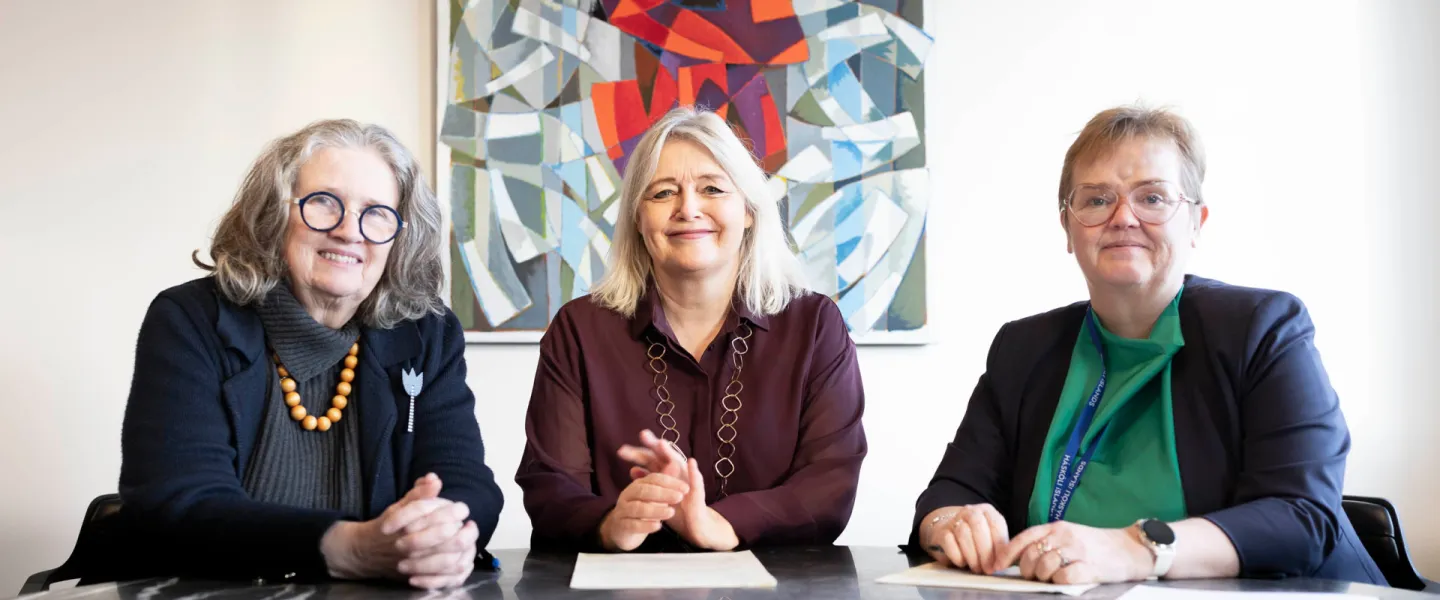
The University of Iceland and the Árni Magnússon Institute for Icelandic Studies have renewed their collaborative agreement, aimed at scaling up both research and education within the domain of Icelandic Studies. Silja Bára R. Ómarsdóttir, Rector of the University of Iceland, and Guðrún Nordal, Director of the Institute, signed the contract at the beginning of the month, which has a five-year term.
As a university institution, the Árni Magnússon Institute conducts research in Icelandic Studies and related fields, often in partnership with departments within the University of Iceland, such as the Faculty of Icelandic and Comparative Cultural Studies, as well as the Faculty of Sociology, Anthropology, and Folkloristics. Furthermore, the Institute's mandate is to disseminate knowledge in Icelandic Studies, through exhibitions of the Icelandic medieval manuscripts that the Institute preserves and researches.
The University of Iceland and the Árni Magnússon Institute have maintained a long-standing and mutually successful working relationship. The objective is to further integrate this cooperation now that the Institute's operations and the study programmes within The University of Iceland's Faculty of Icelandic and Comparative Cultural Studies have been relocated to the Edda building.
The new agreement intends to further enhance and improve the quality assurance of research in Icelandic Studies and related disciplines, while simultaneously prioritising their promotion, both nationally and internationally. The two institutions will also jointly support student education in the aforementioned fields of study, which include Icelandic culture, language, literature, history, and folkloristics, among others.
The agreement stipulates that the two parties will formulate shared priorities for research collaboration, which has previously been implemented via the annual Humanities Conference (Hugvísindaþing), the Centre for Digital Humanities and Arts (Miðstöð stafrænna hugvísinda), and the Centre for Medieval Studies (Miðaldastofa). Moreover, the agreement mandates that the Institute and the University of Iceland will grant reciprocal access to research materials and facilities for the staff and students of both institutions, as circumstances allow. Researchers at the Institute who have been awarded competency certification (or peer-reviewed accreditation) may also apply for research funding support from the University of Iceland's Research Fund, in the same way as the University’s faculty and specialists.
The two parties will continue to collaborate on the development of research programmes in Icelandic Studies. Their combined initiatives include offering a successful summer course related to Icelandic Studies and an international Master’s programme in Medieval Studies, which has proven highly popular. The agreement also provides for individual staff members of the Institute to deliver instruction at the University of Iceland within their area of specialisation. Representatives of the Institute may also propose ideas for seminars or other educational contributions to the key collaborating study programmes within the University of Iceland. Similarly, researchers within the Institute may supervise students' final projects at the University of Iceland.
The Director of the Árni Magnússon Institute for Icelandic Studies will retain the status of a professor without fixed teaching obligations in the Icelandic Studies programme at the University of Iceland. They will also have the right to attend and vote at departmental meetings for the Faculty of Icelandic and Comparative Cultural Studies, the School of Humanities Forums, and the University of Iceland University Council.
A dedicated Steering Committee is responsible for implementing the agreement. Its members include the Dean of the School of Humanities and the Director of the Institute, along with six other representatives from the two institutions.