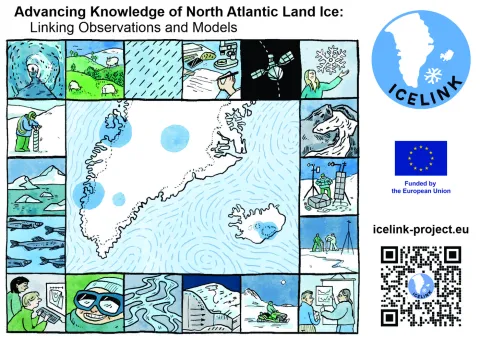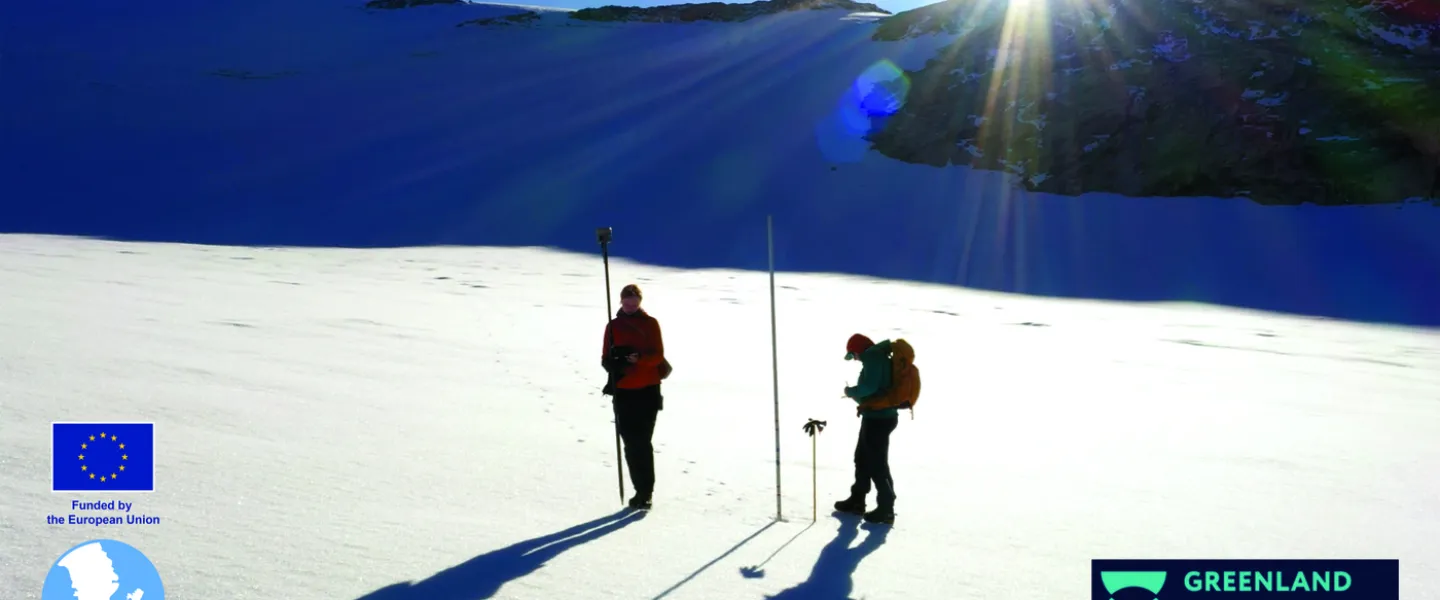
The artist collaboration Sermit | Jöklar, the Eu-funded research consortium ICELINK (with which UI is involved) and the people behind the Global Glacier Casualty List are joining forces for Greenland Science Week 2025 to spotlight the stark reality of the impacts of climate change on glaciers. The goal is to inspire discussion about the profound implications of melting glaciers for the region and how communities can adapt.
Held biennially in Nuuk, Greenland’s capital city, Greenland Science Week offers a busy programme of academic events, public outreach activities, workshops and seminars. Between 10 and 14 November, the festival aims to take visitors on an emotive journey under the shadow of a warming climate, through the disappearance of a single piece of ice to the ever-expanding list of disappearing glaciers world-wide and finally to ICELINK’s efforts to improve understanding of the future of Greenland’s and Iceland’s ice and how we might best adapt to these changes.
Scientists have long been warning about the consequences of burning fossil fuels and the resulting rapid mass loss of glaciers and ice caps globally due to climate change. Losses of ice in Greenland and Iceland mean more freshwater flowing into the North Atlantic, which could affect atmospheric and oceanic circulation in the future. So far, the consequences of these changes are not well understood, but local and regional authorities will need to prepare. This is where ICELINK comes in. The project’s goal is to improve our knowledge and understanding of how land ice in the North Atlantic region will respond to climate change and how these changes will impact local climate and ecosystems.
Working closely with local stakeholders, including utility companies, government services and industry, ICELINK will ensure that this new knowledge reaches those who can help prepare for what’s to come.
It’s a strong and urgent message, but it’s increasingly falling on deaf ears. When you hear an alarm so often it stops being alarming – it’s called alert fatigue – and the artist collaboration Sermit | Jöklar is helping to change this. Through a medley of visual and immersive art, they aim to help festival-goers build an emotional connection to the loss of our glaciers. Together with information about ICELINK’s research and goals, the exhibit will showcase a glacier ice sculpture melting both before your eyes and under a microscope.
There will also be a preview of the artists’ short film, Bye Bye Glacier; a cinematic kaleidoscope that captures the release of ancient minerals, sediments, and air bubbles as a glacier melts, undoing centuries of nature’s efforts, ultimately leading the viewer through the stages of grief as a glacier dies. Combined with an interactive portal to the ever-expanding Global Glacier Casualty List that tells stories of the many glaciers that have been officially declared deceased due to climate change, the hope is that it will be easier for people to relate to the work of projects like ICELINK that are aiming to help civilization navigate and adapt to climate-driven changes.
Collaborations between art and science are increasingly important, not only because they can help counteract this alert fatigue, but adding a creative, artistic element to a science project can enhance communication, foster discussion and innovation, and provide a much-needed fresh perspective. If done well, science-art collaborations at public exhibits can also increase the accessibility of science messages and provide meaning and relevance to more people.
The full programme for Greenland Science Week is available here.