- Do you want a graduate programme that you can complete without writing a Master's thesis?
- Do you have a solid foundation in the basic principles of finance or equivalent knowledge?
- Do you want a programme that can prepare you for a range of financial careers?
- Do you want to acquire in-depth knowledge of the fundamentals of finance?
- Would you like a programme taught in blocks so you can concentrate on just two courses at once?
The MFin in finance is an interdisciplinary programme offered jointly by the Faculty of Business School and the Faculty of Economics.
Graduates from the MFin programme in finance have acquired in-depth knowledge and competence in the fundamentals of finance and are equipped to take on all challenges in the world of finance, including business finance, banking and financial markets.
The programme is unique in that students are not required to write a Master's thesis; the focus is on training students to apply theories and methods to resolve practical challenges.
Programme structure
The programme is at least 90 ECTS and can be completed in one and a half years of full-time study.
Organisation of teaching
The programme is taught in 7-week blocks, which means there are two blocks per semester or four per year. This means that students take only two courses at once, allowing them to concentrate on a smaller range of topics and explore them in greater depth.
This programme is taught in Icelandic but most textbooks are in English.
Main objectives
The programme aims to prepare students for specialist careers in financial management for businesses and institutions.
Other
Completing the programme does not allow a student to apply for doctoral studies.
The MFin in finance is an interdisciplinary programme offered jointly by the Faculty of Business School and the Faculty of Economics.
Graduates from the MFin programme in finance have acquired in-depth knowledge and competence in the fundamentals of finance and are equipped to take on all challenges in the world of finance, including business finance, banking and financial markets.
The programme is unique in that students are not required to write a Master's thesis; the focus is on training students to apply theories and methods to resolve practical challenges.
Programme structure
The programme is at least 90 ECTS and can be completed in one and a half years of full-time study.
The programme is made up of:
- Mandatory courses, 60 ECTS
- Restricted electives, 30 ECTS
Organisation of teaching
The programme is taught in 7-week blocks, which means there are two blocks per semester or four per year. This means that students take only two courses at once, allowing them to concentrate on a smaller range of topics and explore them in greater depth.
This programme is taught in Icelandic but most textbooks are in English.
Main objectives
The programme aims to prepare students for specialist careers in financial management for businesses and institutions.
Other
Completing the programme does not allow a student to apply for doctoral studies.
BA or BS degree with GPA of 7.25 or higher is required, either in Finance, Economics, Engineering, Mathematics, Physics and related fields or in another field along with a certified examination in securities trading.
In the M.Fin. programme in Finance, students are expected from the outset to demonstrate independence in their work methods, organise their workload and time effectively, and meet the requirements and deadlines set by the programme.
The programme is an interdisciplinary master’s degree in finance and economics, aimed at enabling students to gain a deep understanding of, and proficiency in applying, theoretical concepts to the analysis of corporate finance and financial markets.
- CV
- Statement of purpose
- Reference 1, Name and email
- Reference 2, Name and email
- Certified copies of diplomas and transcripts
Further information on supporting documents can be found here
Programme structure
Check below to see how the programme is structured.
This programme does not offer specialisations.
- First year
- Fall
- Corporate Financing
- Mathematics for Finance I
- Corporate and investment valuation
- Mathematics for Finance II
- Spring 1
- Financial Models in Excel
- Fixed income analysis
- Practical case studies in finance
- Financial institutions and markets
Corporate Financing (VIÐ181F)
The objective of this course is for students to acquire the techniques that have proven effective in corporate financing and financial management, and to gain the insights that finance theory provides when addressing corporate financing challenges. Upon completing the course, students should have knowledge and understanding of the fundamental theories developed by scholars in finance, be familiar with leading professional practices internationally, and possess the technical ability to solve practical problems related to the assessment and selection of long‑ and short‑term financing options, dividend payments and dividend policy, equity issuance, bond issuance, and capital structure.
Mathematics for Finance I (HAG122F)
This course covers key topics in statistics and pricing in finance. Emphasis is placed on introducing students to the use of statistical and mathematical methods for analysing, pricing, and obtaining information about financial instruments. Real‑world examples are highlighted, giving students practical experience in solving problems similar to those they may encounter in their professional work in financial markets.
The statistics portion of the course includes an overview of continuous and discrete probability distributions, expected values, variance and standard deviation, confidence intervals, hypothesis testing, and linear regression analysis, both simple and multiple. The course also covers the fundamental concepts of the Capital Asset Pricing Model (CAPM).
The pricing portion of the course focuses on the valuation of forward contracts on equities, bonds, and foreign exchange, as well as interest rate swaps, the construction of yield curves, and the types and characteristics of options.
Corporate and investment valuation (VIÐ187F)
Valuation of companies and investment appraisal. The course covers the content of financial statements and their analysis in relation to business valuation and investment assessment. Various valuation methods suitable for different types of firms are reviewed, including operating companies, real estate companies, banks, insurance companies, and others.
Mathematics for Finance II (HAG122M)
The course will cover the main points of statistics and pricing in finance. Emphasis is placed on introducing students to the use of numerical and mathematical methods to analyze, price and obtain information about financial instruments. Emphasis is placed on real examples where students are trained to solve tasks similar to those they may have to solve in the workplace.
The statistical part of the course will cover time series analysis. There, models such as auto regressive models (e. Auto regressive model, AR model) and models with moving averages (e. Moving-average model, MA model) will be introduced to play. Also the combination of ARMA, ARIMA and SARIMA models. Finally, conditional variance models or ARCH and GARCH models will be reviewed.
In the pricing section, we will cover binomial trees, Wiener processes, Ito's auxiliary theorem, the Black-Scoles-Merton model and the pricing of stock and currency options.
Financial Models in Excel (VIÐ267F)
The purpose of the course is to teach students how to apply financial theory in practice. The course will present how to approach practical financial problems by using theory in the spreadsheet environment of Excel and in the coding environment of Visual Basic. Cornerstone financial models will be assessed using real world data. Upon completion of the course, students should be comfortable with pricing securities (bonds, stock, derivatives) and performing various types of risk evaluations. Topics covered include portfolio management and evaluation, assessment of equilibrium stock pricing models, option pricing (e.g. Monte Carlo), volatility predications (e.g. GARCH models), bond immunization strategies, term structure estimation, etc. In short, the purpose of the course is to help students learn how to use the tools necessary to use financial theory in a practical way which will benefit them in any finance or research related position.
Fixed income analysis (HAG230F)
In this course, the main types of fixed income instruments and interest rate derivatives will be covered. Emphasis will be placed on bonds in international context as well as the special features of the domestic bond market. Some of the issues covered will be: traditional, indexed-linked, callable and convertible bonds, credit and interest rate derivatives. Pricing, portfolio management and risk management for fixed income instruments and derivatives on those will also be covered.
Practical case studies in finance (VIÐ272F)
The aim of the course is to give students the opportunity to apply financial theories, methods, and tools acquired in previous courses to the solution of realistic and complex financial problems. Emphasis is placed on students’ ability to identify problems, develop an appropriate approach, and justify the choice of theoretical models and methods used in solving the assignments.
The projects are based on real or realistic scenarios, where there is rarely a single “correct” answer. Instead, the focus is on the quality of the analysis, assumptions, reasoning, and the professional presentation of results. Students work with diverse data and must deal with uncertainty, limitations, and multiple potential solutions.
Special emphasis is placed on students developing technical and analytical skills, such as structuring financial problems in a systematic manner, applying appropriate calculation rules and analytical techniques, and communicating results clearly, critically, and professionally in both written and oral form.
Financial institutions and markets (HAG231F)
The main emphasis of the course is on the role of financial markets and institutions. The interplay between central bank and commercial banks is explored in relation to interest rate - and exchange rate determination. Furthermore, the connection between monetary and fiscal policy is mapped out, regarding both price and financial stability. The second emphasis of the course is on the role of the banking system in the economy and on the function of main asset markets. The main structural characteristics of Icelandic financial markets are described in comparison to foreign markets.
- Second year
- Fall
- Not taught this semesterMicroeconomics of Competitiveness
- Fair Value Accounting
- Corporate law and Bankruptcy Proceedings and Administration
- Consolidated Financial Statements
- Business Ethics
- Spring 1
- Automation, finance tech. and auditing
- Resource Economics
- The economics of decision making
- International Taxation and Transfer-Pricing Methods
- Not taught this semesterNegotiation
- Year unspecified
- Internship
- Internship
Microeconomics of Competitiveness (VIÐ174M)
The course is based on a series of cases according to the course outline. Each case is carefully prepared for this course and a guideline for the reading material is also provided and the readings are related to the cases in question. It is the case discussion that drives the learning process. The order of the cases reflect the design of the course. The first case addresses competitiveness from an overall point of view. Then the focus is on how international and specialized the distribution of the value chain has become in the developed countries, which has resulted in clusters and cluster activities. The cases also address the role of government and the role of institutes of collaboration. The cases covered address different key issues in many industries and in many parts of the world, both in developed and developing countries. The key subject is how to understand the key aspects of National Economic Strategy. The class uses the case teaching method (the Harvard model) and it is the students that do analyse the cases through their discussion which is facilitated by the teacher. The students also prepare an extensive team project (a cluster analysis) and present their results in class. In addition the student write an individual report on the subject.
Fair Value Accounting (VIÐ304F)
The aim of the course is for students to acquire a better knowledge and understanding of the main issues concerning the analysis of annual accounts that are prepared in accordance with international accounting standards. Special emphasis will be placed on fair value accounting and preferably the entry of financial instruments, e.g. equities, bonds and derivatives. The rules on impairment of financial assets and other assets will also be reviewed. The main requirements of IFRS standards regarding the recognition of fixed assets at fair value will also be explained, e.g. property, plant and equipment and investment assets, as well as reference to the recalculation of lease obligations in the annual accounts.
Special emphasis on following accounting standards,
IFRS 9: Financial Instruments,
IFRS 7: Financial Instruments: Disclosures
IFRS 13: Fair value measurement
IFRS 16: Leases
IFRS 2: Share-based Payment
IAS 32: Financial Instruments: Presentation
IAS 40: Investment Property
Corporate law and Bankruptcy Proceedings and Administration (VIÐ121F)
The issues and legal sources of company law will be discussed. Different categories of companies and different points of view will be covered when resolving issues. The characteristics of the main types of financial companies will be explained. For discussion will be e.g. their financial basis and rules relating to the status of their counterparts, governance, the responsibilities of management and auditors and the legal status of members. The main topic of the course concerns private limited companies and public limited companies and the fundamentals that result from the limited liability of their owners, ie. on the protection of the funds of these companies. These are rules on the payment of share capital, registration of share capital, increase and decrease of share capital, own shares and rules on disbursement of capital with dividends or on dissolution of companies. The merger and division of public limited companies and the rules that must be met in that connection will be discussed. The moratorium, composition agreements and bankruptcy proceedings of companies will also be discussed. The role of auditors in connection with their work for companies will also be discussed.
Consolidated Financial Statements (VIÐ177F)
This course primarily deals with the preparation of consolidated financial statements and the accounting aspects of mergers and acquisitions. In addition, the following accounting issues are discussed: settlement of partnerships, inventories, trade receivables, goodwill, booking of agency transactions, booking of foreign transactions and conversion of annual accounts from one currency to another, bankruptcy settlement, and financial statements of municipalities and other non-profit entities.
Business Ethics (VIÐ191F)
The course addresses ethical challenges in business operations and how they manifest within companies and in their interactions with stakeholders, public authorities, and society at large. Emphasis is placed on students analysing, applying, evaluating, arguing for, and developing ethical solutions to real business issues based on theories in business ethics.
Teaching materials and assignments are based on realistic case studies, academic texts, and collaboration with industry partners. Students work systematically on identifying ethical dilemmas, applying theoretical approaches, evaluating different corporate responses, justifying their own ethical positions, and formulating practical proposals for processes and/or policies within complex societal contexts.
The course also emphasises that students develop a conscious and responsible attitude toward their own role as professionals and managers, in line with the University of Iceland’s values of social responsibility, equality, sustainability, and innovation, guided by sound ethical principles.
Students choose the course scope based on ECTS credits. The course may be taken as 7.5 ECTS, 6 ECTS (students from Philosophy), 3 ECTS, or 1.5 ECTS.
Please note that the course is taught in the first teaching block of the autumn semester, according to the block structure of the Master’s programme at the School of Business.
Automation, finance tech. and auditing (VIÐ293F)
The basic concepts and theories of automation and RPA (Robotic Process Automation Projects) is covered, and special attention is paid to how to identify processes / projects in operations, accounting and auditing that can be automated with RPA
Concepts and basics of financial technology (Fin. Tech.) is covered. Developments and market conditions presented as well as electronic currencies. Audit risk and financial technology is specifically covered.
Concepts related to Management Cost Accounting will be covered. The importance of management accounting has increased due to the increased complexity of cost allocation and the reliability of costs. Financial reports are based on cost accounting and are therefore the basis for reliable accounting, e.g. annual accounts. At the same time, management and control systems are examined in the context of management cost accounting.
Resource Economics (HAG031M)
The objective of this course is to introduce and explain the fundamental economic laws of natural resource utilization. Optimal utilisation patterns in static and dynamic contexts are examined. The reasons for frequently observed suboptimal utilization of natural resources are explained. On that basis, efficient management regimes for natural resource utilization are discussed. The economics of fisheries, energy and the environment are specifically examined. Standard methods of analytical economics are employed.
The economics of decision making (HAG015F)
The course has three linked facets (taught in English) and is suitable for students of economics, business, finance and political science.
- how the human species makes decisions
- how the decision-weaknesses of others can be strategically exploited
- insights and tools to improve students’ own decision-making now and in the future.
“Decisions have consequences”. In addition to providing an increased understanding of the science of economic and financial decision-making, this course improves the decision-making of each participant. The ability to make better decisions conveys a life-long, and broad, competitive advantage.
The instructor is an experimental game theorist and practicing strategist and strategic consultant. The course combines new trends in behavioral game theory and scientific strategy with application in business and geopolitics.
The class is interactive. Attendance of at least 80% is required as part of the assessment. The course is thus not suitable for students who cannot attend much due to a conflicting schedule.
Course topics include:
- Controlling emotion
- Neurological research on intuition, and leveraging one's own intuition.
- Influencing the decisions of others.
- Improving the decisions of groups and teams.
- Bubbles and crashes in the financial markets: understanding and possibly profiting from cycles.
- The science of risk versus how humans usually think about risk
- Mass movements, mobs, violence and crowd control, and strategizing in such situations.
- Politics behind the scenes.
- How the human brain really makes decisions (as opposed to the standard economic model of optimization).
- Identifying common errors and traps that prevent effective decisions.
- Analyzing one's own decision-making processes and pinpointing problem areas.
- Techniques to improve one’s judgments and decisions.
International Taxation and Transfer-Pricing Methods (VIÐ296F)
The course will cover in detail the rules of national law and international agreements on the conclusion and interpretation of double taxation agreements. The full tax liability of individuals and companies due to domicile in a state and its termination in one of the member states of a double taxation agreement will be discussed if a person or company is domiciled in two or more countries at the same time. Rules on limited tax liability and the division of taxing rights between member states of a double taxation treaty will be explained. Methods for mitigating double taxation under national law and a double taxation treaty will be discussed when income is taxed in two or more countries. It will be discussed how double taxation agreements can be used in tax planning with the establishment of companies in different countries. The impact of the EEC or ESS Convention on the tax laws of individual states, harmful tax competition and what has been done to eradicate it will be disclosed. Students will be trained in the use of double taxation agreements with problem solving solutions and realistic tasks. At the end of the course, it is assumed that the student has a good insight into the complex system that national law and double taxation agreements can spin on the financial measures of individuals and companies in modern society.
Transfer-Pricing Methods (TPM) often predict where profits and costs fall. TPM is an important factor in globalization, but TPM is governed by the rules of the home country and also the published rules of the OECD. TPM is closely related to tax law in the country in question. TPM rules are examined and their effects analyzed.
Negotiation (VIÐ284F)
This course covers negotiation, with a focus on negotiating skills, behavior in negotiation, and the legal aspects of contracts. The objective of the course is to prepare students, through active practice, to be effective in identifying opportunities for creating value, solving conflicts, conducting negotiations, designing deals and implementing them. The course is based on lectures, practical assignments and simulations. Lectures introduce theories and concepts in the field of negotiation, as well as the structure and common terms of contracts. Simulations allow students to participate in realistic negotiations that address common issues that arise in real-life business negotiations.
Internship (VIÐ0AFF, VIÐ0AFF)
The objective of the internship program is to develop students’ skills and expand their network of professional relationships and contacts. The internship for graduate students is 7.5 ECTS which equals 200 hours within a company or an organization. Students complete work assignments under the guidance of specialists in public and private organizations. The tasks shall be relevant to the specialization of the student’s studies. Each student can only complete one internship position. Further stipulations regarding the internship are laid out in each particular internship contract and contract addendum.
Internships are advertised separately at the beginning of each semester. Further information can be found here.
Please send inquiries to vidskipti@hi.is
Internship (VIÐ0AFF, VIÐ0AFF)
The objective of the internship program is to develop students’ skills and expand their network of professional relationships and contacts. The internship for graduate students is 7.5 ECTS. Students complete work assignments under the guidance of specialists in public and private organizations. The tasks shall be relevant to the specialization of the student’s studies.Each student can only complete one internship position.
Further stipulations regarding the internship are laid out in each particular internship contract and contract addendum.
Internships are advertised separately at the beginning of each semester. Further information can be found here.
Please send inquiries to vidskipti@hi.is
- Fall
- VIÐ181FCorporate FinancingMandatory (required) course7,5A mandatory (required) course for the programme7,5 ECTS, creditsCourse Description
The objective of this course is for students to acquire the techniques that have proven effective in corporate financing and financial management, and to gain the insights that finance theory provides when addressing corporate financing challenges. Upon completing the course, students should have knowledge and understanding of the fundamental theories developed by scholars in finance, be familiar with leading professional practices internationally, and possess the technical ability to solve practical problems related to the assessment and selection of long‑ and short‑term financing options, dividend payments and dividend policy, equity issuance, bond issuance, and capital structure.
Face-to-face learningPrerequisitesCourse taught in period IHAG122FMathematics for Finance IMandatory (required) course7,5A mandatory (required) course for the programme7,5 ECTS, creditsCourse DescriptionThis course covers key topics in statistics and pricing in finance. Emphasis is placed on introducing students to the use of statistical and mathematical methods for analysing, pricing, and obtaining information about financial instruments. Real‑world examples are highlighted, giving students practical experience in solving problems similar to those they may encounter in their professional work in financial markets.
The statistics portion of the course includes an overview of continuous and discrete probability distributions, expected values, variance and standard deviation, confidence intervals, hypothesis testing, and linear regression analysis, both simple and multiple. The course also covers the fundamental concepts of the Capital Asset Pricing Model (CAPM).
The pricing portion of the course focuses on the valuation of forward contracts on equities, bonds, and foreign exchange, as well as interest rate swaps, the construction of yield curves, and the types and characteristics of options.Face-to-face learningThe course is taught if the specified conditions are metPrerequisitesCourse taught in period IVIÐ187FCorporate and investment valuationMandatory (required) course7,5A mandatory (required) course for the programme7,5 ECTS, creditsCourse DescriptionValuation of companies and investment appraisal. The course covers the content of financial statements and their analysis in relation to business valuation and investment assessment. Various valuation methods suitable for different types of firms are reviewed, including operating companies, real estate companies, banks, insurance companies, and others.
Face-to-face learningPrerequisitesCourse taught in period IIHAG122MMathematics for Finance IIMandatory (required) course7,5A mandatory (required) course for the programme7,5 ECTS, creditsCourse DescriptionThe course will cover the main points of statistics and pricing in finance. Emphasis is placed on introducing students to the use of numerical and mathematical methods to analyze, price and obtain information about financial instruments. Emphasis is placed on real examples where students are trained to solve tasks similar to those they may have to solve in the workplace.
The statistical part of the course will cover time series analysis. There, models such as auto regressive models (e. Auto regressive model, AR model) and models with moving averages (e. Moving-average model, MA model) will be introduced to play. Also the combination of ARMA, ARIMA and SARIMA models. Finally, conditional variance models or ARCH and GARCH models will be reviewed.
In the pricing section, we will cover binomial trees, Wiener processes, Ito's auxiliary theorem, the Black-Scoles-Merton model and the pricing of stock and currency options.
Face-to-face learningPrerequisitesCourse taught in period II- Spring 2
VIÐ267FFinancial Models in ExcelMandatory (required) course7,5A mandatory (required) course for the programme7,5 ECTS, creditsCourse DescriptionThe purpose of the course is to teach students how to apply financial theory in practice. The course will present how to approach practical financial problems by using theory in the spreadsheet environment of Excel and in the coding environment of Visual Basic. Cornerstone financial models will be assessed using real world data. Upon completion of the course, students should be comfortable with pricing securities (bonds, stock, derivatives) and performing various types of risk evaluations. Topics covered include portfolio management and evaluation, assessment of equilibrium stock pricing models, option pricing (e.g. Monte Carlo), volatility predications (e.g. GARCH models), bond immunization strategies, term structure estimation, etc. In short, the purpose of the course is to help students learn how to use the tools necessary to use financial theory in a practical way which will benefit them in any finance or research related position.
Face-to-face learningPrerequisitesCourse taught in period IIIHAG230FFixed income analysisMandatory (required) course7,5A mandatory (required) course for the programme7,5 ECTS, creditsCourse DescriptionIn this course, the main types of fixed income instruments and interest rate derivatives will be covered. Emphasis will be placed on bonds in international context as well as the special features of the domestic bond market. Some of the issues covered will be: traditional, indexed-linked, callable and convertible bonds, credit and interest rate derivatives. Pricing, portfolio management and risk management for fixed income instruments and derivatives on those will also be covered.
Face-to-face learningThe course is taught if the specified conditions are metPrerequisitesCourse taught in period IIIVIÐ272FPractical case studies in financeMandatory (required) course7,5A mandatory (required) course for the programme7,5 ECTS, creditsCourse DescriptionThe aim of the course is to give students the opportunity to apply financial theories, methods, and tools acquired in previous courses to the solution of realistic and complex financial problems. Emphasis is placed on students’ ability to identify problems, develop an appropriate approach, and justify the choice of theoretical models and methods used in solving the assignments.
The projects are based on real or realistic scenarios, where there is rarely a single “correct” answer. Instead, the focus is on the quality of the analysis, assumptions, reasoning, and the professional presentation of results. Students work with diverse data and must deal with uncertainty, limitations, and multiple potential solutions.
Special emphasis is placed on students developing technical and analytical skills, such as structuring financial problems in a systematic manner, applying appropriate calculation rules and analytical techniques, and communicating results clearly, critically, and professionally in both written and oral form.
Face-to-face learningPrerequisitesCourse taught in period IVHAG231FFinancial institutions and marketsMandatory (required) course7,5A mandatory (required) course for the programme7,5 ECTS, creditsCourse DescriptionThe main emphasis of the course is on the role of financial markets and institutions. The interplay between central bank and commercial banks is explored in relation to interest rate - and exchange rate determination. Furthermore, the connection between monetary and fiscal policy is mapped out, regarding both price and financial stability. The second emphasis of the course is on the role of the banking system in the economy and on the function of main asset markets. The main structural characteristics of Icelandic financial markets are described in comparison to foreign markets.
Face-to-face learningThe course is taught if the specified conditions are metPrerequisitesCourse taught in period IV- Fall
- Not taught this semesterVIÐ174MMicroeconomics of CompetitivenessRestricted elective course7,5Restricted elective course, conditions apply7,5 ECTS, creditsCourse Description
The course is based on a series of cases according to the course outline. Each case is carefully prepared for this course and a guideline for the reading material is also provided and the readings are related to the cases in question. It is the case discussion that drives the learning process. The order of the cases reflect the design of the course. The first case addresses competitiveness from an overall point of view. Then the focus is on how international and specialized the distribution of the value chain has become in the developed countries, which has resulted in clusters and cluster activities. The cases also address the role of government and the role of institutes of collaboration. The cases covered address different key issues in many industries and in many parts of the world, both in developed and developing countries. The key subject is how to understand the key aspects of National Economic Strategy. The class uses the case teaching method (the Harvard model) and it is the students that do analyse the cases through their discussion which is facilitated by the teacher. The students also prepare an extensive team project (a cluster analysis) and present their results in class. In addition the student write an individual report on the subject.
Face-to-face learningPrerequisitesCourse taught in period IVIÐ304FFair Value AccountingRestricted elective course7,5Restricted elective course, conditions apply7,5 ECTS, creditsCourse DescriptionThe aim of the course is for students to acquire a better knowledge and understanding of the main issues concerning the analysis of annual accounts that are prepared in accordance with international accounting standards. Special emphasis will be placed on fair value accounting and preferably the entry of financial instruments, e.g. equities, bonds and derivatives. The rules on impairment of financial assets and other assets will also be reviewed. The main requirements of IFRS standards regarding the recognition of fixed assets at fair value will also be explained, e.g. property, plant and equipment and investment assets, as well as reference to the recalculation of lease obligations in the annual accounts.
Special emphasis on following accounting standards,
IFRS 9: Financial Instruments,
IFRS 7: Financial Instruments: Disclosures
IFRS 13: Fair value measurement
IFRS 16: Leases
IFRS 2: Share-based Payment
IAS 32: Financial Instruments: Presentation
IAS 40: Investment PropertyFace-to-face learningPrerequisitesCourse taught in period IIVIÐ121FCorporate law and Bankruptcy Proceedings and AdministrationRestricted elective course7,5Restricted elective course, conditions apply7,5 ECTS, creditsCourse DescriptionThe issues and legal sources of company law will be discussed. Different categories of companies and different points of view will be covered when resolving issues. The characteristics of the main types of financial companies will be explained. For discussion will be e.g. their financial basis and rules relating to the status of their counterparts, governance, the responsibilities of management and auditors and the legal status of members. The main topic of the course concerns private limited companies and public limited companies and the fundamentals that result from the limited liability of their owners, ie. on the protection of the funds of these companies. These are rules on the payment of share capital, registration of share capital, increase and decrease of share capital, own shares and rules on disbursement of capital with dividends or on dissolution of companies. The merger and division of public limited companies and the rules that must be met in that connection will be discussed. The moratorium, composition agreements and bankruptcy proceedings of companies will also be discussed. The role of auditors in connection with their work for companies will also be discussed.
Face-to-face learningPrerequisitesCourse taught in period IVIÐ177FConsolidated Financial StatementsRestricted elective course7,5Restricted elective course, conditions apply7,5 ECTS, creditsCourse DescriptionThis course primarily deals with the preparation of consolidated financial statements and the accounting aspects of mergers and acquisitions. In addition, the following accounting issues are discussed: settlement of partnerships, inventories, trade receivables, goodwill, booking of agency transactions, booking of foreign transactions and conversion of annual accounts from one currency to another, bankruptcy settlement, and financial statements of municipalities and other non-profit entities.
Face-to-face learningPrerequisitesCourse taught in period IIVIÐ191FBusiness EthicsRestricted elective course7,5Restricted elective course, conditions apply7,5 ECTS, creditsCourse DescriptionThe course addresses ethical challenges in business operations and how they manifest within companies and in their interactions with stakeholders, public authorities, and society at large. Emphasis is placed on students analysing, applying, evaluating, arguing for, and developing ethical solutions to real business issues based on theories in business ethics.
Teaching materials and assignments are based on realistic case studies, academic texts, and collaboration with industry partners. Students work systematically on identifying ethical dilemmas, applying theoretical approaches, evaluating different corporate responses, justifying their own ethical positions, and formulating practical proposals for processes and/or policies within complex societal contexts.
The course also emphasises that students develop a conscious and responsible attitude toward their own role as professionals and managers, in line with the University of Iceland’s values of social responsibility, equality, sustainability, and innovation, guided by sound ethical principles.
Students choose the course scope based on ECTS credits. The course may be taken as 7.5 ECTS, 6 ECTS (students from Philosophy), 3 ECTS, or 1.5 ECTS.
Please note that the course is taught in the first teaching block of the autumn semester, according to the block structure of the Master’s programme at the School of Business.Face-to-face learningPrerequisitesCourse taught in period I- Spring 2
VIÐ293FAutomation, finance tech. and auditingRestricted elective course7,5Restricted elective course, conditions apply7,5 ECTS, creditsCourse DescriptionThe basic concepts and theories of automation and RPA (Robotic Process Automation Projects) is covered, and special attention is paid to how to identify processes / projects in operations, accounting and auditing that can be automated with RPA
Concepts and basics of financial technology (Fin. Tech.) is covered. Developments and market conditions presented as well as electronic currencies. Audit risk and financial technology is specifically covered.
Concepts related to Management Cost Accounting will be covered. The importance of management accounting has increased due to the increased complexity of cost allocation and the reliability of costs. Financial reports are based on cost accounting and are therefore the basis for reliable accounting, e.g. annual accounts. At the same time, management and control systems are examined in the context of management cost accounting.
Face-to-face learningPrerequisitesCourse taught in period IVHAG031MResource EconomicsRestricted elective course6Restricted elective course, conditions apply6 ECTS, creditsCourse DescriptionThe objective of this course is to introduce and explain the fundamental economic laws of natural resource utilization. Optimal utilisation patterns in static and dynamic contexts are examined. The reasons for frequently observed suboptimal utilization of natural resources are explained. On that basis, efficient management regimes for natural resource utilization are discussed. The economics of fisheries, energy and the environment are specifically examined. Standard methods of analytical economics are employed.
Face-to-face learningPrerequisitesHAG015FThe economics of decision makingRestricted elective course7,5Restricted elective course, conditions apply7,5 ECTS, creditsCourse DescriptionThe course has three linked facets (taught in English) and is suitable for students of economics, business, finance and political science.
- how the human species makes decisions
- how the decision-weaknesses of others can be strategically exploited
- insights and tools to improve students’ own decision-making now and in the future.
“Decisions have consequences”. In addition to providing an increased understanding of the science of economic and financial decision-making, this course improves the decision-making of each participant. The ability to make better decisions conveys a life-long, and broad, competitive advantage.
The instructor is an experimental game theorist and practicing strategist and strategic consultant. The course combines new trends in behavioral game theory and scientific strategy with application in business and geopolitics.
The class is interactive. Attendance of at least 80% is required as part of the assessment. The course is thus not suitable for students who cannot attend much due to a conflicting schedule.
Course topics include:
- Controlling emotion
- Neurological research on intuition, and leveraging one's own intuition.
- Influencing the decisions of others.
- Improving the decisions of groups and teams.
- Bubbles and crashes in the financial markets: understanding and possibly profiting from cycles.
- The science of risk versus how humans usually think about risk
- Mass movements, mobs, violence and crowd control, and strategizing in such situations.
- Politics behind the scenes.
- How the human brain really makes decisions (as opposed to the standard economic model of optimization).
- Identifying common errors and traps that prevent effective decisions.
- Analyzing one's own decision-making processes and pinpointing problem areas.
- Techniques to improve one’s judgments and decisions.
Face-to-face learningThe course is taught if the specified conditions are metPrerequisitesCourse taught in period IVVIÐ296FInternational Taxation and Transfer-Pricing MethodsRestricted elective course7,5Restricted elective course, conditions apply7,5 ECTS, creditsCourse DescriptionThe course will cover in detail the rules of national law and international agreements on the conclusion and interpretation of double taxation agreements. The full tax liability of individuals and companies due to domicile in a state and its termination in one of the member states of a double taxation agreement will be discussed if a person or company is domiciled in two or more countries at the same time. Rules on limited tax liability and the division of taxing rights between member states of a double taxation treaty will be explained. Methods for mitigating double taxation under national law and a double taxation treaty will be discussed when income is taxed in two or more countries. It will be discussed how double taxation agreements can be used in tax planning with the establishment of companies in different countries. The impact of the EEC or ESS Convention on the tax laws of individual states, harmful tax competition and what has been done to eradicate it will be disclosed. Students will be trained in the use of double taxation agreements with problem solving solutions and realistic tasks. At the end of the course, it is assumed that the student has a good insight into the complex system that national law and double taxation agreements can spin on the financial measures of individuals and companies in modern society.
Transfer-Pricing Methods (TPM) often predict where profits and costs fall. TPM is an important factor in globalization, but TPM is governed by the rules of the home country and also the published rules of the OECD. TPM is closely related to tax law in the country in question. TPM rules are examined and their effects analyzed.
Face-to-face learningPrerequisitesCourse taught in period IIINot taught this semesterVIÐ284FNegotiationRestricted elective course7,5Restricted elective course, conditions apply7,5 ECTS, creditsCourse DescriptionThis course covers negotiation, with a focus on negotiating skills, behavior in negotiation, and the legal aspects of contracts. The objective of the course is to prepare students, through active practice, to be effective in identifying opportunities for creating value, solving conflicts, conducting negotiations, designing deals and implementing them. The course is based on lectures, practical assignments and simulations. Lectures introduce theories and concepts in the field of negotiation, as well as the structure and common terms of contracts. Simulations allow students to participate in realistic negotiations that address common issues that arise in real-life business negotiations.
Face-to-face learningPrerequisitesCourse taught in period III- Year unspecified
VIÐ0AFF, VIÐ0AFFInternshipRestricted elective course7,5/7,5Restricted elective course, conditions apply7,5/7,5 ECTS, creditsCourse DescriptionThe objective of the internship program is to develop students’ skills and expand their network of professional relationships and contacts. The internship for graduate students is 7.5 ECTS which equals 200 hours within a company or an organization. Students complete work assignments under the guidance of specialists in public and private organizations. The tasks shall be relevant to the specialization of the student’s studies. Each student can only complete one internship position. Further stipulations regarding the internship are laid out in each particular internship contract and contract addendum.
Internships are advertised separately at the beginning of each semester. Further information can be found here.
Please send inquiries to vidskipti@hi.is
The course is taught if the specified conditions are metPrerequisitesVIÐ0AFF, VIÐ0AFFInternshipRestricted elective course7,5/7,5Restricted elective course, conditions apply7,5/7,5 ECTS, creditsCourse DescriptionThe objective of the internship program is to develop students’ skills and expand their network of professional relationships and contacts. The internship for graduate students is 7.5 ECTS. Students complete work assignments under the guidance of specialists in public and private organizations. The tasks shall be relevant to the specialization of the student’s studies.Each student can only complete one internship position.
Further stipulations regarding the internship are laid out in each particular internship contract and contract addendum.
Internships are advertised separately at the beginning of each semester. Further information can be found here.Please send inquiries to vidskipti@hi.is
The course is taught if the specified conditions are metPrerequisitesSecond year- Fall
- VIÐ181FCorporate FinancingMandatory (required) course7,5A mandatory (required) course for the programme7,5 ECTS, creditsCourse Description
The objective of this course is for students to acquire the techniques that have proven effective in corporate financing and financial management, and to gain the insights that finance theory provides when addressing corporate financing challenges. Upon completing the course, students should have knowledge and understanding of the fundamental theories developed by scholars in finance, be familiar with leading professional practices internationally, and possess the technical ability to solve practical problems related to the assessment and selection of long‑ and short‑term financing options, dividend payments and dividend policy, equity issuance, bond issuance, and capital structure.
Face-to-face learningPrerequisitesCourse taught in period IHAG122FMathematics for Finance IMandatory (required) course7,5A mandatory (required) course for the programme7,5 ECTS, creditsCourse DescriptionThis course covers key topics in statistics and pricing in finance. Emphasis is placed on introducing students to the use of statistical and mathematical methods for analysing, pricing, and obtaining information about financial instruments. Real‑world examples are highlighted, giving students practical experience in solving problems similar to those they may encounter in their professional work in financial markets.
The statistics portion of the course includes an overview of continuous and discrete probability distributions, expected values, variance and standard deviation, confidence intervals, hypothesis testing, and linear regression analysis, both simple and multiple. The course also covers the fundamental concepts of the Capital Asset Pricing Model (CAPM).
The pricing portion of the course focuses on the valuation of forward contracts on equities, bonds, and foreign exchange, as well as interest rate swaps, the construction of yield curves, and the types and characteristics of options.Face-to-face learningThe course is taught if the specified conditions are metPrerequisitesCourse taught in period IVIÐ187FCorporate and investment valuationMandatory (required) course7,5A mandatory (required) course for the programme7,5 ECTS, creditsCourse DescriptionValuation of companies and investment appraisal. The course covers the content of financial statements and their analysis in relation to business valuation and investment assessment. Various valuation methods suitable for different types of firms are reviewed, including operating companies, real estate companies, banks, insurance companies, and others.
Face-to-face learningPrerequisitesCourse taught in period IIHAG122MMathematics for Finance IIMandatory (required) course7,5A mandatory (required) course for the programme7,5 ECTS, creditsCourse DescriptionThe course will cover the main points of statistics and pricing in finance. Emphasis is placed on introducing students to the use of numerical and mathematical methods to analyze, price and obtain information about financial instruments. Emphasis is placed on real examples where students are trained to solve tasks similar to those they may have to solve in the workplace.
The statistical part of the course will cover time series analysis. There, models such as auto regressive models (e. Auto regressive model, AR model) and models with moving averages (e. Moving-average model, MA model) will be introduced to play. Also the combination of ARMA, ARIMA and SARIMA models. Finally, conditional variance models or ARCH and GARCH models will be reviewed.
In the pricing section, we will cover binomial trees, Wiener processes, Ito's auxiliary theorem, the Black-Scoles-Merton model and the pricing of stock and currency options.
Face-to-face learningPrerequisitesCourse taught in period II- Spring 2
VIÐ267FFinancial Models in ExcelMandatory (required) course7,5A mandatory (required) course for the programme7,5 ECTS, creditsCourse DescriptionThe purpose of the course is to teach students how to apply financial theory in practice. The course will present how to approach practical financial problems by using theory in the spreadsheet environment of Excel and in the coding environment of Visual Basic. Cornerstone financial models will be assessed using real world data. Upon completion of the course, students should be comfortable with pricing securities (bonds, stock, derivatives) and performing various types of risk evaluations. Topics covered include portfolio management and evaluation, assessment of equilibrium stock pricing models, option pricing (e.g. Monte Carlo), volatility predications (e.g. GARCH models), bond immunization strategies, term structure estimation, etc. In short, the purpose of the course is to help students learn how to use the tools necessary to use financial theory in a practical way which will benefit them in any finance or research related position.
Face-to-face learningPrerequisitesCourse taught in period IIIHAG230FFixed income analysisMandatory (required) course7,5A mandatory (required) course for the programme7,5 ECTS, creditsCourse DescriptionIn this course, the main types of fixed income instruments and interest rate derivatives will be covered. Emphasis will be placed on bonds in international context as well as the special features of the domestic bond market. Some of the issues covered will be: traditional, indexed-linked, callable and convertible bonds, credit and interest rate derivatives. Pricing, portfolio management and risk management for fixed income instruments and derivatives on those will also be covered.
Face-to-face learningThe course is taught if the specified conditions are metPrerequisitesCourse taught in period IIIVIÐ272FPractical case studies in financeMandatory (required) course7,5A mandatory (required) course for the programme7,5 ECTS, creditsCourse DescriptionThe aim of the course is to give students the opportunity to apply financial theories, methods, and tools acquired in previous courses to the solution of realistic and complex financial problems. Emphasis is placed on students’ ability to identify problems, develop an appropriate approach, and justify the choice of theoretical models and methods used in solving the assignments.
The projects are based on real or realistic scenarios, where there is rarely a single “correct” answer. Instead, the focus is on the quality of the analysis, assumptions, reasoning, and the professional presentation of results. Students work with diverse data and must deal with uncertainty, limitations, and multiple potential solutions.
Special emphasis is placed on students developing technical and analytical skills, such as structuring financial problems in a systematic manner, applying appropriate calculation rules and analytical techniques, and communicating results clearly, critically, and professionally in both written and oral form.
Face-to-face learningPrerequisitesCourse taught in period IVHAG231FFinancial institutions and marketsMandatory (required) course7,5A mandatory (required) course for the programme7,5 ECTS, creditsCourse DescriptionThe main emphasis of the course is on the role of financial markets and institutions. The interplay between central bank and commercial banks is explored in relation to interest rate - and exchange rate determination. Furthermore, the connection between monetary and fiscal policy is mapped out, regarding both price and financial stability. The second emphasis of the course is on the role of the banking system in the economy and on the function of main asset markets. The main structural characteristics of Icelandic financial markets are described in comparison to foreign markets.
Face-to-face learningThe course is taught if the specified conditions are metPrerequisitesCourse taught in period IV- Fall
- Not taught this semesterVIÐ174MMicroeconomics of CompetitivenessRestricted elective course7,5Restricted elective course, conditions apply7,5 ECTS, creditsCourse Description
The course is based on a series of cases according to the course outline. Each case is carefully prepared for this course and a guideline for the reading material is also provided and the readings are related to the cases in question. It is the case discussion that drives the learning process. The order of the cases reflect the design of the course. The first case addresses competitiveness from an overall point of view. Then the focus is on how international and specialized the distribution of the value chain has become in the developed countries, which has resulted in clusters and cluster activities. The cases also address the role of government and the role of institutes of collaboration. The cases covered address different key issues in many industries and in many parts of the world, both in developed and developing countries. The key subject is how to understand the key aspects of National Economic Strategy. The class uses the case teaching method (the Harvard model) and it is the students that do analyse the cases through their discussion which is facilitated by the teacher. The students also prepare an extensive team project (a cluster analysis) and present their results in class. In addition the student write an individual report on the subject.
Face-to-face learningPrerequisitesCourse taught in period IVIÐ304FFair Value AccountingRestricted elective course7,5Restricted elective course, conditions apply7,5 ECTS, creditsCourse DescriptionThe aim of the course is for students to acquire a better knowledge and understanding of the main issues concerning the analysis of annual accounts that are prepared in accordance with international accounting standards. Special emphasis will be placed on fair value accounting and preferably the entry of financial instruments, e.g. equities, bonds and derivatives. The rules on impairment of financial assets and other assets will also be reviewed. The main requirements of IFRS standards regarding the recognition of fixed assets at fair value will also be explained, e.g. property, plant and equipment and investment assets, as well as reference to the recalculation of lease obligations in the annual accounts.
Special emphasis on following accounting standards,
IFRS 9: Financial Instruments,
IFRS 7: Financial Instruments: Disclosures
IFRS 13: Fair value measurement
IFRS 16: Leases
IFRS 2: Share-based Payment
IAS 32: Financial Instruments: Presentation
IAS 40: Investment PropertyFace-to-face learningPrerequisitesCourse taught in period IIVIÐ121FCorporate law and Bankruptcy Proceedings and AdministrationRestricted elective course7,5Restricted elective course, conditions apply7,5 ECTS, creditsCourse DescriptionThe issues and legal sources of company law will be discussed. Different categories of companies and different points of view will be covered when resolving issues. The characteristics of the main types of financial companies will be explained. For discussion will be e.g. their financial basis and rules relating to the status of their counterparts, governance, the responsibilities of management and auditors and the legal status of members. The main topic of the course concerns private limited companies and public limited companies and the fundamentals that result from the limited liability of their owners, ie. on the protection of the funds of these companies. These are rules on the payment of share capital, registration of share capital, increase and decrease of share capital, own shares and rules on disbursement of capital with dividends or on dissolution of companies. The merger and division of public limited companies and the rules that must be met in that connection will be discussed. The moratorium, composition agreements and bankruptcy proceedings of companies will also be discussed. The role of auditors in connection with their work for companies will also be discussed.
Face-to-face learningPrerequisitesCourse taught in period IVIÐ177FConsolidated Financial StatementsRestricted elective course7,5Restricted elective course, conditions apply7,5 ECTS, creditsCourse DescriptionThis course primarily deals with the preparation of consolidated financial statements and the accounting aspects of mergers and acquisitions. In addition, the following accounting issues are discussed: settlement of partnerships, inventories, trade receivables, goodwill, booking of agency transactions, booking of foreign transactions and conversion of annual accounts from one currency to another, bankruptcy settlement, and financial statements of municipalities and other non-profit entities.
Face-to-face learningPrerequisitesCourse taught in period IIVIÐ191FBusiness EthicsRestricted elective course7,5Restricted elective course, conditions apply7,5 ECTS, creditsCourse DescriptionThe course addresses ethical challenges in business operations and how they manifest within companies and in their interactions with stakeholders, public authorities, and society at large. Emphasis is placed on students analysing, applying, evaluating, arguing for, and developing ethical solutions to real business issues based on theories in business ethics.
Teaching materials and assignments are based on realistic case studies, academic texts, and collaboration with industry partners. Students work systematically on identifying ethical dilemmas, applying theoretical approaches, evaluating different corporate responses, justifying their own ethical positions, and formulating practical proposals for processes and/or policies within complex societal contexts.
The course also emphasises that students develop a conscious and responsible attitude toward their own role as professionals and managers, in line with the University of Iceland’s values of social responsibility, equality, sustainability, and innovation, guided by sound ethical principles.
Students choose the course scope based on ECTS credits. The course may be taken as 7.5 ECTS, 6 ECTS (students from Philosophy), 3 ECTS, or 1.5 ECTS.
Please note that the course is taught in the first teaching block of the autumn semester, according to the block structure of the Master’s programme at the School of Business.Face-to-face learningPrerequisitesCourse taught in period I- Spring 2
VIÐ293FAutomation, finance tech. and auditingRestricted elective course7,5Restricted elective course, conditions apply7,5 ECTS, creditsCourse DescriptionThe basic concepts and theories of automation and RPA (Robotic Process Automation Projects) is covered, and special attention is paid to how to identify processes / projects in operations, accounting and auditing that can be automated with RPA
Concepts and basics of financial technology (Fin. Tech.) is covered. Developments and market conditions presented as well as electronic currencies. Audit risk and financial technology is specifically covered.
Concepts related to Management Cost Accounting will be covered. The importance of management accounting has increased due to the increased complexity of cost allocation and the reliability of costs. Financial reports are based on cost accounting and are therefore the basis for reliable accounting, e.g. annual accounts. At the same time, management and control systems are examined in the context of management cost accounting.
Face-to-face learningPrerequisitesCourse taught in period IVHAG031MResource EconomicsRestricted elective course6Restricted elective course, conditions apply6 ECTS, creditsCourse DescriptionThe objective of this course is to introduce and explain the fundamental economic laws of natural resource utilization. Optimal utilisation patterns in static and dynamic contexts are examined. The reasons for frequently observed suboptimal utilization of natural resources are explained. On that basis, efficient management regimes for natural resource utilization are discussed. The economics of fisheries, energy and the environment are specifically examined. Standard methods of analytical economics are employed.
Face-to-face learningPrerequisitesHAG015FThe economics of decision makingRestricted elective course7,5Restricted elective course, conditions apply7,5 ECTS, creditsCourse DescriptionThe course has three linked facets (taught in English) and is suitable for students of economics, business, finance and political science.
- how the human species makes decisions
- how the decision-weaknesses of others can be strategically exploited
- insights and tools to improve students’ own decision-making now and in the future.
“Decisions have consequences”. In addition to providing an increased understanding of the science of economic and financial decision-making, this course improves the decision-making of each participant. The ability to make better decisions conveys a life-long, and broad, competitive advantage.
The instructor is an experimental game theorist and practicing strategist and strategic consultant. The course combines new trends in behavioral game theory and scientific strategy with application in business and geopolitics.
The class is interactive. Attendance of at least 80% is required as part of the assessment. The course is thus not suitable for students who cannot attend much due to a conflicting schedule.
Course topics include:
- Controlling emotion
- Neurological research on intuition, and leveraging one's own intuition.
- Influencing the decisions of others.
- Improving the decisions of groups and teams.
- Bubbles and crashes in the financial markets: understanding and possibly profiting from cycles.
- The science of risk versus how humans usually think about risk
- Mass movements, mobs, violence and crowd control, and strategizing in such situations.
- Politics behind the scenes.
- How the human brain really makes decisions (as opposed to the standard economic model of optimization).
- Identifying common errors and traps that prevent effective decisions.
- Analyzing one's own decision-making processes and pinpointing problem areas.
- Techniques to improve one’s judgments and decisions.
Face-to-face learningThe course is taught if the specified conditions are metPrerequisitesCourse taught in period IVVIÐ296FInternational Taxation and Transfer-Pricing MethodsRestricted elective course7,5Restricted elective course, conditions apply7,5 ECTS, creditsCourse DescriptionThe course will cover in detail the rules of national law and international agreements on the conclusion and interpretation of double taxation agreements. The full tax liability of individuals and companies due to domicile in a state and its termination in one of the member states of a double taxation agreement will be discussed if a person or company is domiciled in two or more countries at the same time. Rules on limited tax liability and the division of taxing rights between member states of a double taxation treaty will be explained. Methods for mitigating double taxation under national law and a double taxation treaty will be discussed when income is taxed in two or more countries. It will be discussed how double taxation agreements can be used in tax planning with the establishment of companies in different countries. The impact of the EEC or ESS Convention on the tax laws of individual states, harmful tax competition and what has been done to eradicate it will be disclosed. Students will be trained in the use of double taxation agreements with problem solving solutions and realistic tasks. At the end of the course, it is assumed that the student has a good insight into the complex system that national law and double taxation agreements can spin on the financial measures of individuals and companies in modern society.
Transfer-Pricing Methods (TPM) often predict where profits and costs fall. TPM is an important factor in globalization, but TPM is governed by the rules of the home country and also the published rules of the OECD. TPM is closely related to tax law in the country in question. TPM rules are examined and their effects analyzed.
Face-to-face learningPrerequisitesCourse taught in period IIINot taught this semesterVIÐ284FNegotiationRestricted elective course7,5Restricted elective course, conditions apply7,5 ECTS, creditsCourse DescriptionThis course covers negotiation, with a focus on negotiating skills, behavior in negotiation, and the legal aspects of contracts. The objective of the course is to prepare students, through active practice, to be effective in identifying opportunities for creating value, solving conflicts, conducting negotiations, designing deals and implementing them. The course is based on lectures, practical assignments and simulations. Lectures introduce theories and concepts in the field of negotiation, as well as the structure and common terms of contracts. Simulations allow students to participate in realistic negotiations that address common issues that arise in real-life business negotiations.
Face-to-face learningPrerequisitesCourse taught in period III- Year unspecified
VIÐ0AFF, VIÐ0AFFInternshipRestricted elective course7,5/7,5Restricted elective course, conditions apply7,5/7,5 ECTS, creditsCourse DescriptionThe objective of the internship program is to develop students’ skills and expand their network of professional relationships and contacts. The internship for graduate students is 7.5 ECTS which equals 200 hours within a company or an organization. Students complete work assignments under the guidance of specialists in public and private organizations. The tasks shall be relevant to the specialization of the student’s studies. Each student can only complete one internship position. Further stipulations regarding the internship are laid out in each particular internship contract and contract addendum.
Internships are advertised separately at the beginning of each semester. Further information can be found here.
Please send inquiries to vidskipti@hi.is
The course is taught if the specified conditions are metPrerequisitesVIÐ0AFF, VIÐ0AFFInternshipRestricted elective course7,5/7,5Restricted elective course, conditions apply7,5/7,5 ECTS, creditsCourse DescriptionThe objective of the internship program is to develop students’ skills and expand their network of professional relationships and contacts. The internship for graduate students is 7.5 ECTS. Students complete work assignments under the guidance of specialists in public and private organizations. The tasks shall be relevant to the specialization of the student’s studies.Each student can only complete one internship position.
Further stipulations regarding the internship are laid out in each particular internship contract and contract addendum.
Internships are advertised separately at the beginning of each semester. Further information can be found here.Please send inquiries to vidskipti@hi.is
The course is taught if the specified conditions are metPrerequisitesAdditional information The University of Iceland collaborates with over 400 universities worldwide. This provides a unique opportunity to pursue part of your studies at an international university thus gaining added experience and fresh insight into your field of study.
Students generally have the opportunity to join an exchange programme, internship, or summer courses. However, exchanges are always subject to faculty approval.
Students have the opportunity to have courses evaluated as part of their studies at the University of Iceland, so their stay does not have to affect the duration of their studies.
- More about the possibility of exchange studies abroad.
The University of Iceland collaborates with over 400 universities worldwide. This provides a unique opportunity to pursue part of your studies at an international university thus gaining added experience and fresh insight into your field of study.
Students generally have the opportunity to join an exchange programme, internship, or summer courses. However, exchanges are always subject to faculty approval.
Students have the opportunity to have courses evaluated as part of their studies at the University of Iceland, so their stay does not have to affect the duration of their studies.
An education in this field opens up opportunities in financial management, specialist financial positions, or other work at:
- Banks
- Savings institutions
- Public limited companies
- Insurance companies
- Pension funds
This list is not exhaustive
- MAESTRO is the organisation for Master's students at the University of Iceland Faculty of Business Administration and Faculty of Economics.
- The role and purpose of MAESTRO is to advocate for members' interests and make their time at UI more enjoyable and productive. MAESTRO provides students with useful information, maintains a good working relationship with the University and faculties, as well as encouraging students to socialise together and build connections.
- MAESTRO on Facebook
- MAESTRO on Instagram
Students' comments
The practical M.Fin. programme suited my long-term career goals, offering flexibility and the ability to combine innovation with finance. It enhanced my management skills and broadened my professional network.Helpful content Study wheel
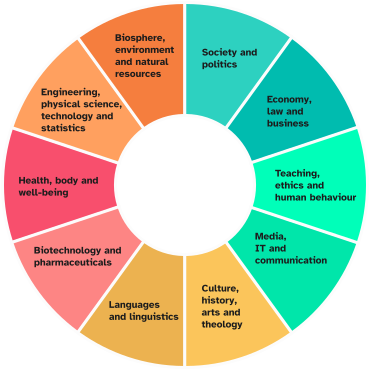
What interests you?
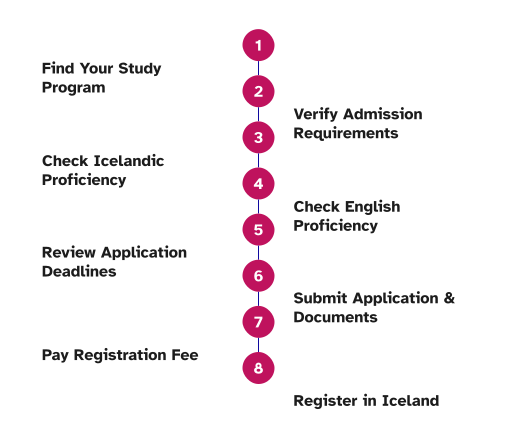
How to apply
Follow the path
Contact us If you still have questions, feel free to contact us.
School of Social SciencesWeekdays 9 am - 3 pmStudent and Teaching ServiceThe School office offers support to students and lecturers, providing guidance, counselling, and assistance with various matters.
You are welcome to drop by at the office in Gimli or you can book an online meeting in Teams with the staff.
Share