GRÓ GEST alumni challenge established hierarchies at Makerere conference
An international conference at Makerere University in Uganda brought together GRÓ GEST alumni, feminist scholars and development practitioners to examine whose knowledge counts, who gets to define expertise, and how more equitable partnerships can be built between the Global North and South.
What do a mental health consultation in Tanzania, a coffee farm in Malawi, and an HIV prevention programme in Kenya have in common? Each raises fundamental questions about whose knowledge is recognised, whose expertise carries authority, and who ultimately gets to decide how problems are understood and addressed.
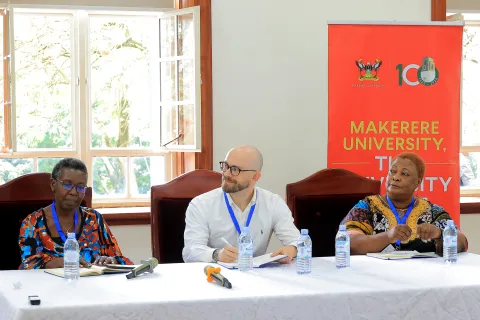
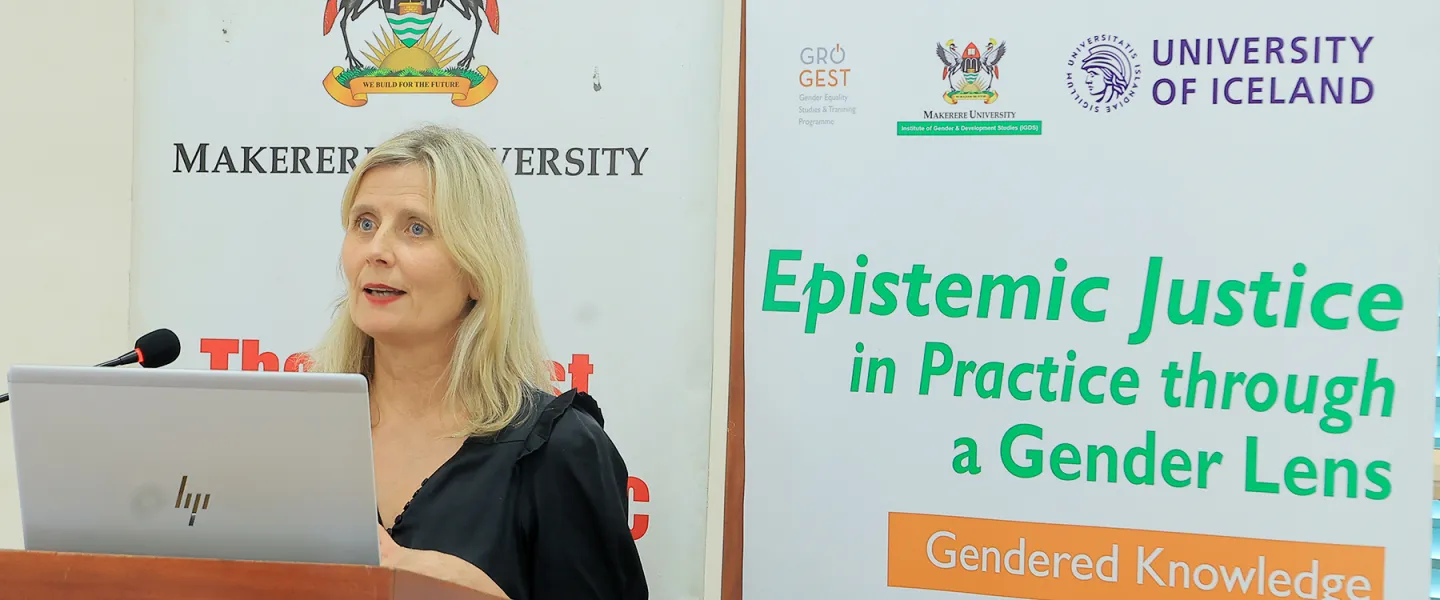
These questions were at the heart of Epistemic Justice in Practice: Gendered Knowledge in Global North–South Development Partnerships, a two-day international conference held at Makerere University in Kampala, Uganda, on 21–22 October 2026.
Co-organised by the GRÓ Gender Equality Studies and Training Programme (GRÓ GEST) at the University of Iceland and Makerere University's Institute of Gender and Development Studies, the conference brought together approximately 100 participants, including GRÓ GEST alumni from Uganda, Kenya, Tanzania and Malawi, academics, postgraduate students, civil society representatives and development practitioners.
Recognising alumni as producers of knowledge
In her opening remarks, Dr Irma Erlingsdóttir, Director of GRÓ GEST, emphasised that the conference's purpose extended beyond showcasing the professional achievements of former fellows.
"Our alumni return to institutions where they confront questions that no syllabus, policy framework or development manual can fully anticipate," Irma explained. "In doing so, they do not merely apply knowledge. They generate it."
This principle shaped the conference from the outset. Rather than inviting alumni to report on projects or describe successful interventions, organisers asked them to identify intellectual problems emerging from their professional experience, critically examine the assumptions underlying their work, and develop original arguments.
The resulting contributions covered donor funding, mental health, sexuality and bodily autonomy, climate adaptation, women's land rights, agricultural production and gender education.
Formally opening the conference as Acting Vice Chancellor, Professor Sarah N. Ssali, Makerere University’s Deputy Vice Chancellor (Academic Affairs), reinforced the importance of recognising GRÓ GEST alumni as intellectual leaders and knowledge producers.
She also presented the partnership between Makerere University and the University of Iceland as an example of collaboration grounded in mutual respect, shared learning and intellectual reciprocity. As she put it, “It reflects a model of engagement that recognises the contribution of all partners as co-creators of knowledge and agents of change.”
From participation to authority
The alumni presentations brought questions of epistemic justice into direct conversation with the practical realities of development work, public institutions and community life.
GRÓ GEST alumni Everlyne Nthenya Mumo examined gender-transformative HIV prevention in Mombasa, Kenya, demonstrating how frontline practitioners generate valuable knowledge by adapting internationally developed programmes to local circumstances. Brenda Apeta explored the role of local storytelling and participants' lived experiences in gender education in Uganda.
Other alumni challenged established assumptions about expertise. Tawonga Kwangu Msowoya of Malawi explored the often-unrecognised knowledge and expertise of women smallholder farmers in the global coffee industry, while Dr Gloria E. Swilla of Tanzania examined how formal psychiatric frameworks can overlook the social and gendered dimensions of mental distress.
Across these different contexts, alumni demonstrated how established categories of knowledge and expertise can fail to capture the complexity of people's actual experiences.