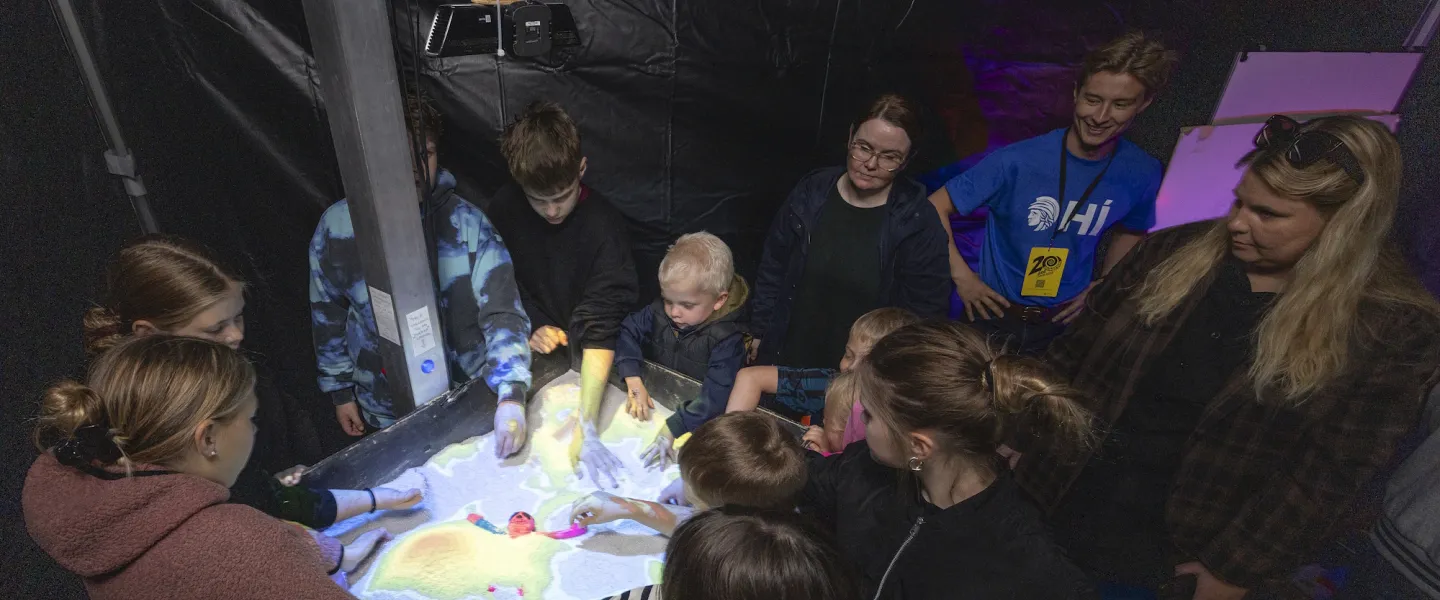
Vísindasmiðja á Vísindavöku

Spider silk as an alternative to nylon, social magic, the Great Song Bank, digital experimental humanities, life in the ocean, research on the placenta, Iceland's contribution to space exploration, and the ever-popular Science Centre are among the attractions awaiting visitors at the University of Iceland exhibition area at Researchers' Night on Saturday, 26 September from 12:00 to 17:00 at Laugardalshöll.

Researchers’ Night is an annual event and has long been established as Iceland’s largest science communication event. Scientists from Icelandic universities, institutions, and companies come together to present their work and discoveries, inviting visitors to try out equipment, tackle challenges and explore science through interactive and engaging activities. Researchers' Night is held annually in major European cities and is for anyone, of any generation, interested in science.

The University of Iceland and the University of Iceland at Hólar will share a joint exhibition area featuring around 40 interactive stations across a wide range of academic disciplines.

First aid, surgery and zebrafish

Guests can learn about protein content in different foods, how people make decisions, and the creative approaches social workers use when working with children, and explore the Milky Way, dark energy, and dark matter. Visitors can test their football skills and learn about a long-term study of young female football players, try their hand at CPR, first aid and the Heimlich manoeuvre, practise suturing wounds with the help of medical students, and discover how zebrafish are used to study human diseases.

Languages and the hidden life of animals

Visitors can also have a go at speaking Polish, learn about the Japanese language and culture, practise writing Chinese characters and sample mooncakes. Visitors can also delve into the hidden world of ants, handle crustaceans, starfish and other marine invertebrates, examine a real beehive and peer inside fruit fly cells.
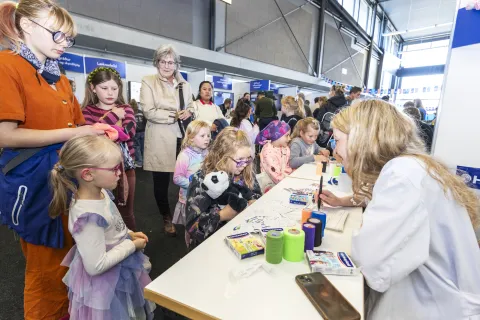
Bangsaspítali

Doctors from the Teddy Bear Hospital will be on hand to care for sick and injured teddy bears and dolls, while visitors can also learn how parents and preschool staff can identify potential speech and language development delays in children. Visitors of all ages are invited to stop by for a chat in front of the camera with students from the University of Iceland's journalism programme. Furthermore, they can step into the shoes of ethnologists by interviewing family members about the games and activities they enjoyed as children.

Horses, head lice and striped Arctic char

Representatives from the University of Iceland at Hólar will answer questions on everything to do with equine studies, aquaculture and fish biology. Staff from the University of Iceland's Experimental Farm at Keldur will explain why some Arctic char have stripes, how head lice spread, and what lives on unwashed hands!

Staff from the University of Iceland's ever-popular Science Workshop will also have fun equipment and tools on site. Visitors can experiment with a thermal imaging camera, try encryption, look at black holes, and much more.

Icebergs and race cars

Visitors can, furthermore, see icebergs from Breiðamerkurjökull glacier and an ice-core drill presented by the University of Iceland's Institute of Earth Sciences, the Icelandic Meteorological Office and the Icelandic Glaciological Society. The drill will be used to unlock clues about the past by extracting an ice core up to 200 metres long from Vatnajökull glacier. Visitors can also learn how to read glacier crevasse maps and monitor surface changes in real time caused by the recent surge of Dyngjujökull glacier.

Students from Team Spark will showcase their electric racing car, while representatives of the World Robot Olympiad, an international STEM and robotics competition for young people, will present the competition. Visitors can also tackle mathematical puzzles in a new computer game.

Artificial intelligence in the spotlight

Artificial intelligence will also be in the spotlight at the University of Iceland exhibition area, where visitors can draw fish and imaginary creatures that come to life in a digital aquarium with the help of AI, compete against AI in recognising landscapes, and explore the impact of cyberattacks on people and critical infrastructure in Iceland. An earthquake simulator will also be on site, along with magnetometers, compasses and lodestones that shed light on the Earth's magnetic field and its impact on Iceland.

The Researchers’ Night in Iceland is organised by RANNÍS, the Icelandic Centre for Research, and the programme is available on its website.

Share

Tags
Did this help?

Why wasn't this information helpful

Limit to 250 characters.