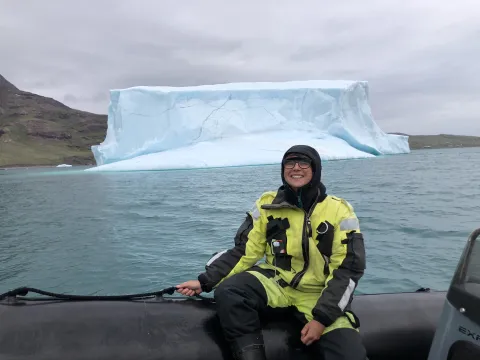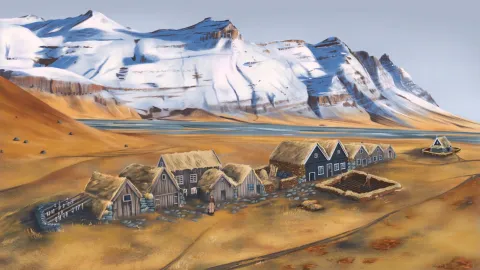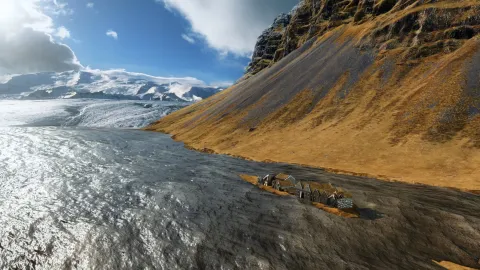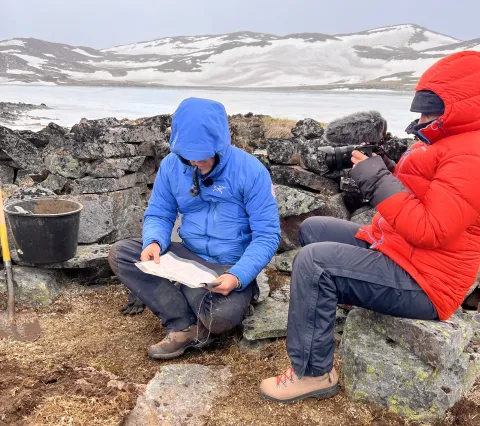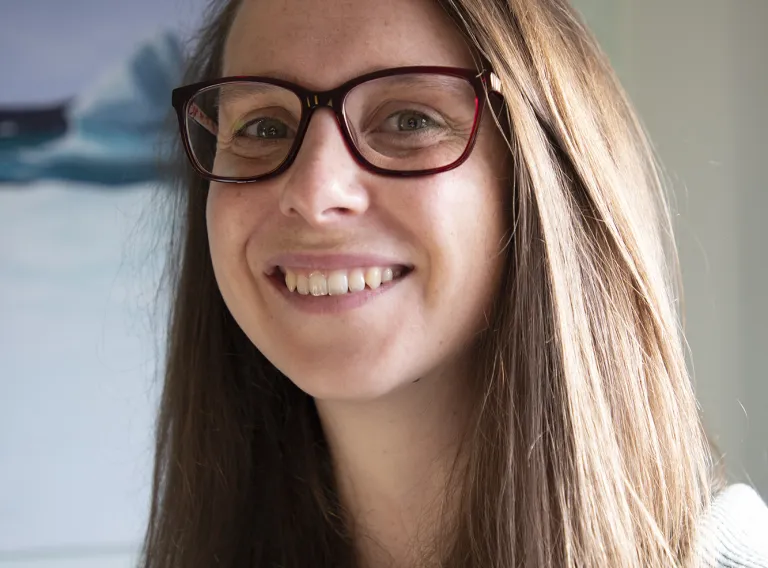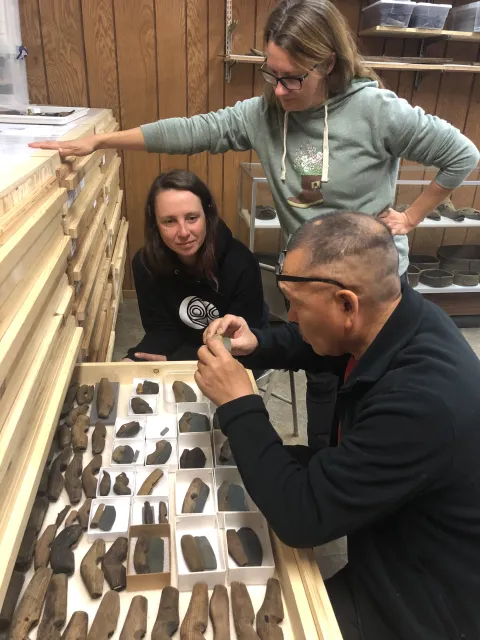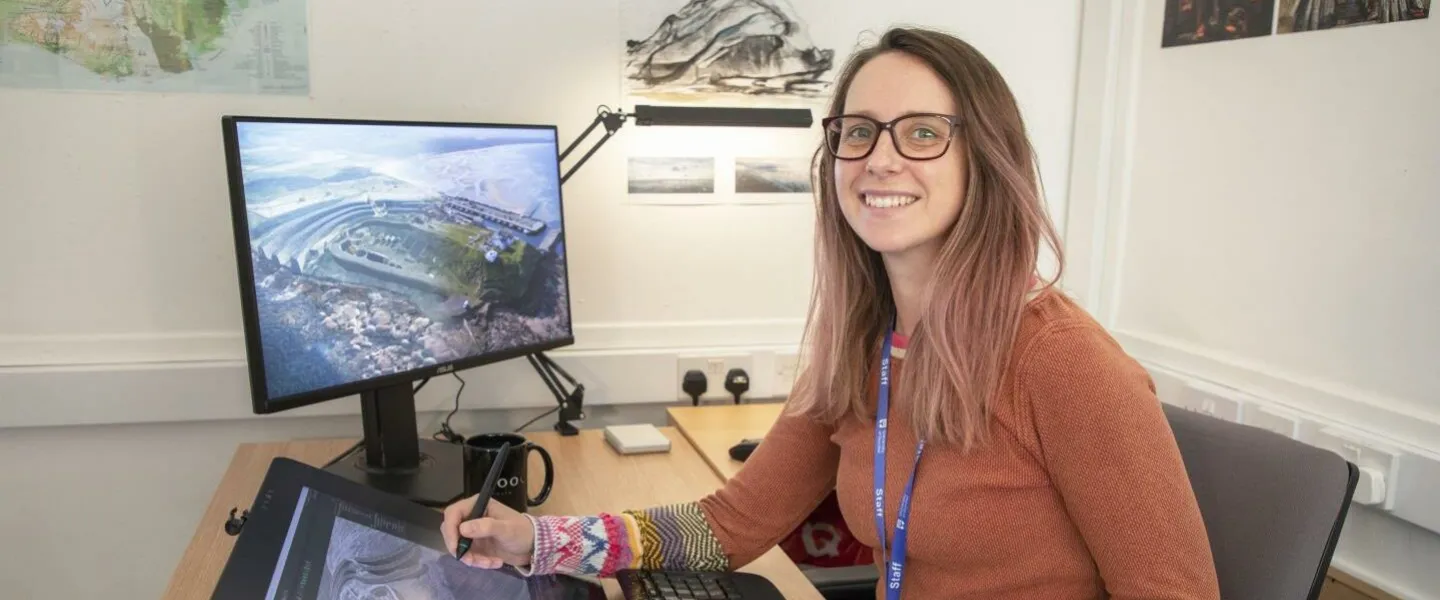
Growing up in Scotland, Alice Watterson probably didn’t envisage herself working in some of the world’s northernmost settlements. By combining archaeology and visual arts, she has worked with scientists and Indigenous communities in Alaska and Greenland, sharing stories of ancient artefacts and past civilisations through 3D modelling, animation and film, while helping preserve cultural heritage threatened by climate change. As a research specialist at the University of Iceland’s Research Centre in Höfn, Alice recently premiered a short documentary about a little-known farm in south Iceland that was destroyed by a glacial flood more than 150 years ago.
Alice holds a bachelor's in Archaeology and a master's in Archaeological Computing. “During my master’s, I started working with 3D modelling and reconstruction. Archaeology is a very visual field with a long history of creating images and interpreting the past. I really enjoyed that aspect of it," says Alice, who did her PhD at the Glasgow School of Art.
After graduating, Alice worked in communication design at the University of Dundee, focusing on animation, 3D modelling, filmmaking and science communication related to archaeology and cultural heritage.
Drawn to Iceland by the glaciers
Through this work she got to know her partner, now husband, Kieran Baxter. “His background is in animation and then he came into archaeology, whereas I started in archaeology and came into animation, so we met in the middle," she says and smiles.
When Kieran got the opportunity to do a post-doc at the University of Iceland's Research Centre in Höfn in Hornafjörður, where he has been developing new ways to visualise the rapidly changing landscapes of Icelandic glaciers, Alice joined him on his field work. What was supposed to be a few months turned into a year, and the couple eventually decided to move to Iceland. “Once we made the move up here, I managed to bring in a few heritage projects to the research centre in Höfn,” says Alice.