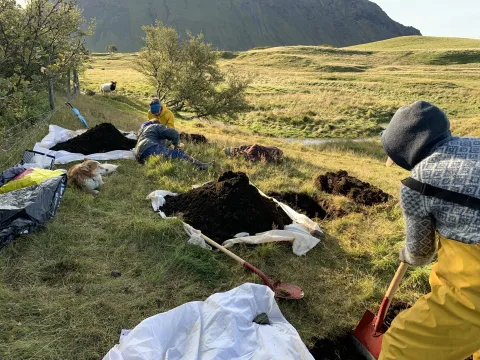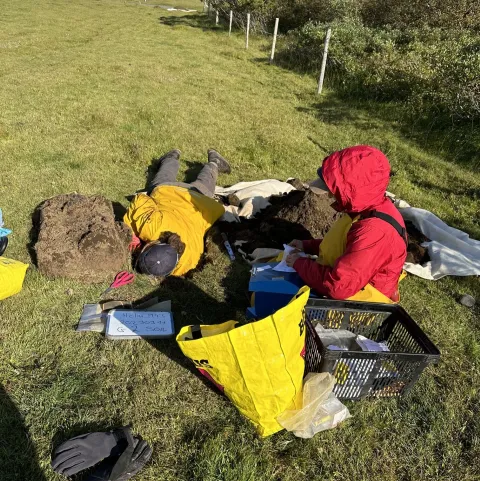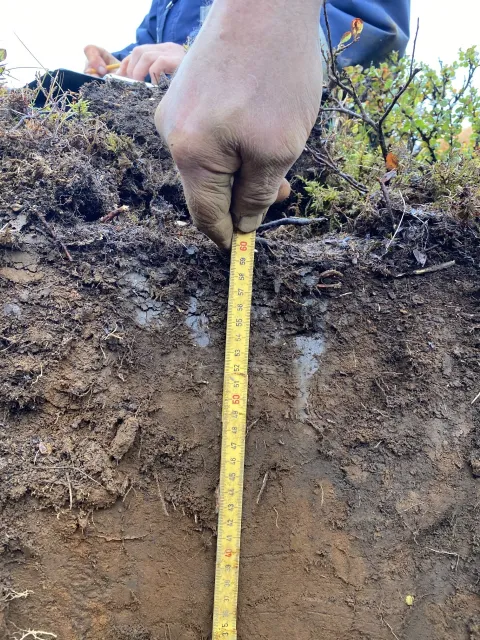
A new study by researchers at the University of Iceland at Hólar, the University of Iceland and domestic and international partner institutions has found significantly more carbon in the soil of land that has been continuously grazed than in areas that have been protected from grazing. This runs counter to earlier assumptions that grazing is harmful to both plants and ecosystems. This is the first study conducted in Iceland to investigate how protection grazing affects ecosystem carbon balance. The findings were recently published in the scientific journal Global Change Biology Communications.
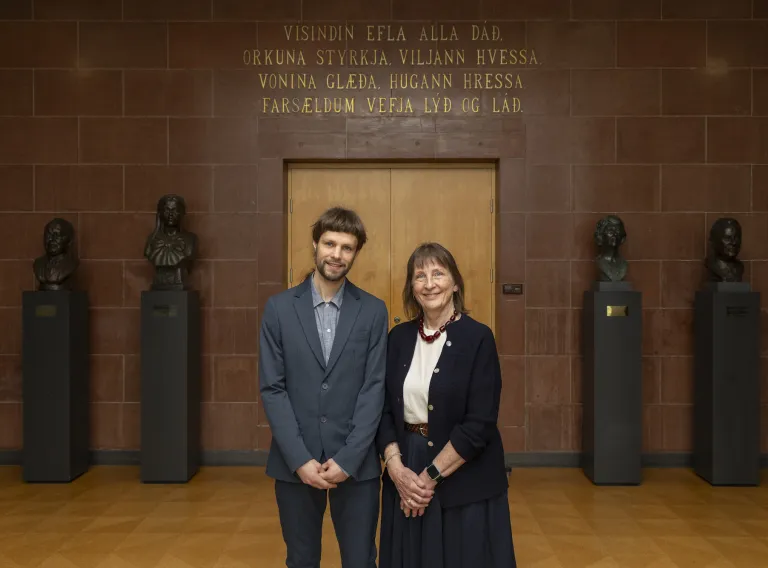
“For decades, the prevailing view has been that grazing is harmful to both plants and ecosystems, and excluding livestock from rangeland has been a major conservation focus in Iceland. However, few studies have been conducted in Iceland looking at the effects of grazing on plants and ecosystems,” says Anna Guðrún Þórhallsdóttir, professor of natural resources at the University of Iceland at Hólar and one of the authors of the article.
Without grazing, rangeland disappears and woody vegetation takes over
Anna Guðrún points out that international research over the past two decades has shown that when grazing ceases, rangeland disappears and woody vegetation takes over. Rangeland is a term referring to uncultivated grazing land outside fields and meadows. Around half of the world’s land area is classified as rangeland, and Iceland is home to the most extensive rangelands in Northern Europe. These consist mainly of grassland, heathland and mosaics of the two vegetation types. “Grassland and heathland are habitat types that are maintained through grazing, mowing or burning. Without these factors, shrubs and woody vegetation take over,” says Anna Guðrún.
When rangeland gives way to woody vegetation, the effects on biodiversity are far-reaching, and the many plant and animal species that depend on these habitats decline and disappear. “Today, maintaining rangeland through grazing is one of the main focuses of conservation in Europe,” she says, giving the example of a report by the United Nations Food and Agriculture Organisation in Europe: Europe’s Grasslands: A Different Rangeland Story.