The UI Science and Innovation Prize winners 2026.

A project developing tissue scaffold from brown algae instead of animal-derived tissue, used to treat chronic wounds, burns, injuries, and other tissue damage, received the annual University of Iceland Science and Innovation Prize. The prize was awarded on Monday, 27 April, in the Main Building’s Ceremonial Hall. In addition to the main prize, prizes were awarded to three other projects that focus on a search and rescue system that can respond automatically to emergencies at sea, a clinical language technology solution that automatically analyses Icelandic language samples to detect linguistic impairments in people, and a predictive model that predicts the risk of malnutrition in hospitalised patients.

The University of Iceland’s Science and Innovation Prize has a long history and has gone by a few names over the years. The aim of the prize, now held for the 28th time, is to highlight practical ideas from students and staff at all UI schools which could deliver commercial and societal benefits.

Research and innovation have been thriving at the university recently, as reflected in the 20 submitted ideas for the award this year. The selection committee looked in particular for novelty and originality, implementation, societal impact, e.g., in terms of the UN Sustainable Development Goals, and projects that were consistent with the University's strategy and supported its mission.

As in previous years, prizes were awarded for the best ideas in four categories: Health, Technology and Progress, Society, and the Motivational Prize. An overall competition winner was also selected from among the prize recipients in the four categories.
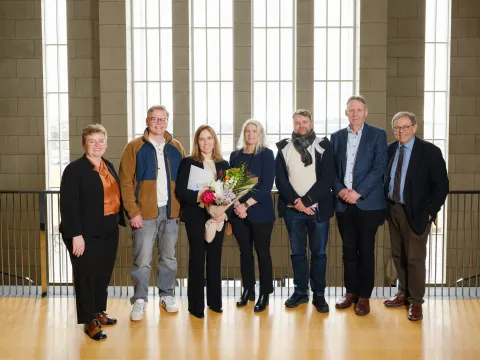
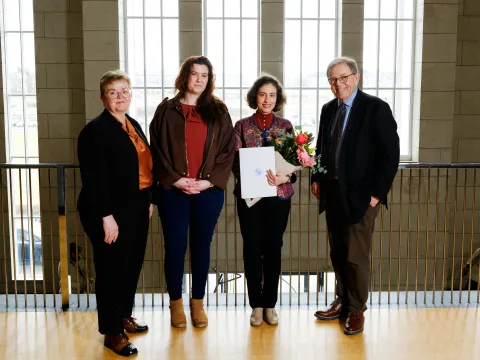
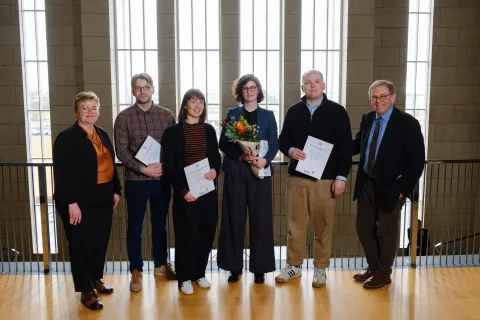
Winners of the "Health" category.
Winners of the overall prize and in the Health category with the rector and chair of the selection committee. IMAGE/Kristinn Ingvarsson

The winner of the Health category, awarded a prize of ISK 1.5 million, was the project "Tissue scaffold made from brown algae” This project was also the overall winner of the competition, awarded an additional ISK 1 million. Behind the project is Svava Kristinsdóttir, a doctoral student in bioengineering at the Faculty of Industrial Engineering, Mechanical Engineering and Computer Science, in collaboration with Sigrún Nanna Karlsdóttir and Sigurður Brynjólfsson, professors at the same faculty, Óttar Rolfsson, professor in the Faculty of Medicine in the School of Health Sciences, and Ólafur Eysteinn Sigurjónsson, professor at Reykjavik University.

The project involves developing a tissue scaffold from brown algae rather than animal tissue. Tissue scaffolds are used in regenerative medicine, where millions of patients need treatment for chronic wounds, burns, injuries, and other tissue damage each year. Access to safe, affordable and sustainable tissue scaffolds is lacking.

The selection committee believes that this project is based on a strong scientific foundation, offers industry innovation, demonstrates substantial societal impact and environmental benefits, and has the potential to generate further research, job creation, and future economic value. “The project’s novelty, on the one hand, lies in its development of a new type of tissue scaffold material which, as mentioned before, is made from brown algae instead of animal products, which have been used until now, and so, meets increasing demands for sustainability within the healthcare sector. On the other hand, its novelty lies in a new defluorination method that better preserves the raw material's qualities than conventional methods that use harsher chemicals," the selection committee states.

The committee also states that since the project involves both the development of a new product and a new production method, it is of great practical value and offers opportunities for industrial development in biotechnology and health technology. “The project also offers further possibilities of collaboration between the university community and the healthcare industry, where further research opportunities and discoveries may be created. Thus, this is an outstanding, research-driven innovation project that demonstrates how scientific research can deliver real-world impact and yield solutions that can be applied globally.

A patent application has been filed for the invention.

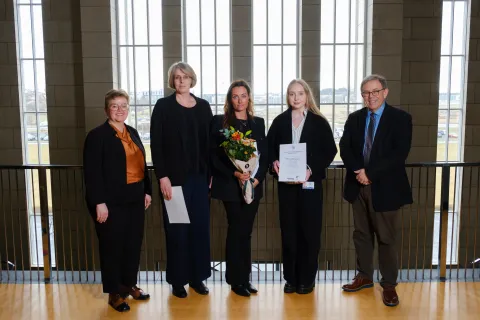
Winners of the "Technology and Progress" category.
Winners of the Technology and Progress category with the Rector and chair of the selection committee. IMAGE/Kristinn Ingvarsson

The winner of the Technology and Progress category, awarded a prize of ISK 1.5 million, was the project “AEGIR: Air-sEa inteGrated Intelligent Rescue with 6G-Native System for Zero-Shot Cooperative Maritime Search & Rescue”. Behind the project are Mandana Mahgoli, a doctoral student in electrical and computer engineering at the faculty of Electrical and Computer Engineering in the School of Engineering and Natural Sciences, in collaboration with Ian F. Akyildiz, a visiting professor at the faculty, and Teresa Sofia Giesta da Silva, a marine biologist at the Marine and Freshwater Institute.

During search and rescue operations at sea, communication is often difficult because radio waves travel only short distances through water, and sound signals do not easily cross the boundary between the sea and the air. As a result, underwater search-and-rescue systems are often almost entirely cut off from communication until diving teams arrive on site. AEGIR is a search-and-rescue system capable of autonomously responding to maritime emergencies. The system is based on technology in which unmanned aerial vehicles (UAVs) and autonomous underwater vehicles (AUVs), or submarines, operate as a coordinated system.

The project is built on the integration of five new subsystems that, together, will create one comprehensive solution. The project has already proven successful in simulations, and the next step is real-world testing under demanding conditions in Faxaflói Bay in collaboration with the Icelandic Coast Guard and Marine and Freshwater Research Institute. “The project has a clear social and practical value, as the Coast Guard responds to around 1,500 emergency calls each year. Although the current focus is primarily on rescue operations, the potential applications are far broader, including monitoring and measurement in marine and ocean environments where the need is considerable. The project could therefore become the foundation for further collaboration with key domestic stakeholders and for additional interdisciplinary research projects within the university community,” the selection committee states.

The committee further concludes that the project offers significant societal benefits and strong innovation. “It presents exciting advances in technological development and combines diverse technical solutions in an effective way. By bridging the gap between research and practical application in cooperation with the Coast Guard and the Marine and Freshwater Research Institute, the project could have a wide-ranging impact on the development of rescue methods and maritime monitoring.”

Winners of the "Society" category.
Winners of the Society category with the Rector and chair of the selection committee. IMAGE/Kristinn Ingvarsson

The winner of the Society category, awarded a prize of ISK 1.5 million, was the project “ALDA: Clinical language sample analysis”. Behind the project is Iris Edda Nowenstein, a lecturer at the Faculty of Icelandic and Comparative Cultural Studies in the School of Humanities, in collaboration with Bryndís Bergþórsdóttir and Gunnar Thor Örnólfsson, researchers at the UI Institute of Linguistics at the same faculty, and Hinrik Hafsteinsson, a doctoral student at the Faculty of Icelandic and Comparative Cultural Studies.

They are developing a clinical language technology solution that uses advances in language technology and artificial intelligence to automatically collect and analyse language samples in Icelandic. Language samples are used, for example, by speech therapists to diagnose developmental language disorders, but they are also valuable for diagnosing diseases, measuring disease progression, and assessing treatment outcomes. Language samples have been used to detect and monitor the progression of neurodegenerative diseases such as Alzheimer's disease, MND, and Parkinson's disease, as well as to evaluate the benefits of medical treatment.

The evaluation committee states that the project’s innovation lies in developing a comprehensive, modern, and accessible language technology solution for speech therapists while also collecting important clinical language technology data through such a web-based platform. This kind of data collection is considered essential if the Icelandic language is to benefit from the latest health technologies in speech and language disorders in the future.

“The project could have a considerable impact. Although the current focus is on a defined target group, it creates numerous secondary opportunities for innovation, research, and practical application. The project could serve as a model for smaller nations and lower-resource language communities, and it aligns with the policy of the government and the University of Iceland by creating exciting interdisciplinary jobs and building domestic expertise in language technology,” the committee states.

It is also noted that the project has already achieved substantial results, and that the team has demonstrated clear vision, determination, and ambition in presentations and business development, alongside continuous research and development. “The selection committee considers the project ALDA: Clinical Language Sample Analysis to be especially important for Icelandic society and to represent careful, purposeful development of impactful technology that lays the foundation for diverse future solutions for the Icelandic healthcare system.”

Winners of the "Motivation" prize
Winners of the Motivation Prize with the Rector and chair of the selection committee. IMAGE/Kristinn Ingvarsson

The Motivational Prize of ISK 500,000 was awarded to the project “Predictive model – risk of malnutrition in hospitalised patients”. Behind the project are Áróra Rós Ingadóttir, lecturer at the Faculty of Food Science and Nutrition, along with Ingibjörg Gunnarsdóttir and Þórhallur Ingi Halldórsson, professors at the same faculty, and Karen Ruth Hákonardóttir, a prospective doctoral student at the faculty. Also involved in the project are Hafsteinn Einarsson, associate professor at the Faculty of Industrial Engineering, Mechanical Engineering and Computer Science in the School of Engineering and Natural Sciences, Björn Rúnar Lúðvíksson, professor at the Faculty of Medicine in the School of Health Sciences, and Adeline Tracz, an engineer at Landspitali University Hospital.

The project addresses malnutrition among hospital patients, especially older patients and those newly discharged. Malnutrition occurs when people don’t receive enough energy and protein, which may lead to muscular dystrophy, reduced physical and mental capabilities and increased risk of illness. Unfortunately, malnutrition is much too common and can cause a longer duration of hospital stay, increased infections, higher mortality rates and more frequent readmissions. Despite clinical guidelines recommending screening on admission, it is not always carried out. The project involves developing a predictive model to enable automatic screening methods that analyse malnutrition more effectively and sooner in healthcare.

The project was considered especially interesting because it is led by a strong, interdisciplinary team, has clear practical applications and is based on a solid scientific foundation, which the selection committee encourages the team to continue developing. “Furthermore, the results could serve as an important tool for support within the healthcare system and hopefully shape future strategy in the effort to reduce malnutrition among patients,” the selection committee states.

The committee says that the project is very promising and has great potential for further development, in addition to building on interesting, interdisciplinary research within and outside the university. “The research on which the project is based could open up further exciting and unforeseen possibilities that can have a wide-ranging impact on solutions to prevent problems within healthcare.

The competition for the University of Iceland’s Science and Innovation Prize is a collaboration between the University of Iceland, Árnason|Faktor and TTO Iceland. The prize award ceremony was part of Iceland Innovation Week 2026, which started on Monday, 27 April.

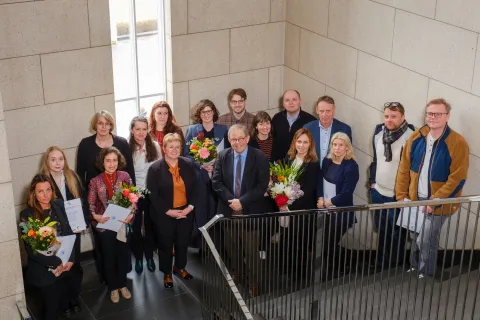
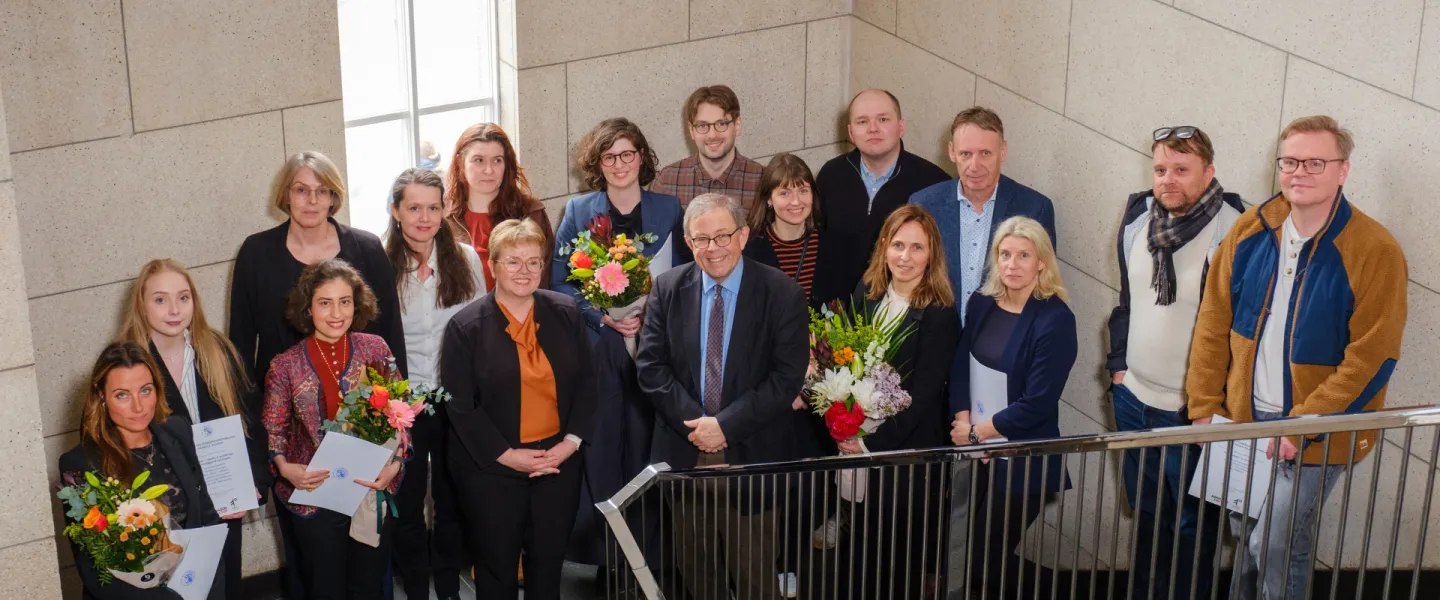
All winners of UI's Science and Innovation Prize 2026.
Winners at the award ceremony with the Rector, chair of the selection committee and project manager at the Innovation Office. IMAGE/Kristinn Ingvarsson

Share

Tags
Did this help?

Why wasn't this information helpful

Limit to 250 characters.