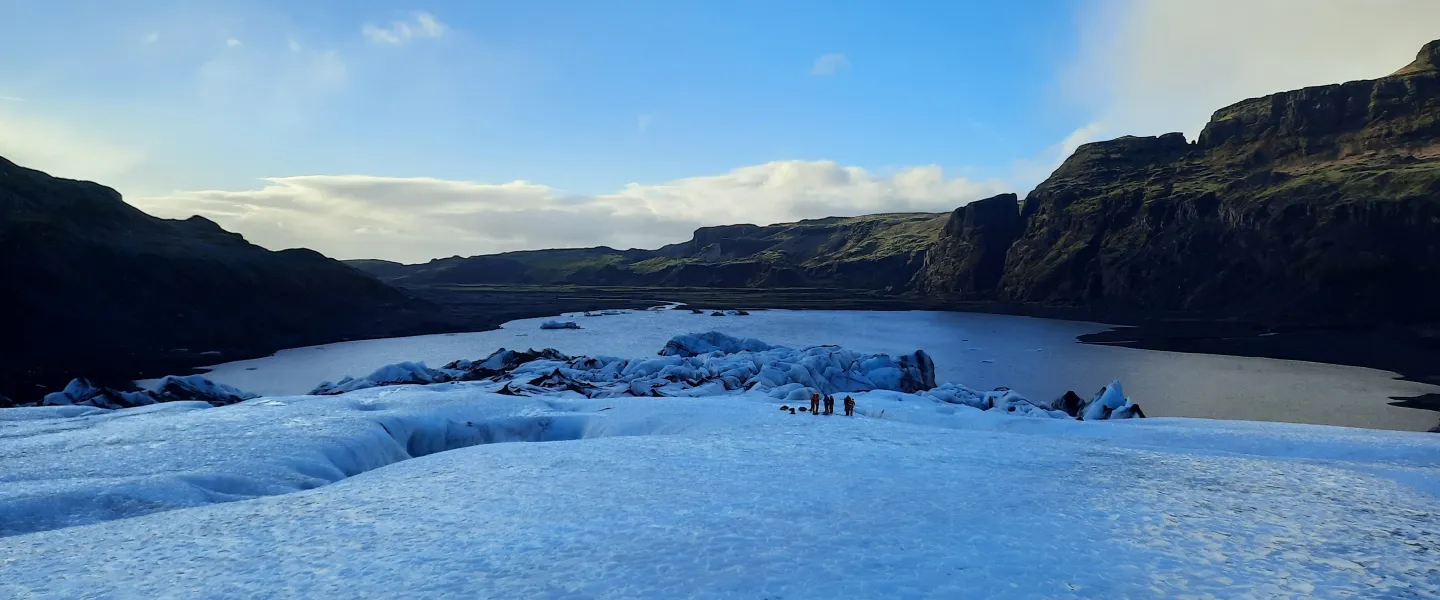
People standing on a glacier.

A composition intended to bring attention to the effects of climate change on glaciers in Iceland by Polish composer Agata Zubel and based on conversations with University of Iceland’s Guðfinna Aðalgeirsdóttir, Professor of Glaciology, will premiere in Strasbourg, France, on Tuesday, March 10. Guðfinna and her colleagues from the Horizon Europe research project ICELINK have been collaborating with a number of artists to help draw attention to the dramatic impact of climate change on glaciers worldwide and the urgent need to act to limit greenhouse gas emissions.

Celebrating 300 years since Antonio Vivaldi composed his famous piece, The Four Seasons, Agata Zubel, along with three other composers, was commissioned to compose a piece that would echo The Four Seasons in the context of today’s dramatically changing seasons. The new piece is entitled [Uncertain] Four Seasons.

Zubel was commissioned to compose a piece related to Winter in The Four Seasons, and she decided to connect it to Reykjavík and the environmental changes in Iceland driven by climate change. “This new composition echoes Vivaldi and puts it in a modern context at a time when the seasons are changing due to human activity and the climate crisis,” Zubel says in the programme notes, called Will Winter be Saved?
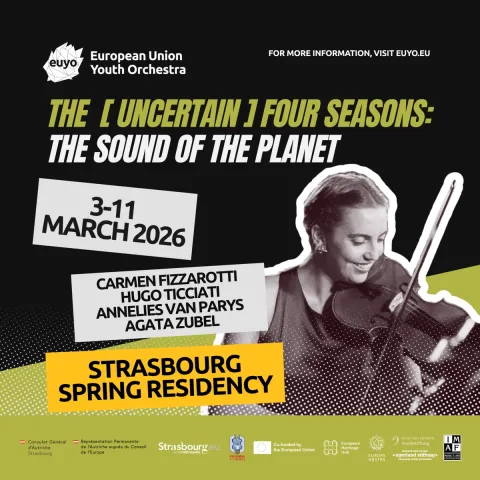
A poster for the premiere of the new composition in Strasbourg.

Zubel travelled to Iceland last autumn and spoke with Guðfinna Aðalgeirsdóttir, Professor of Glaciology, about climate change in Iceland and its effects on glacial retreat. Research shows that glacier cover has shrunk by over 2,000 square kilometres in one century. Zubel decided to include statistics on glacial retreat in Iceland in her composition.

In the programme notes, Zubel expresses gratitude to Guðfinna for her contribution to the piece. “Thanks to her, the music is not a vision of catastrophe but of hope and positive energy. We know what must be done to care for the future. We have the knowledge and the technologies to reverse negative trends, and all that is needed is decision and collective will.”

The piece will be performed by the European Union Youth Orchestra String Ensemble at the Pavillon Joséphine in Strasbourg on March 10. The orchestra celebrates its 50th anniversary this year.
 

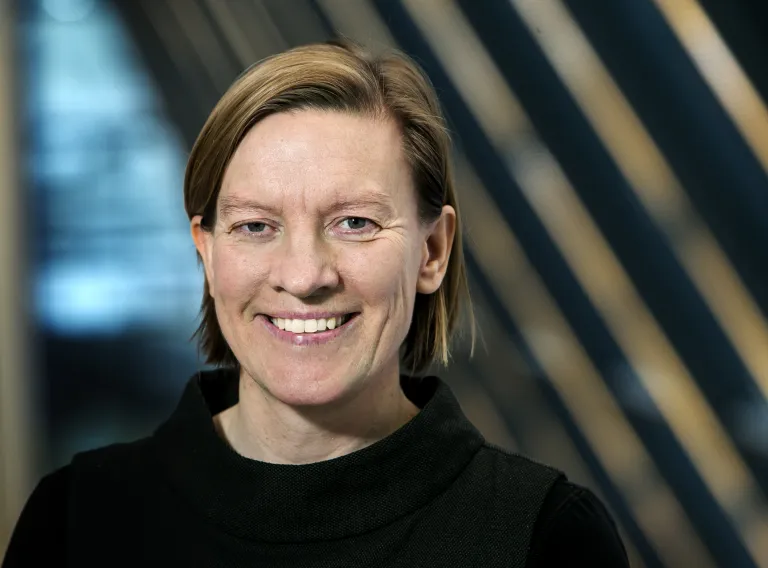
Guðfinna Aðalgerisdóttir, Professor of Glaciaology at the University of Iceland.

With Artists on Sólheimajökull Glacier

Guðfinna is participating alongside other Icelandic scientists in the European research project ICELINK, which received a grant of over one billion ISK from the European Union, aiming to shed new light on the effects of climate change on glacier ice in the North Atlantic. Concurrently with collecting and analysing data on past, present and future glacier response to climate, the researchers are sharing their results with industry, the public and policymakers, through strategic collaborations with a diverse group of artists.

At the beginning of the year, three Belgian artists, Mattias De Craene, Stijn Demeulenaere and Kevin Trappeniers, travelled to Iceland for an artist residency organised by The Association of Icelandic Visual Artists (SÍM) in relation to their initiative Art / Earth - Jöklaminni. The resident artists' project was to explore artistic responses to climate change and vulnerable ecosystems, in collaboration with The Young Academy and scientists at the University of Iceland. As part of the project, the Belgian artists went with Guðfinna to Sólheimajökull glacier last month and followed up with an exhibition at SÍM last week, which was covered on RÚV.

Art / Earth - Jöklaminni is based on reciprocal artists' residencies, and in March, three Icelandic artists, Sigrún Gyða Sveinsdóttir, Vala Jónsdóttir and Julie Sjöfn Gasiglia, along with the curator Þóranna Dögg Björnsdóttir, will participate in a one-month residency at C-TAKT in Dommelhof, Belgium.

Additionally, the International Day of Glaciers will be celebrated for the second time on March 21. For the occasion, an event will be held at the Reykjavík Museum of Photography in connection with the photographer Kristján Maack’s exhibition, Sleeping Giants, which references Icelandic glaciers. Among the speakers is Guðfinna, who will present the ICELINK project.

“As a scientist, it is inspiring and fun to collaborate with various artists. In the ICELINK project, we are prioritising innovative collaborations with artists to maximise the impact of our scientific achievements and to help emphasise the urgent need for society to act to reduce greenhouse gas emissions,” Guðfinna says about the collaboration.

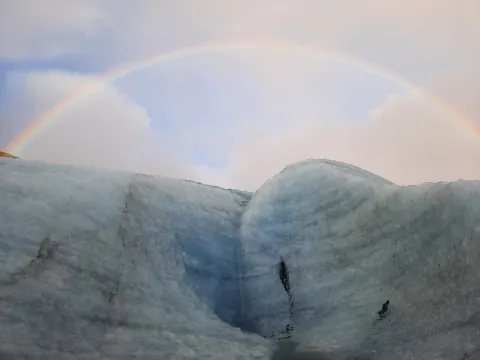
A glacier.
Guðfinna Aðalgeirsdóttir and her colleagus in the Horizon Europe research project ICELINK have recently collaborated with various artists, with the aim of drawing attention to the effect of climate change on glaciers around the world.

Share

Tags
Did this help?

Why wasn't this information helpful

Limit to 250 characters.