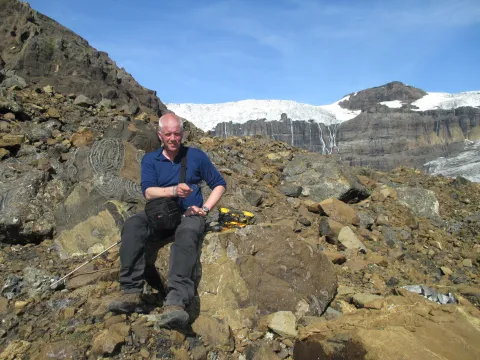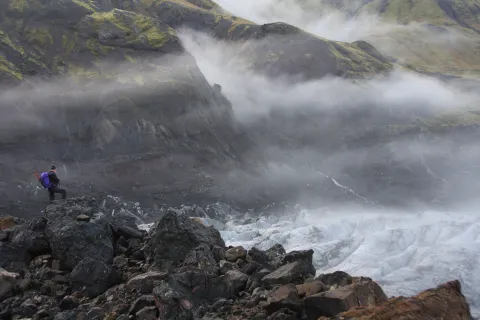
Climate change and glacier retreat are significantly altering the landscape in certain parts of Iceland, posing hazards in some areas, according to Þorsteinn Sæmundsson, an adjunct professor at the University of Iceland. He is conducting research on how glacier retreat and permafrost thaw can affect mountain slope stability and the risks posed by landslides and potential sudden outburst floods from glacial lakes.
Glaciers are retreating, and as they do, the risk of landslides may increase. Landslides vary in size and type, from loose sediments falling from slopes to rockfalls, in which chunks of rock collapse, to large sections of mountainsides collapsing in rockslides or rock avalanches, and even to large sections of mountainsides falling into lakes in front of glacier termini. Such lakes have formed and continue to form in front of many outlet glaciers, especially along the southern part of Vatnajökull.
Another risk factor currently being studied, one that is more hidden and therefore harder to detect, involves changes in permafrost. Permafrost refers to ground, sediment or rock, that remains frozen year-round, but as the climate warms, it can begin to thaw.
“Where permafrost is present, the ice acts like a kind of glue. However, when it thaws, things can start to loosen, groundwater flow changes, and slopes can become unstable. This development can be dangerous for many reasons. It is worth keeping in mind that slopes we have until now considered stable may become unstable when these changes occur, as examples have shown,” Þorsteinn points out.
When outlet glaciers, such as those found in southern Iceland, retreat and thin, they cause various changes. In most cases, these glaciers have carved deeply into the bedrock and sediments. When they retreat, they often leave behind deep hollows, surrounded by steep, often unstable slopes. These hollows fill with meltwater from glaciers, forming glacial lakes.