Discussions on accessibility and equal access to digital public services for disabled people in official documents are limited. These are the preliminary results of research focusing on the rights of disabled people and their ability to participate in society.
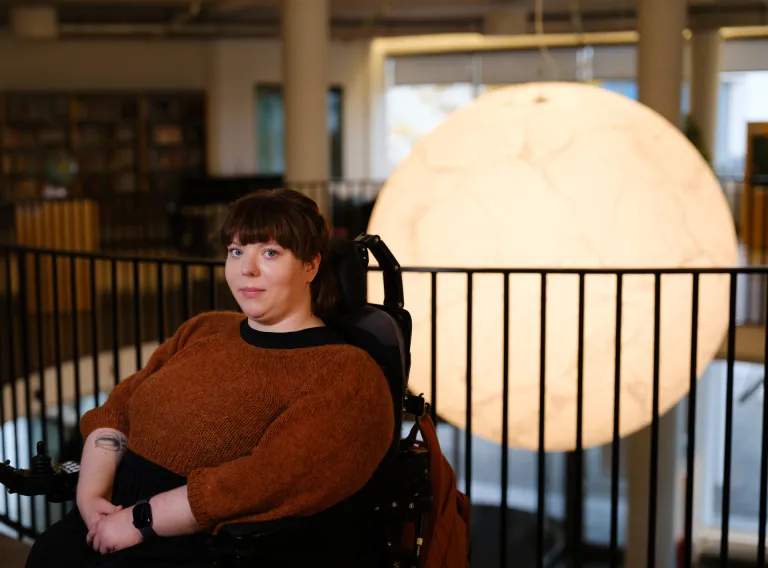
The research is led by Inga Björk Margrétar Bjarnadóttir, a doctoral student in the School of Education at the University of Iceland. “Society increasingly expects people to take part in digital development, but too often accessibility for different groups isn’t taken into account when introducing digital services or new technologies,” says Inga Björk.
Digital technologies not accessible to everyone
When asked how the research came to be, Inga Björk says she has long been interested in technology and its impact on disabled people.
“Often, technology has a positive impact on the quality of life for disabled people, but sadly, it is often inaccessible,” she says and explains as an example that some disabled people can’t use online identification because they don’t have access to electronic IDs.
“People run out of time and are inadvertently signed out, for example, when signing in to buy event tickets or when doing their banking online. Moreover, people don’t always understand user interfaces because a certain proficiency at media literacy is assumed, for example, that people can easily find out how to check for bus routes or watch a live stream on RÚV’s website.”
There was a turning point in 2019, when Inga Björk started working for Throskahjalp, a national organisation that advocates for the rights of disabled people. “I witnessed firsthand the difficulties people with developmental disabilities and their carers ran into when navigating these technologies. Therefore, I wanted to give myself some time to analyse these issues in-depth,” she says.
Analysing governmental policies in digital public services
Inga Björk’s supervisors are Laufey Elísabet Löve, associate professor at the Faculty of Subject Teacher Education in the School of Education, and Ingólfur Ásgeir Jóhannesson, professor emeritus at the same faculty.
On the one hand, the research is based on an analysis of government policies on digital public services; on the other hand, it is based on interviews. Inga Björk interviewed disabled people, government digital development professionals, and spokespeople from disability-interest groups to gather the perspectives of diverse, invested parties on the status of digital public service development.