What do Jaja Ding Dong and a humpback whale’s spout have in common?
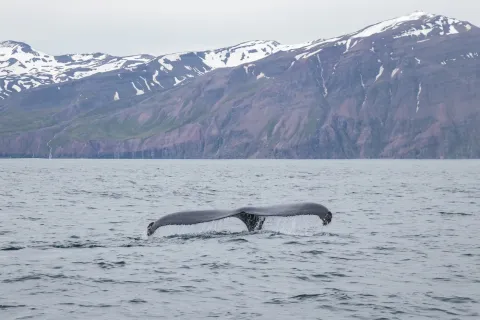
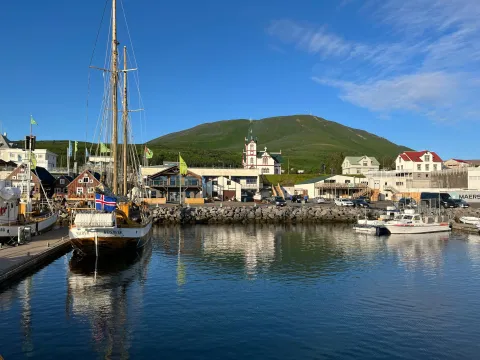
A strange question, perhaps, but the answer is surprisingly simple: both have put Húsavík on the world map. Will Ferrell’s Eurovision film brought the town international fame in the world of the European Song Contest and greatly increased tourist interest in the area, while humpback whales have at the same time made Húsavík something of a home port for whale watching in Europe.
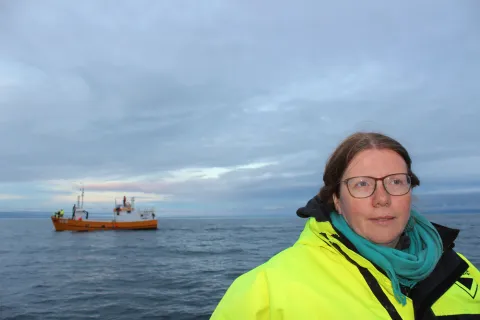
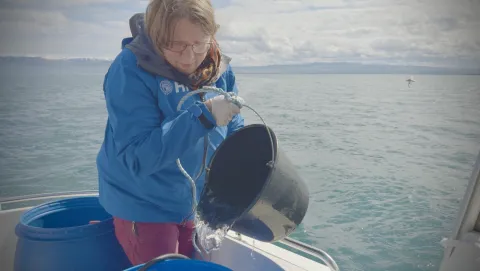
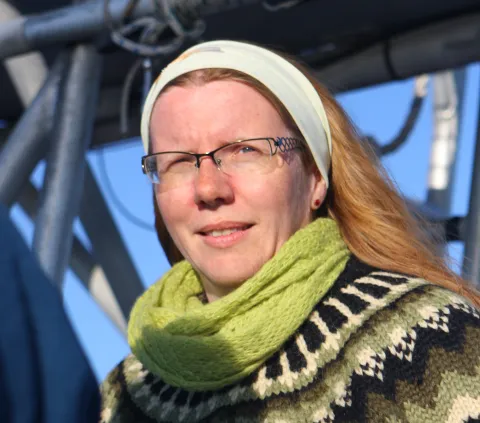
‘Whales are not only the largest animals on earth. They are also among the most important players in the ocean. Through their movements, feeding ecology, and biological behaviour, they affect nutrients in the sea, its ecosystems, and even the earth’s carbon cycle. That is why whale research is not only about individual species, but about the ocean itself, its rhythms, its energy flows, and the complex relationships that keep its ecosystems running.’ So says Marianne Helene Rasmussen, marine biologist and director of the University of Iceland Research Centre in Húsavík.
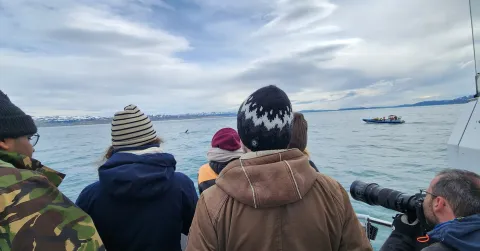
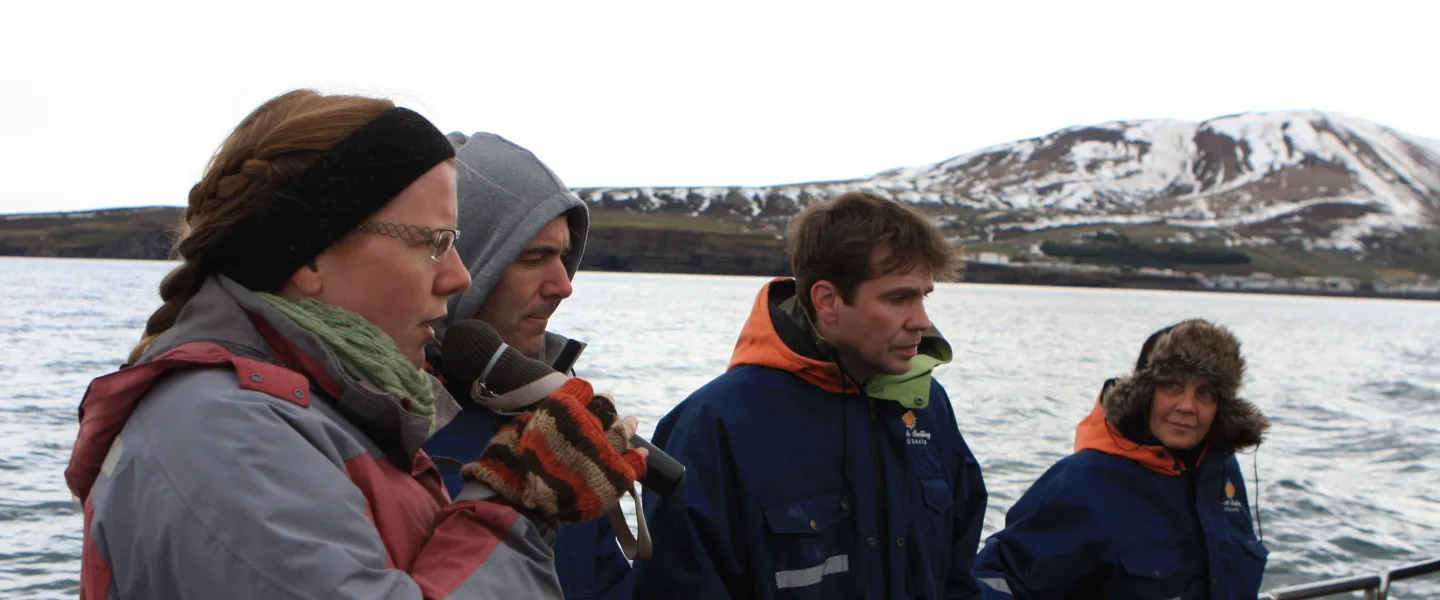
Conditions for whale research around Iceland are exceptionally favourable, and few places stand out quite like Skjálfandi Bay by Húsavík, where Marianne works. A wide variety of whales can regularly be seen there, even during the winter months, which surprises many people. This week, when we were travelling in Húsavík, a blue whale, the largest animal on earth, was spotted there, even though it was March and winter was far from over.