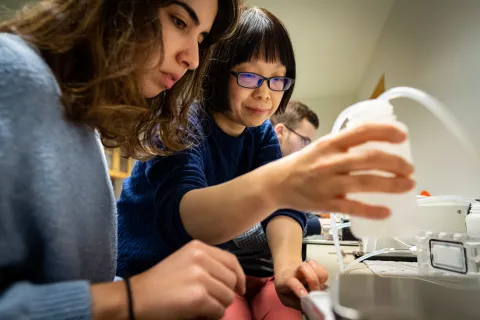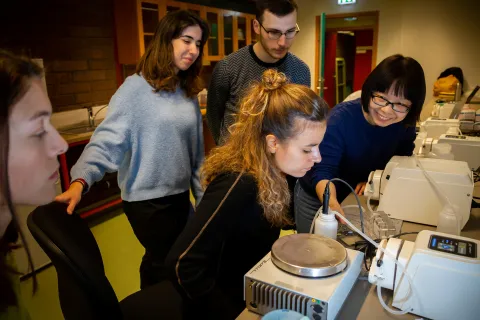
Very few of us ever think about what becomes of the things that we send down the drain or flush in toilets. The wastewater enters sewer systems and flows to rivers, lakes, or the sea, either treated or untreated, since Icelanders still have some way to go to meet European directives on wastewater treatment. At the University of Iceland, research is being conducted on novel wastewater treatment methods that take into account local conditions and the potential to use nutrients in certain wastewater as fertiliser for vegetable cultivation.
Wastewater discharge standards are becoming increasingly stringent globally, as untreated wastewater can have adverse effects on the environment and even contribute to the spread of diseases among people.
“EU directives on wastewater treatment require three main stages: primary (physical) treatment, secondary (biological) treatment, and disinfection (tertiary) treatment. In Iceland, most collected municipal wastewater is treated only with primary physical treatment; therefore, the treated wastewater generally does not meet EU discharge standards. However, biological processes fail to perform efficiently under Icelandic conditions, mainly due to the cold climate, high wastewater inflow rates with low organic concentrations, and dispersed populations. Therefore, there is an urgent need to develop a technically and economically feasible non-biological secondary wastewater treatment process that can be effectively adopted in Iceland,” says Bing Wu, Professor of Environmental Engineering at the University of Iceland, who is developing such a wastewater treatment process.
“My research focuses on innovative water and wastewater treatment, resource recovery, and renewable energy through advanced membrane technology and environmental biotechnology. My research activities include developing technically and economically feasible and environmentally sustainable processes, conducting laboratory and pilot-scale testing, and exploring theoretical fundamentals to solve challenges in the ‘Water-Food-Energy’ nexus and strengthen climate resilience,” says Bing.
Direct Membrane Filtration Can Be Used for Nutrient Recovery
The method at the centre of her research is called Direct Membrane Filtration (DMF). “Direct membrane filtration of wastewater without involving any biological treatment step has been considered a promising alternative solution for secondary wastewater treatment. In a DMF system, a semi-permeable microfiltration or ultrafiltration membrane (0.01-0.1 µm pore size) acts as a barrier to retain particulates, colloidal matter, and pathogens while allowing water and smaller substances to pass through. Compared to conventional biological treatment processes, DMF offers several advantages, including simplicity of design and maintenance, low capital costs, the ability to handle fluctuating inflow rates and low temperatures caused by seasonal changes, production of superior treated water quality free of solids and pathogens, and reduced sludge production, which lowers post-treatment costs. Thus, DMF processes offer potential solutions for Icelandic municipal wastewater treatment,” Bing points out.
In addition, Bing notes that direct membrane filtration is suitable for certain industrial wastewater treatment applications. “For example, we are working on membrane separation of microalgal cultivation wastewater for nutrient recovery. In this concept, residual nutrients such as phosphorus, ammonium, nitrate, trace elements, and water in microalgal cultivation solutions can pass through the ultrafiltration membrane and be readily collected as irrigation water for cultivated plants,” says Bing.