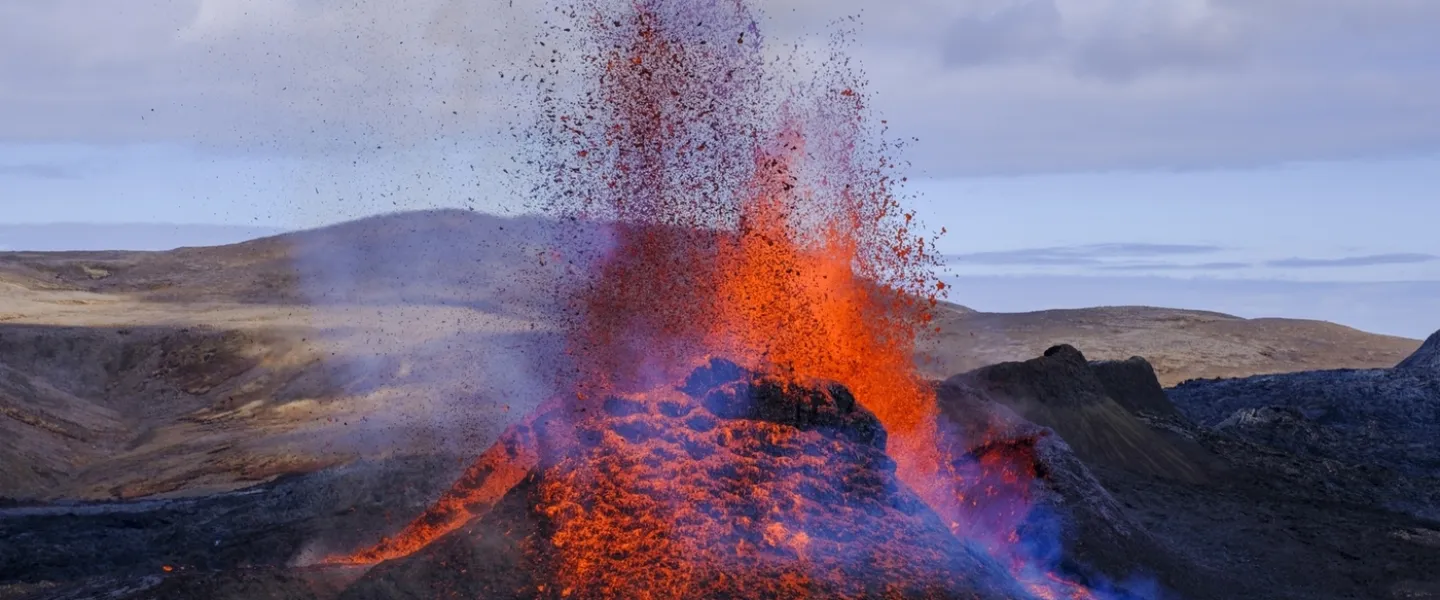
The recent Fagradalsfjall eruption in the southwest of Iceland has enthralled the whole world, including nature lovers and scientists alike. The eruption was especially important as it provided geologists with a rare opportunity to study magmas that were accumulated in a deep crustal magma reservoir but ultimately derived from the Earth’s mantle (below 20 km).
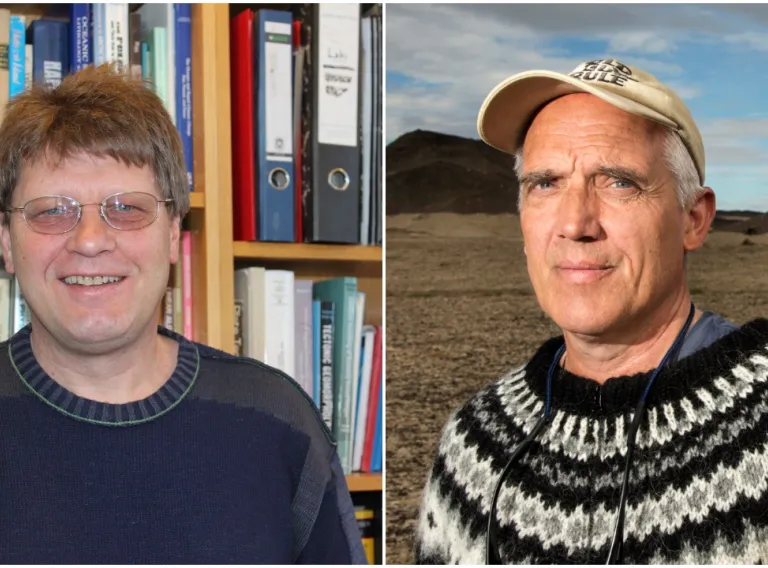
This is published in a new article published in the prestigious scientific journal Nature Communications. Among the authors are the earth scientists Þorvaldur Þórðarson, professor, Ármann Höskuldsson, research professor, and William M. Moreland, adjunct lecturer, all at the University of Iceland.
A research team from USA, Sweden, Iceland, and Germany took this exceptional opportunity to collect lava samples every few days in order to construct a time-integrated catalogue of samples and to monitor the geochemical evolution throughout the eruption to a degree of detail not previously possible. Usually, when volcano scientists look at past eruptions they work with a limited view of the erupted materials – for example older lava flows can get wholly or partially buried by newer ones. However, at Fagradalsfjall, the eruption was so well monitored and sampled that scientists had a unique chance to capture the evolution of an Icelandic eruption in almost real-time.