"Climate change is contributing to shifts in the magnitude and scale of hazards, and the emergence of risks in areas where they were previously unknown. This calls for risk management at the local, national and international level," says Stephanie Matti, a doctoral student in anthropology, who studies the risks involved in the event of a landslide from Svínafellsheiði in South-east Iceland.
The PhD thesis focuses on risk management, or to evaluate and ways to prepare responses to various threats and opportunities, both in companies, geographical areas, countries or on an international scale. Stephanie places particular focus on best practises in preparing people for unprecedented risks. "Most of the research I have conducted so far focuses on the local level, examining the risk management of the Svínafellsheiði fracture," explains Stephanie
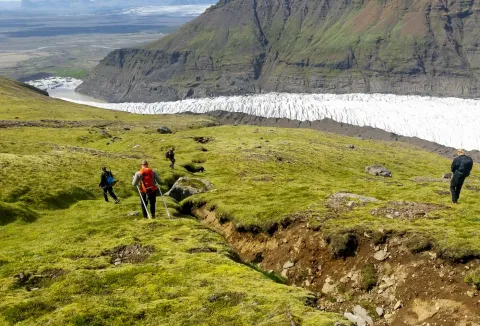
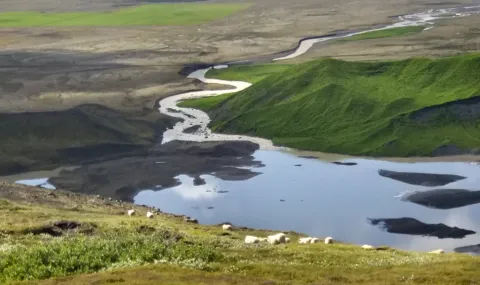
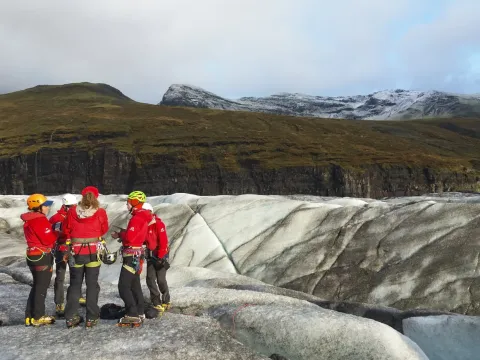
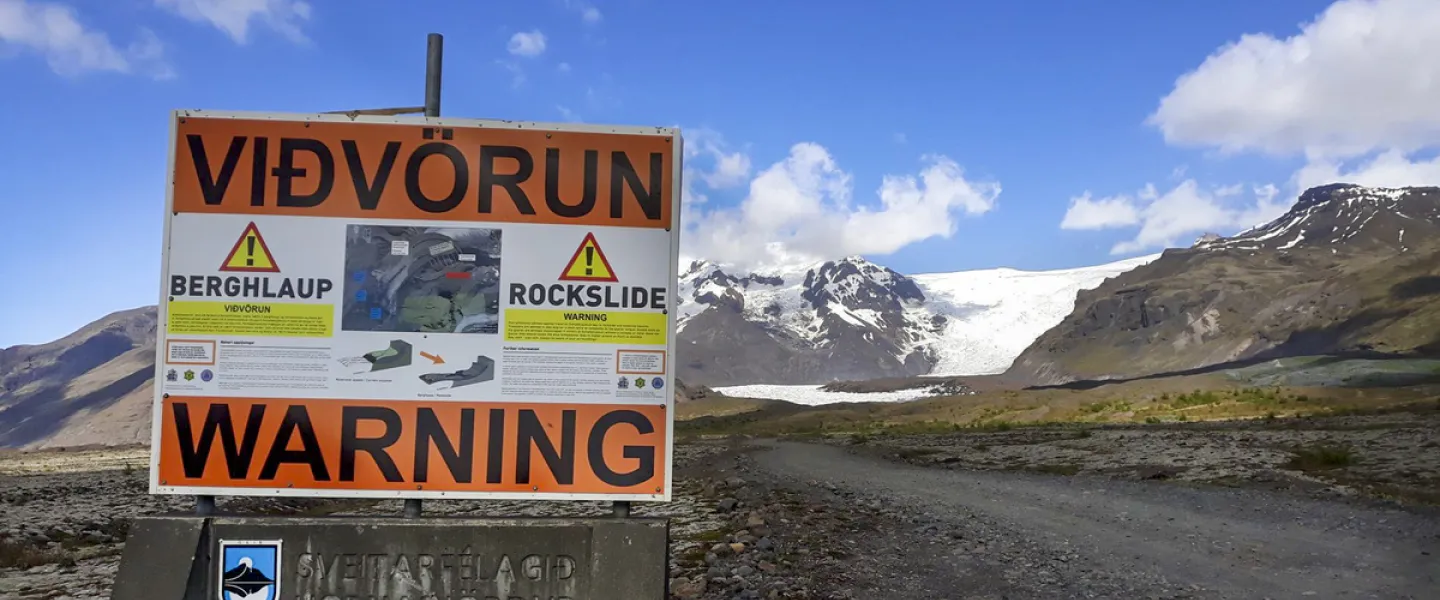
The fracture has been on the news quite often recently. It is located on a steep hill on the plateau above Svínafellsjökull. The locals first noticed the fracture in 2014, and monitoring by earth scientists at the University of Iceland and Icelandic Meteorological Office has shown that the fracture is expanding, and more fractures have been found in the area. "A fracture in the mountainside of Svínafellsheiði in south-east Iceland, threatens to cause between 60 and 100 million cubic metres of debris to fall onto the glacier below, and potentially affect both people and infrastructure," says Stephanie.