Tjarnarsalur, Sturlugata 8
- Free admission
GPMLS-BMC lecture Tuesday 27 October at 11:00-12:00 in Tjarnarsalur, Sturlugata 8 (Amgen DeCode building)
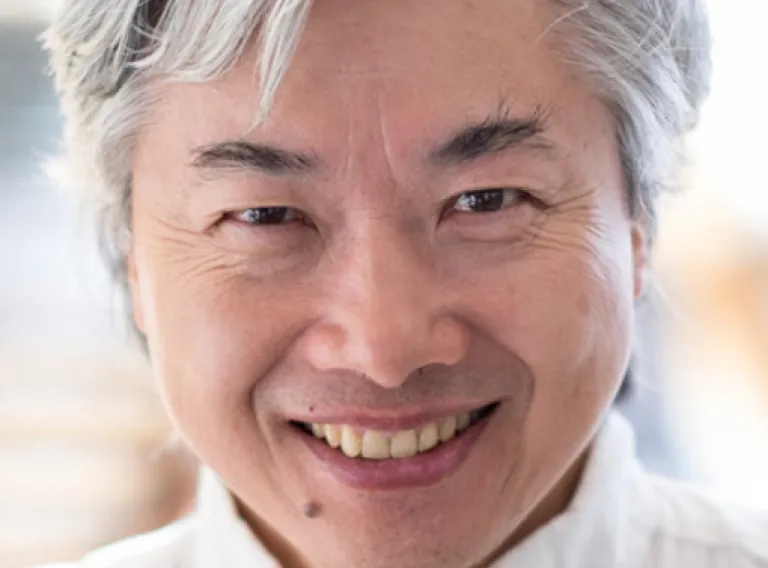
Speaker: SHUGUANG ZHANG, Ph.D., Media Lab, Massachusetts Institute of Technology, Cambridge, Massachusetts USA
Title: The QTY code for protein editing
Abstract: Ever since proteins were discovered, proteins have been classified into two chemically distinct classes: I) the hydrophilic class proteins including most cytosol enzymes, growth factors, transcription factors and other DNA and RNA binding proteins; and II) the hydrophobic class integral transmembrane proteins including membrane transporters, ion channels, G protein-coupled receptors (GPCRs) and photosynthesis systems. These two chemically distinct classes of proteins have been believed to be totally immutable, namely, the hydrophobic membrane proteins cannot be converted into hydrophilic water-soluble proteins and vice versa. Such classification has been taken for granted. Shuguang Zhang conceived a simple QTY code that removes the boundaries of these chemical distinctions. Zhang’s QTY code is elegant in its simplicity. Zhang used the QTY code to systematically replaced over 50% amino acids L (Lue), I (Ile), V (Val), F (Phe) in transmembrane domain with amino acids Q (Gln), T (Thr), Y (Tyr). Zhang demonstrated experimentally that the hydrophilic QTY analog proteins not only retain their structural stability, but they also retained their functional activities of chemokine and cytokines receptors and histidine kinase’s four enzymatic activities. The molecular basis of the simple QTY code are: i) all natural-amino acids exist in alpha-helices, regardless of their distinct chemical properties: a) hydrophilic, b) hydrophobic and c) amphiphilic; ii) several amino acids have striking structural likeness regardless of their different chemical properties; namely, LóQ, V/IóT, FóY. Zhang’s team engineered the water-soluble CXCR4QTY analog receptor as a highly sensitive sensing device. Similar as specific DNA base pairing AóT, GóC, the QTY code makes specific amino acid exchanges in bi-directions. Zhang’s team showed experimentally that the reverse QTY code (rQTY) can convert a hydrophilic human serum albumin into self-assembled and well-defined protein nanoparticles. The QTY code represents a transformative leap in protein engineering, specifically designed to solve one of the "holy grails" of molecular biology: the conversion of water-insoluble, hydrophobic membrane proteins into water-soluble, functional analogues. The QTY code is more than a tool; it is a philosophy for protein "rewriting." It suggests that the properties of life—like whether a molecule prefers oil or water—are not fixed but are "codes" that can be edited.
Brief Bio: Shuguang Zhang is at MIT Media Lab, Massachusetts Institute of Technology. His current research focuses on designs of biological molecules, particularly proteins and peptides. He received his B.S from Sichuan University, China in 1980 and Ph.D. in Biochemistry & Molecular Biology from University of California at Santa Barbara, USA in 1988. He was an American Cancer Society Postdoctoral Fellow with the late Alexander Rich at MIT (1988-1991) and a Whitaker Foundation Investigator at MIT (1999-2002). He was a 2003 Fellow of Japan Society for Promotion of Science (JSPS fellow). His work of designer self-assembling peptide scaffold won 2004 R&D100 award. He won a 2006 Guggenheim Fellowship and spent academic sabbatical in University of Cambridge, Cambridge, UK. He won 2006 Wilhelm Exner Medal of Austria. He was elected to Austrian Academy of Sciences in 2010, to American Institute of Medical and Biological Engineering in 2011, to US National Academy of Inventors in 2013, to the European Academy of Science and Arts in 2021. He won the 2020 Emil Thomas Kaiser Award from the Protein Society. He is a honorary member of the Erwin Schrödinger Society for Nanoscience and gave for the 20th Erwin Schrödinger Colloquium at the Austrian Academy of Sciences in 2021. He received the 2024 Eva and George Klein Medal of the Karolinska Institute, Stockholm, Sweden. He is a foreign fellow of The Royal Society of Arts and Sciences in Göteborg, Sweden. He has published over 210 scientific papers that have been cited >44,000 with an h-index of 99. He is also a board member of Molecular Frontiers Foundation. Molecular Frontiers Foundation organizes annually Molecular Frontiers Symposia in Sweden and around the world. The Foundation encourages young people to ask big and good scientific questions about nature. The selected winners will be awarded for Molecular Frontiers Inquiry Prize.
About events held at the University of Iceland
The content of events organised within the University of Iceland is the responsibility of the organisers, speakers, and other participants. The views, opinions, and statements expressed at such events, whether orally or in writing, are those of the individuals concerned and do not necessarily reflect the views, policies, or positions of the University of Iceland.
Share
Buses 14, 1, 6, 3 and 12 stop at the University of Iceland in Vatnsmýri. Buses 11 and 15 also stop nearby. Let's travel in an ecological way!