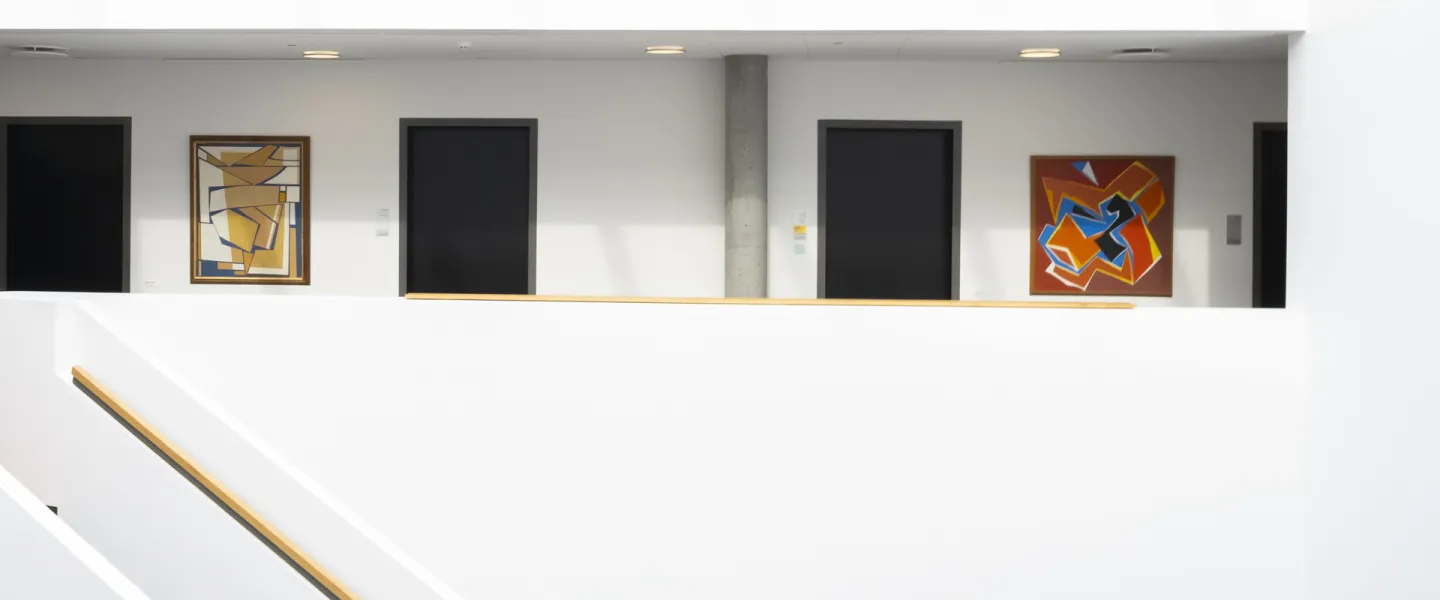
Askja
Room N-132
Doctoral candidate:
Kateryna Barynova
Title of thesis:
Metal ion escape and gas rarefaction in high power impulse magnetron sputtering
Opponents:
Dr. Tomáš Kozák, Associate Professor at the Department of Physics and NTIS, University of West Bohemia in Pilsen, Czech Republic
Dr. Julian Held, Assistant Professor within the group Plasma & Materials Processing (PMP) at Eindhoven University of Technology, Netherlands
Advisor:
Dr. Jón Tómas Guðmundsson, Professor at the Faculty of Physical Sciences, University of Iceland
Other members of the doctoral committee:
Dr. Martin Rudolph, Head of "Modelling and Simulation" at Leibniz Institute of Surface Engineering (IOM), Germany
Dr. Daniel Lundin, Senior Associate Professor in the Coatings and Plasma Physics Division, Department of Physics, Chemistry and Biology (IFM), Linköping University, Sweden
Chair of Ceremony:
Dr. Birgir Hrafnkelsson, Professor and Head of the Faculty of Physical Sciences, University of Iceland
Abstract:
High power impulse magnetron sputtering (HiPIMS) is an advanced ionized physical vapor deposition (IPVD) technique that uses almost the same hardware as dc magnetron sputtering (dcMS), but is more flexible in tuning the film characteristics. Compared to conventional dc magnetron sputtered films, thin films produced by HiPIMS typically have enhanced properties, such as better crystallinity, higher mass density, and improved phase composition, primarily due to low-energy ion bombardment during the film growth process. However, the broader use of HiPIMS in industrial applications is constrained by the main disadvantage: often a significantly lower deposition rate. This drawback is mainly attributed to the back-attraction of the film-forming species after they have been ionized in the dense plasma near the cathode target. The thesis focuses on addressing this primary limitation of HiPIMS by investigating the physics governing the discharge, and the relationship between sputter yield and deposition rate. The central goal was to analyze and further develop the ionization region model (IRM) of HiPIMS discharges to optimize the deposition process. The research involved computational modeling, including studies on working gas rarefaction across multiple target materials, the detailed modeling of discharges with chromium, aluminum, and graphite targets in various gas mixtures (e.g., Ne/Ar), and the analysis of the results obtained from the simulations. The main conclusion, supported by the data analysis of the IRM simulations for various target materials under diverse discharge conditions, is that the sputter yield dictates the back-attraction probability of the sputtered species. The sputter yield is shown to be a key factor that significantly changes the discharge composition, electron temperature, degree of gas rarefaction, and, consequently, the possible limit on deposition rate and overall discharge characteristics. Furthermore, the sputter yield determines which process is mainly responsible for working gas rarefaction. In conclusion, this work establishes that the target sputter yield is important for controlling and optimizing the HiPIMS discharge. The thesis serves as an introduction to the physical processes investigated, while the detailed results of the work are presented in the attached articles. The work also includes a supplementary experimental part focused on measurements of the ionized flux fraction (IFF) in the deposition flux. This experimental data served for constraining one of the parameters within the IRM, thereby improving the model’s predictive power.
About the doctoral candidate:
Kateryna Barynova earned her Master 2 in Nuclei, Particles, Astroparticles, and Cosmology from Université Paris-Saclay in 2021, supported by the International Master’s Scholarship IDEX. Previously, she received both her M.Sc. and B.Sc. in Physics from Taras Shevchenko National University of Kyiv, Ukraine, in 2020 and 2018, respectively. Her current research focuses on modeling discharges in low-temperature plasmas, a field in which she has co-authored a number of articles in leading journals and presented at international conferences, winning a Student Paper Award at the 51st IEEE International Conference on Plasma Science (51st ICOPS). Before beginning her Ph. D. program, Kateryna had several internships at CEA Paris-Saclay and the French National Institute of Nuclear and Particle Physics, specializing in the data analysis of gamma-ray bursts and multi-messenger astronomy. She was also a member of GRANDMA, an international network of telescopes dedicated to multi-messenger astronomy, where she co-authored several collaborative papers. Earlier in 2012, Kateryna won a silver medal in the International Olympiad on Astronomy and Astrophysics (IOAA).

Share
Buses 14, 1, 6, 3 and 12 stop at the University of Iceland in Vatnsmýri. Buses 11 and 15 also stop nearby. Let's travel in an ecological way!