Aðalbygging
The Aula
Link on Zoom:
https://eu01web.zoom.us/j/68393623115
Doctoral candidate:
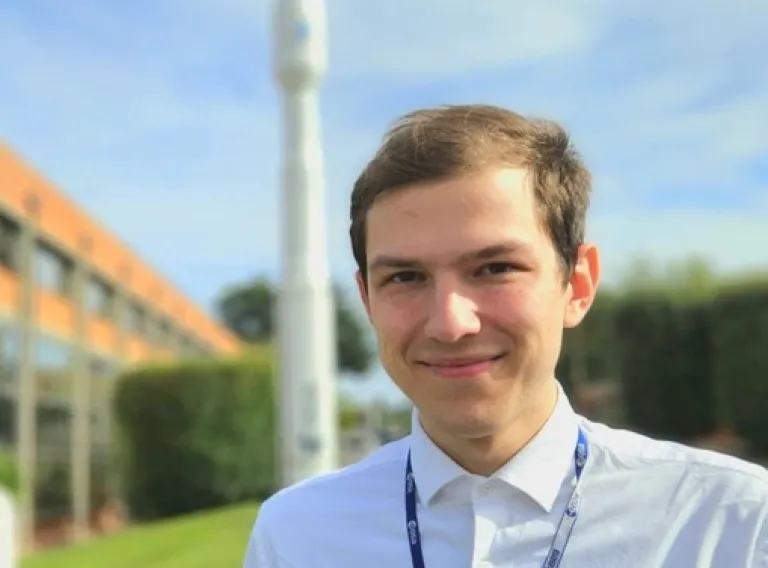
Amer Delilbasic
Title of thesis:
Novel Hybrid Quantum-Classical Computing Algorithms Enhancing Satellite Remote Sensing Applications for Earth Observation
Opponents:
Dr. Marc Rußwurm, Junior Research Group Leader, University of Bonn
Dr. Davide Venturelli, Fellow and Associate Director for Quantum Technologies, Research Institute for Advanced Computer Science (RIACS) and Universities Space Research Association (USRA)
Advisor:
Dr. Morris Riedel, Professor at the Faculty of Industrial Engineering, Mechanical Engineering, and Computer Science, University of Iceland
Other members of the doctoral committee:
Dr. Gabriele Cavallaro, Associate Professor at the Faculty of Electrical and Computer Engineering, University of Iceland
Dr. Bertrand Le Saux, Policy Officer for Green Deal (Destination Earth) and AI Applications, European Commission
Chair of Ceremony:
Dr. Rúnar Unnþórsson, Professor and Head of the Faculty of Industrial Engineering, Mechanical Engineering and Computer Science, University of Iceland
Abstract:
Earth observation (EO) is increasingly driven by large-scale remote sensing (RS) data, acquired from satellite and airborne platforms across diverse temporal and spatial resolutions. These datasets are characterized not only by volume, but by complex properties such as multi-source heterogeneity, high dimensionality, nonlinear feature distributions, and spatio-temporal variability. Processing such data at operational scale introduces significant algorithmic and computational challenges, particularly in high-resolution environmental monitoring and planetary-scale inference tasks. Quantum computing (QC) offers a computational paradigm fundamentally different from classical computing, leveraging the principles of quantum mechanics to perform operations in high-dimensional state spaces. This theoretical advantage makes QC a compelling candidate for selected EO tasks, especially those involving combinatorial optimization and learning tasks. However, the limited qubit fidelity and scale of current quantum hardware constrain their direct applicability to operational applications in Earth observation. This PhD thesis investigates the application of annealing-based and circuit-based quantum algorithms to EO, as well as the integration of quantum algorithms with classical devices, such as those in high-performance computing (HPC) environments. It examines acquisition scheduling and data classification tasks within EO workflows. Experiments assess practical algorithmic benefits, computational scalability, and constraints imposed by hybrid quantum-classical execution. Results demonstrate that quantum modules, when carefully embedded into HPC architectures, can enhance selected stages of EO pipelines, specifically using quantum machine learning and quantum optimization approaches.
About the doctoral candidate:
Amer Delilbasic received his B.Sc. and M.Sc. degrees, both cum laude, in Information and Communication Engineering from the University of Trento in 2019 and 2021, respectively. He is a member of the “AI and ML for Remote Sensing” Simulation and Data Lab at the Jülich Supercomputing Centre, Forschungszentrum Jülich, Germany. His research focuses on machine learning and optimization methods based on quantum computing and high performance computing for Earth observation. He has co-authored several articles in leading journals and international conferences in these areas. In 2025, he received the Best Paper Award at the QUEST-IS Conference, held in Paris, France. In 2021, his proposal was selected for funding under the Open Space Innovation Platform of the European Space Agency (ESA). He has also been a Visiting Researcher at the Φ-lab, European Space Research Institute (ESRIN), ESA. He currently serves as co-lead of the QC4EO working group within the IEEE Geoscience and Remote Sensing Society Quantum Earth Science and Technology Technical Committee.
Share
Buses 14, 1, 6, 3 and 12 stop at the University of Iceland in Vatnsmýri. Buses 11 and 15 also stop nearby. Let's travel in an ecological way!