
Askja
Room 132
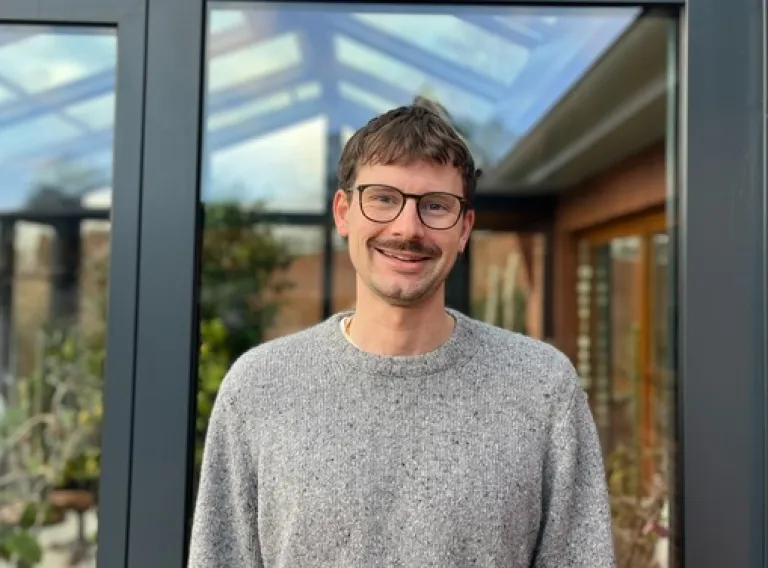
Doctoral candidate: Hendrik Schrautzer
Title of thesis: Ordering in multistable magnetic nanostructures.
Opponents: Dr. Denys Makarov, Head of department Intelligent Materials and Systems, Helmholtz-Zentrum Dresden-Rossendorf e.V., Germany.
Dr. Vitaliy Lomakin, Professor of Electrical and Computer Engineering, University of California, San Diego.
Advisor: Dr. Pavel F. Bessarab, Guest Professor at the Faculty of Physical Sciences, University of Iceland.
Co-advisor: Dr. Hannes Jónsson, Professor at the Faculty of Physical Sciences, University of Iceland.
Faculty supervisor: Dr. Snorri Þorgeir Ingvarsson, Professor at the Faculty of Physical Sciences, University of Iceland.
Other members of the doctoral committee:
Dr. Stefan Heinze, Professor at the Institute of Theoretical Physics and Astrophysics, Christian-Albrechts-University of Kiel, Germany.
Chair of Ceremony: Dr. Benjamín Ragnar Sveinbjörnsson, Associate Professor and Vice Head of the Faculty of Physical Sciences, University of Iceland.
Abstract
Magnetic nanosystems hosting co-existing localized magnetic textures beyond skyrmions are of great interest for fundamental science and technological applications, but their characterization is challenging due to the complexity of the energy surface. This energy surface is uniquely determined by the underlying interactions between magnetic moments and can exhibit numerous local minima associated with metastable states. Within harmonic transition state theory or Kramers/Langer theory, the identification of first-order saddle points on this surface is essential for calculating transition rates between metastable states and thus for quantitative assessment of the thermal stability of localized magnetic structures. In this work, a theoretical framework is developed and implemented that enables the systematic identification of first-order saddle points on the energy surface of magnetic systems. In contrast to methods based on finding minimum energy paths, the developed approach does not require prior knowledge of the final state of the transitions. The approach does not rely on phenomenological models and subjective assumptions, thereby opens the door for highly predictive simulations of long time-scale thermal dynamics of multistable magnetic systems and systematic sampling of the energy surface based on recursive traversing between energy minima via saddle points. The methodology is applied to various systems capable of hosting a large diversity of localized magnetic textures including two- and three-dimensional chiral magnets and transition-metal ultrathin film and multilayer systems. In particular, a hierarchy of transition mechanism universal for various topological textures in two-dimensional chiral magnets is discovered and the interplay between the topology of a texture and its thermodynamically accessible collapse paths is investigated. Furthermore, it is demonstrated that long-range dipole-dipole interactions lead to a vastly increasing complexity of transition mechanisms of three-dimensional textures such as chiral bobbers, skyrmion tubes, and globules. In ultrathin transition metal systems, prototypical for applications, the method reveals that higher-order exchange interactions can strongly enhance the lifetime of skyrmions and antiskyrmions. Together with the presented applications, the developed methodology constitutes an important advancement for the theoretical prediction of the long time-scale magnetization dynamics and characterization of the energy surface of complex, technologically relevant magnetic systems.
About the doctoral candidate
Hendrik was born in 1992 and grew up in Kiel in northern Germany. He studied Physics at the Christian-Albrechts University of Kiel from 2013 to 2020, where he graduated with a Master’s degree. His Master’s project focused on atomistic spin dynamics for magnetic multilayer systems.
After completing his studies, he worked at the software company True Ocean before beginning his PhD in Iceland in 2021. Hendrik’s research interests include the development of computational optimization methods for magnetic systems.
Share
Buses 14, 1, 6, 3 and 12 stop at the University of Iceland in Vatnsmýri. Buses 11 and 15 also stop nearby. Let's travel in an ecological way!