
Askja
Room 132
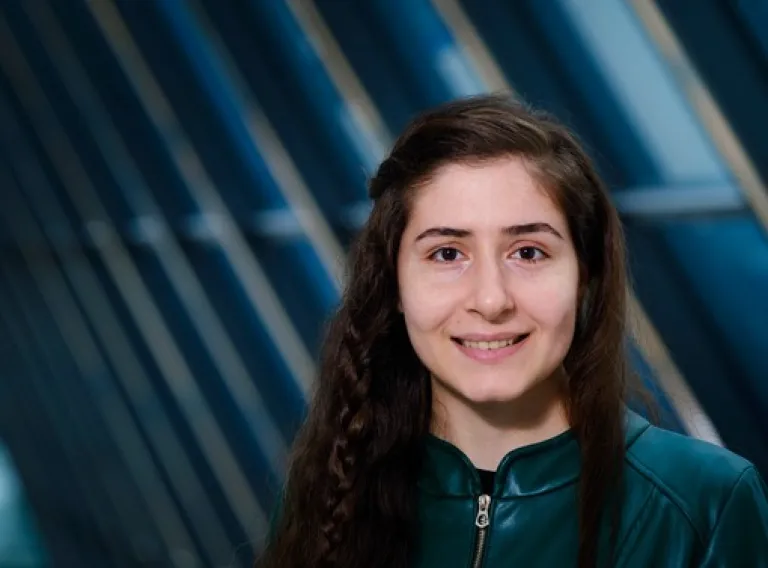
Doctoral candidate: Mahtab Hafizi Yazdabadi
Title of thesis: The Intrinsically Disordered HMGA1 Protein Investigated with Single-molecule Techniques.
Opponents:
Dr. Margrét Helga Ögmundsdóttir, Professor at the Faculty of Medicine, University of Iceland.
Dr. Louise Pinet, Assistant Professor, ENS Lyon, France.
Advisor: Dr. Pétur O. Heiðarsson, Professor at the Faculty of Life and Environmental Sciences, University of Iceland.
Other members of the doctoral committee:
Dr. Zophonías Jónsson, Professor at the Faculty of Life and Environmental Sciences, University of Iceland.
Dr. Dominika Gruszka, Associate Professor at the Department of Physics and Kavli Institute for Nanoscience Discovery, University of Oxford, England.
Chair of Ceremony: Dr. Snæbjörn Pálsson, Professor and Head of the Faculty of Life and Environmental Sciences, University of Iceland.
Abstract
The interaction between nucleoproteins and DNA is crucial to essential cellular processes, thus conformational plasticity is a defining feature of many DNA-binding proteins. A large subset of these proteins, including transcription factors and chromatin remodelers, contain intrinsically disordered regions (IDRs) or exist as intrinsically disordered proteins (IDPs). The high-mobility group protein HMGA1 is a highly disordered chromatin remodeler that is strongly expressed in stem cells and aggressive cancers, making it a potential therapeutic target. HMGA1 remodels chromatin by competing with linker histone H1, yet the molecular details of this competition remain unresolved due to the experimental challenges of studying disordered proteins. In this study, we employed single-molecule spectroscopy to investigate the molecular basis of HMGA1 function and its influence on nucleosome dynamics, particularly its modulation of histone H1 binding kinetics. Our results show that HMGA1a does not significantly alter the dissociation rate of H1, suggesting it cannot actively remove H1 from nucleosomes. Instead, HMGA1a reduces the association rate of H1, indicating that once H1 dissociates, HMGA1a likely prevents its rebinding. Furthermore, we carried out preliminary sm-FRET experiments on a truncated HMGA1a variant lacking the acidic C-terminal domain, providing the first insights into the potential regulatory role of this enigmatic region. Finally, we discovered that H1 could bind to a partially wrapped intermediate nucleosome structure, with significantly higher dissociation rates. By leveraging advanced single-molecule approaches, this work sheds light on the molecular mechanism underlying HMGA1-mediated chromatin remodeling and lays the foundation for future studies targeting HMGA proteins as oncogenic regulators in cancer.
About the doctoral candidate
Mahtab Hafizi was born in 1994 in Esfahan, Iran. She received her bachelor’s degree in Cellular and Molecular Biology in 2016 and her master’s degree in Biochemistry in 2019, both from Shiraz University, Iran. In 2020, she joined the research group of Dr. Pétur O. Heiðarsson as a research assistant, where she began working on intrinsically disordered transcription factor. She started her PhD studies in Biochemistry at the University of Iceland in 2021, continuing her research in this field.
Share
Buses 14, 1, 6, 3 and 12 stop at the University of Iceland in Vatnsmýri. Buses 11 and 15 also stop nearby. Let's travel in an ecological way!