The School of Social Sciences at the University of Iceland welcomes you to the 12th Nordic Working Life Conference, 11-13 May 2026 at Grand Hotel Reykjavík, Iceland.
11 - 13 May 2026
11 - 13 May 2026
The School of Social Sciences at the University of Iceland welcomes you to the 12th Nordic Working Life Conference, 11-13 May 2026 at Grand Hotel Reykjavík, Iceland.
Date
Starts 11 May 2026
Ends 13 May 2026
Language
English
Location
Grand Hotel Reykjavík, Iceland
Contact
nwlc2026@hi.is
Tendencies and changes at local and global levels create opportunities and challenges for the Nordic model and working life in the Nordic countries. While Nordic labour markets are generally considered as an example of flexibility, quality and equal opportunities, there is a continuous need for research that identifies and generates insight into new elements at different levels of working life. Through conceptual and theoretical development as well as creation of knowledge about the role and behaviour of different actors in working life, working life studies play a crucial role in laying the foundation for successful collaboration between government, public agencies, employers, trade unions and other actors in the labour market. Nordic working life studies engage with traditional as well as new and increasingly diverse research topics, including industrial relations and welfare models, occupational safety and health, flexibility in the labour market and the workplace, technological developments, platform work, gender equality, sustainability and work inclusion of LGBTQ+, migrant or disabled workers. The Nordic Working Life Conference provides a platform for exchanging knowledge and ideas based on research about the Nordic context. We welcome contributions that reflect the broad scope and diversity of contemporary Nordic working life studies practised by different disciplines and research environments while placing emphasis on the Nordic context in terms of research topics, conceptual and theoretical frameworks, methodologies and target groups.
The Nordic Working Life Conference is organised in close collaboration with the Nordic Journal on Working Life Studies and the scholarly community in the Nordic countries.
Registration for the conference and the conference dinner is open. To register, use the Conftool platform of the conference. Please note that a user account needs to be established in order to register for the conference.
Registration has been extended to 9 May 2026.
The conference participation fee includes access to all streams and keynote lectures at the venue, coffee, tea and snacks during breaks, and lunch on Tuesday 12th and Wednesday 13th May 2026.
The (optional) conference dinner participation fee is 120 EUR and includes apéritif followed by a three course meal.
During the registration process, participants have the opportunity to indicate any requirements regarding accessibility of the conference as well as dietary requirements.
Payment of conference fees is exclusively handled within the registration platform through a secure module for credit card payment. The platform also provides payment receipts.
Detailed programme can be accessed by registered participants here.
Please note that minor changes to the programme may occur and will be announced
Conference stream 1: New Pathways, New Partners: Preventing OSH Challenges in Nordic Working Life
Keywords: Occupational safety and health (OSH), Knowledge transfer and exchange (KTE), Prevention ecosystems, Intermediaries and boundary spanning, Co-creation
In the Nordic countries, persistent and emergent occupational safety and health (OSH) challenges are shaped by interactions between local institutions and global dynamics. Conventional prevention infrastructures struggle to produce reach and uptake across heterogeneous organisations; small and medium‑sized enterprises (SMEs) and vulnerable sectors are illustrative cases rather than exclusive targets. This stream interrogates how the prevention ecosystem can be reconfigured through novel intermediaries, cross‑sectoral coalitions and governance arrangements to enhance effectiveness and equity across organisations of all sizes.
Aims and Analytical Focus We invite contributions that:
(1) Theorize, map or explore emerging prevention pathways and boundary‑spanning roles (e.g., insurers, digital platform firms, municipal services, education providers, migrant associations, chambers of commerce, OHS providers)
(2) Advance Knowledge Transfer and Exchange (KTE) by analysing mechanisms that link research, policy and practice across local, sectoral and transnational arenas
(3) Investigate collaborative interventions, using implementation science, realist evaluation, co‑creation, mixed‑method or comparative approaches.
Scope: We particularly encourage analyses of mechanisms, context‑sensitivity and transferability within and between Nordic countries, including negative or null results and reflections on implementation failure.
Expected Contribution: The stream aims to shed light on Nordic research on prevention‑oriented KTE, generating shared conceptual tools and cumulative evidence to inform public agencies, social partners and employers, and to renew prevention capacity for a changing working life.
Conference stream 2: Barriers and opportunities for prolonging working life
Keywords: older workers, prolonging working life, early exit, exclusion or integration
Since the turn of the millennium, the prolongation of working life has emerged as a central political priority across many countries and the European Union. Employment rates among older adults have risen substantially – but differently in various countries – during this period, suggesting that certain policy measures and societal shifts have been effective. Yet, governments continue to emphasize the need for further increases in senior employment, implicitly indicating that current levels are still regarded as insufficient in light of demographic change, fiscal sustainability, and labor market needs.
Against this backdrop, this stream invites contributions that examine both the barriers to and opportunities for extending working life further. By bringing together diverse perspectives, the stream aims to foster a deeper understanding of the complex interrelations among cultural, structural, institutional, organizational, and psychological constraints, alongside individual agency, in shaping trajectories of later-life employment. Submissions employing qualitative or quantitative methodologies are welcomed, with particular interest in comparative analyses across the Nordic context. Contributions that address the following thematic foci are especially encouraged:
Conference stream 3: Exploring organizational cultures that enable and prevent workplace harassment
Keywords: harassment, work environment, organizational culture, organizational change, intersectionality
Everyday practices embedded in organizational cultures may contribute to reproducing – and/or preventing – harassment and misconduct at work (Acker, 1990). While certain organizational features may enable or even encourage harassment and unprofessional treatment (O’Connor et al., 2021) (Hearn & Parkin 2001), organizational processes may also offer conditions for counteracting and preventing workplace harassment (Naezer et al., 2019).
A literature review of research on sexual harassment in the Nordic countries concludes that there is still lack of research into cultures of silence, the consequences of harassment for organizations and efforts to prevent harassment in the workplace (Svensson, 2020). Organizational and managerial responses to harassment and misconduct are shaped by complex and sometimes contradictory power dynamics within work cultures, and power structures related to gender and gender identity, class, race, ethnicity, sexuality, bodily ability, and age (Naezer et al., 2019).
This stream seeks to engage discussions on workplace culture as a process, and how organizational cultures both contribute to the occurrence, normalization, acceptance and invisibility of harassment and misconduct, but also contribute to counteracting and preventing the same behaviour. Topics that might be addressed by papers in this stream, by no means exhaustive, include:
References
Acker, J. (1990). Hierarchies, jobs, bodies: A theory of gendered organizations. Gender & Society, 4(2), 139-158.
Hearn, J., & Parkin, W. (2001). Gender, sexuality and violence in organizations: The unspoken forces of organization violations. SAGE Publications Ltd.
Naezer, M., van den Brink, M., & Benschop, Y. (2019). Harassment in Dutch Academia: Exploring Manifestations, Facilitating Factors, Effects and Solutions, Utrecht: LNVH.
Svensson, M. (2020). Sexually harassed at work: An overview of the research in the Nordic countries. Nordic Council of Ministers.
Conference stream 4: Liminal Spaces and Threshold Bodies: Challenges and Opportunities
Keywords: Liminal spaces, in-between, embodiment, treshold bodies, margins
In the contemporary world of work and organizations, liminal spaces, those situated between stability and transition, belonging and exclusion, have always existed. The Nordic countries, known for their comparatively flexible labor markets, have long fostered diverse forms of such in-between positions: part-time and fixed-term employment, temporary agency work, dispatched labor, zero-hours contracts, freelance work, and gig employment. Yet, despite their promise of flexibility, these liminal spaces often fail to meet the complex needs of individuals and the evolving labor market alike.
Traditionally, the notion of liminality has been applied to marginal or precarious work, but it has increasingly become relevant to expert and creative labor as well. We propose, however, to move beyond viewing these spaces merely as deviations from standard employment. Instead, we see them as ambiguous and dynamic positions, zones of both vulnerability and potential, that mediate workers’ relations to social systems, institutions, and labor markets.
Work is also experienced through and shaped by the characteristics of the body, a fact that is often forgotten or overshadowed by various discourses of identity. Workers’ embodied attributes, such as gender, age, size, skin color, or ability, affect how they navigate, perceive, and are positioned within working life. This also applies to academic work. These threshold bodies both reveal and produce the shifting boundaries of inclusion and exclusion at work. While they may expose vulnerabilities and discrimination, they can also embody forms of resilience, resistance, and renewal.
This conference stream invites interdisciplinary dialogue among scholars and practitioners from the Nordic region and beyond. We seek contributions that explore how liminal spaces and threshold bodies shape experiences, identities, and structures of working life, empirically, theoretically, or methodologically. By engaging with these phenomena, we aim to deepen understanding of the challenges and opportunities that lie at the thresholds of work and organization in an increasingly fluid world. Advancing knowledge on these themes can also hold potential to help us reimagine and reorganize work, enabling us to view change not only as a threat but also as a catalyst for more inclusive and sustainable forms of working life.
Conference stream 5: Disability and Employment: Addressing Methodological Challenges and Solutions
Keywords: Disability, employment, methodological challenges, comparative measures, labour market inclusion
Persons with disabilities face persistent barriers to employment, including discrimination, inaccessible workplaces, and limited opportunities for career development. Many are overqualified for the jobs they obtain, reflecting missed opportunities and underutilised potential. These challenges hinder labour market participation and social inclusion, and pose a threat to both equality and the long-term sustainability of welfare societies.
The Nordic countries' ability to respond to these challenges, aligned with the UN Convention on the Rights of Persons with Disabilities (CRPD) and the Sustainable Development Goals (SDGs), requires a deeper understanding of methodological issues and solutions. Persons with disabilities represent the world's largest minority, yet also a highly heterogeneous group. Conceptualising disability, therefore, presents multiple methodological challenges. Despite progress, researchers still face issues such as proxy indicators, small sample sizes, and limited access to longitudinal data. Comparable measures across countries are also crucial to identify structural barriers and evaluate policy effectiveness.
This stream aims to address such methodological challenges and foster exchange among researchers working on (comparative) approaches to studying labour market attachment and autonomy in work among persons with disabilities. We particularly invite contributions based on national and EU-level surveys, survey experiments, field experiments, and administrative register data. Both single-country and comparative studies from Nordic and European contexts are welcome, and we encourage submissions from various disciplines, including social policy, political science, social work, sociology, and economics, to create an interdisciplinary forum within a Nordic and European context.
Conference stream 6: Digital and AI innovations shaping human-centered service work
Keywords: Innovation, artificial intelligence, productivity and efficiency, ethical risks and tensions, work-related wellbeing
As digitalization and artificial intelligence (AI) technologies enter human-centered services, we lack understanding of how they alter work tasks, work-related well-being, and interaction with the clients. Public organisations aim to achieve, and technology developers often promise significant improvements to productivity and efficiency of work processes as an outcome of digital and AI innovation implementation. However, adopting new technologies may have unintended consequences that require careful ex-ante assessment and management of transformation. The adoption of the solutions depends on how professionals trust and accept the automated outcome of the tasks that used to belong to human beings. Transition may produce new and unexpected ethical risks and concerns for the well-being of employees.
We aim to discuss in the session how work tasks in human-centered services, such as social and healthcare, or other kinds of face-to-face services, are shaped by AI and digital tools. We welcome a wide range of contributions on this topic, including empirical and theoretical papers from different countries and service contexts that study the multifaceted impact of these tools at work. For example:
Pondering on long-term impact on professionals’ skill cultivation, expertise, service, and work design, and labor market needs in human-centered work are also very much welcomed.
Conference stream 7: Navigating the Future of Nordic Work: The Impact of AI, algorithmic management and Social Robotics
Keywords: Digitalisation, Labour relations, Nordic model, Work environment and health
The Nordic labour model faces new challenges and opportunities as artificial intelligence (AI), algorithmic management and social robotics reshape workplaces. These technologies are not only changing how work is performed but also raising fundamental questions about ethics, legal frameworks, labour relations, and the future of human participation in work. This stream explores these challenges and opportunities, bringing together interdisciplinary perspectives on the evolving landscape of Nordic working life.
Scope and Objectives
We invite contributions examining the intersection of AI, algorithmic management, social robotics, and Nordic working life, including but not limited to:
Conference stream 8: Working Life in the Armed Forces: Nordic Perspectives in a Changing Security Landscape
Keywords: recruitment, retention, diversity, leadership, military
Working life within the Armed Forces has become an increasingly important area of research and policy debate, particularly in the Nordic countries. The shifting security situation in Europe, including Finland and Sweden’s accession to NATO, and growing concerns about regional stability, has renewed attention to the organization, sustainability, and attractiveness of military work. The Armed Forces thus provide a timely and unique case for exploring how broader transformations in Nordic working life intersect with issues of security, governance, and societal resilience.
This stream invites scholars and practitioners to examine working life in the Armed Forces and other uniformed services from diverse disciplinary and methodological perspectives. Topics of interest include recruitment and retention challenges, gender integration and diversity, professional identity and leadership, work–life balance in military contexts, and the effects of conscription systems on motivation and cohesion. We particularly welcome comparative and cross-national studies that explore how different countries address shared challenges related to personnel management, organizational culture, and workforce inclusion in the defense sector.
By examining working life in the Armed Forces through a Nordic lens, this stream seeks to explore how broader societal changes and security developments shape everyday experiences, employment conditions, and organizational practices in military contexts. It invites reflection on how issues such as recruitment, retention, inclusion, and personnel well-being are addressed within organizations that operate under unique demands of hierarchy, discipline, and readiness. The overall objective of the stream is to strengthen dialogue and collaboration across academic and policy communities, and to build a sustained network for advancing knowledge on working life in the Armed Forces, within Nordic societies and in a wider global and security context.
Conference stream 9: Labour market discrimination of persons with disabilities: New insights from Nordic countries and beyond
Keywords: disability, discrimination, labour market, comparative research
In the last two decades we have seen increasing political efforts to improve the labour market situation of vulnerable groups such as persons with disabilities (PwDs). A major focus of these initiatives has been to combat labour market discrimination. Discrimination of PwDs can be defined as “any distinction, exclusion or restriction on the basis of disability” (Art. 2, UN-CRPD). Besides supranational initiatives such as the “UN-Convention on the Rights of Persons with Disabilities” (UN-CRPD), anti-discrimination legislation has been passed on the national level in many countries.
Despite these on-going efforts, research persistently shows that labour market discrimination against PwDs is still prevalent in Nordic countries and beyond, potentially limiting access to the regular labour market, labour market mobility, subjective well-being, income and other outcomes.
Discrimination against PwDs in the labour market can take many different forms and can be located on the micro-, meso- or macro-level: On the micro-level employers can exclude PwDs, e.g. based on attitudes related to stigma, statistical or taste-based discrimination. On the meso-level, institutional discrimination can be grounded in organisational practices e.g. in job agencies, leading to the segregation of PwDs in specific segments of the labour market such as sheltered workshops. On the macro-level discrimination against PwDs can be engrained in the structure of labour markets or national legislation – sometimes aimed to support anti-discrimination but resulting in more discrimination against PwDs. These different levels cannot be assumed to be independent of each other. In the welfare state literature, for instance, the arrangement of welfare systems is rooted in the dominant political ideologies of the political forces in power.
Moreover, disability is a heterogeneous category, including persons with different impairment conditions that face different impairment-specific limitations and structural barriers. At the same time, experiences of disability discrimination vary by other ascriptive characteristics, necessitating the application of intersectional frameworks.
The aim of this stream is to collect recent studies analysing the labour market discrimination of the diverse group of PwDs in Nordic or other European countries from different theoretical perspectives and on different levels and discuss potentials for comparative research in this field.
Conference stream 10: Care work in crisis - and beyond
Keywords: carework, care technology, dignity, reorganization, new professionalism
Care work and working conditions in the care sector have been the topic of much critical debate in the Nordic countries over the past decades. Continuous rationalization-efforts, combined with a recruitment crisis and demographic ageing, have resulted in a sector under pressure, resulting ina ‘the care crisis’ as one of the major challenges facing both Nordic and other welfare societies (Dowling 2021; Fraser 2016; L. L. Hansen, Dahl, og Horn 2021; Wrede m.fl. 2008). Working life research has extensively addressed the implications of this development for working life in the care sector (e.g. A. M. Hansen og Kamp 2019; Kamp og Vaaben 2025; Trydegård 2005; Wrede m.fl. 2008), but has to a lesser extent examined the implications of various attempts to counter the care crisis and address the quality of care and working lives in the sector. In this stream we aim to explore both potentials and (un)expected consequences for the working life of care workers, and invite contributions examining the implications of e.g.:
Both (primarily) theoretical and empirical contributions are welcomed
Conference stream 11: Time and work
Keywords: time, work-time, scheduling, policys, work
Time is a fundamental yet often under-theorised dimension in the study of work. It plays a key role in establishing norms for work and leisure time through legislation and policies, but is also a focal point for how work is organized and unfolds on a day-to-day basis.
In the workplace, time not only encompasses objective measures for productivity such working hours or shift schedules – it also affects the flow of work where rhythm, repetition, and interruptions may stretch out or compress the subjective experience of time.
Over recent decades, time has become an increasingly complex analytical phenomenon as deregulation, flexibility, and digitalization have diversified and fragmented time regimes, contributing both to the precarisation and individualisation of contemporary working lives.
This stream seeks to deepen our understanding of work-time, time scheduling, temporal dynamics, space, rhythms and practices within workplaces, teams, organisational settings and national differences. We welcome submissions that address, but are not limited to, the following themes:
By exploring these themes we hope to contribute to a conceptualisation of time in work research, mapping of hours worked, extended toward an appreciation of how temporality is embedded in organisational processes, power relations, technologies and individual experience.
Participants who wish to book accommodation at the Grand Hotel Iceland for the duration of the conference can use the following discount code: HI2026
The code gives 10% discount. To book accommodation, go to:
The conference takes place at Hotel Reykjavík Grand.
Location of Hotel Grand Reykjavík
Session rooms are located on several floors within the hotel.
Please consult the conference programme to confirm your session room and allow sufficient time to move between floors. Conference volunteers will be available on site to help participants find the rooms.
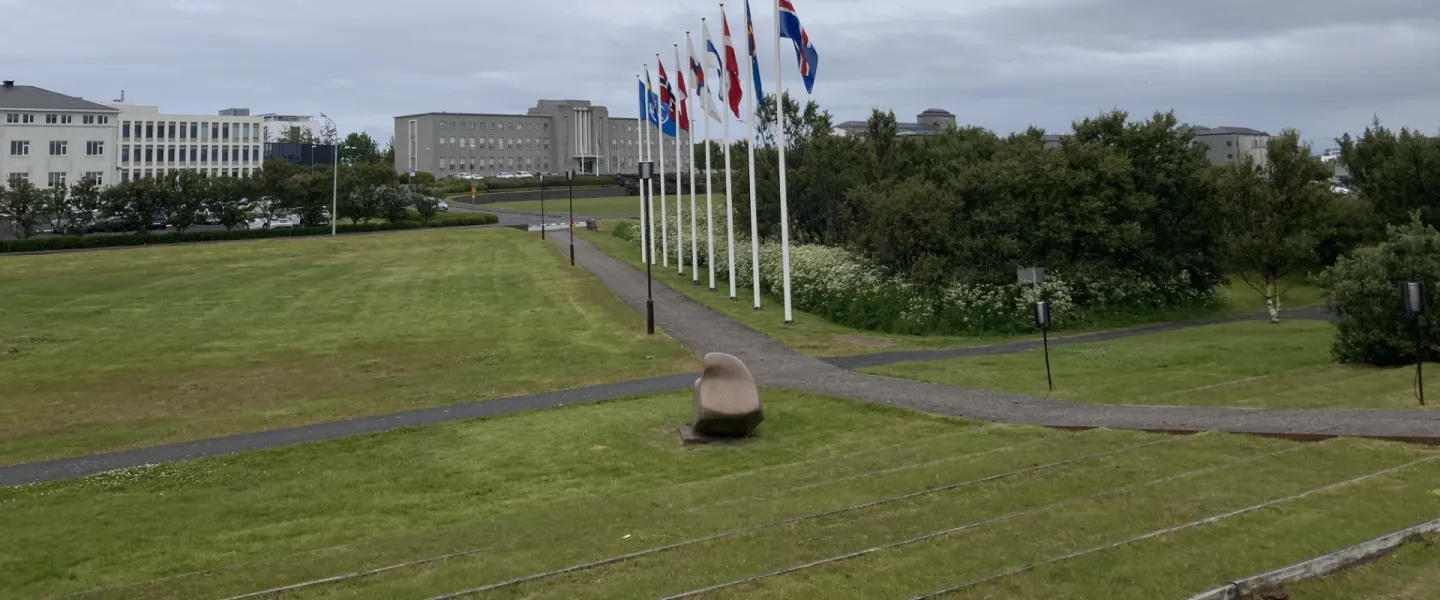
The University of Iceland invites participants to a reception on 11 May 2026 17:30-19:30 at Litla Torg at the University main campus (Sæmundargata 2, 102 Reykjavík).
Location of the University of Iceland
Litla Torg is situated within the building University Centre (Icelandic: Háskólatorg).
Buses will leave at 17:15 from Hotel Reykjavík Grand to transfer participants to the reception.
Please note that while the reception and the bus transfer are free of charge, registration is required no later than 30 April 2026. Invitations with more information about how to register will be sent to all registered conference participants.
The conference dinner will be held at Primavera restaurant in Harpa Concert Hall, Austurbakki 2, 101 Reykjavík. For more information about Harpa, visit Harpa website.
Icelandic weather is rather unpredictable in the spring (or any other season for that matter), so be prepared for different types of sunshine, wind and rain. Follow the weather at the Icelandic meteorological institute.
There are a few options when it comes to travelling from and to the international airport in Keflavík, which is around 45 minutes drive from Reykjavík. More information can be found on Keflavík Airport website.
Reykjavík has a public bus service called Strætó. More information can be found on straeto.is. The app for the bus service allows you to plan your trip, pay and see buses in real-time. It is called Klapp.
Taxis are widely available. They are a more expensive option.
Electric rental scooters are widely found.
There are many cafés and restaurants in downtown Reykjavík.
On the University of Iceland main campus there are several restaurants. More information can be found on University of Iceland webpage: Food and drinks.
The Nordic Working Life Conference is committed to creating an inclusive environment for diverse participants. We therefore suggest a few principles for presenters at the conference aimed at promoting inclusive practices and we ask that you apply them when presenting your paper during our conference in Reykjavík.
Submission of abstracts for presentations to the NWLC2026 has been closed and authors have been informed about acceptance of their abstracts. Authors with accepted abstracts are welcome to upload their full papers or paper drafts to the conference system for use in the stream.
Chair of the organising committee (lead organiser): Stefan C. Hardonk, professor, School of Social Sciences, University of Iceland
Conference staff: Hrefna Guðmundsdóttir, PhD-student, School of Social Sciences, University of Iceland
Other members of the organising committee: