Veröld - Hús Vigdísar
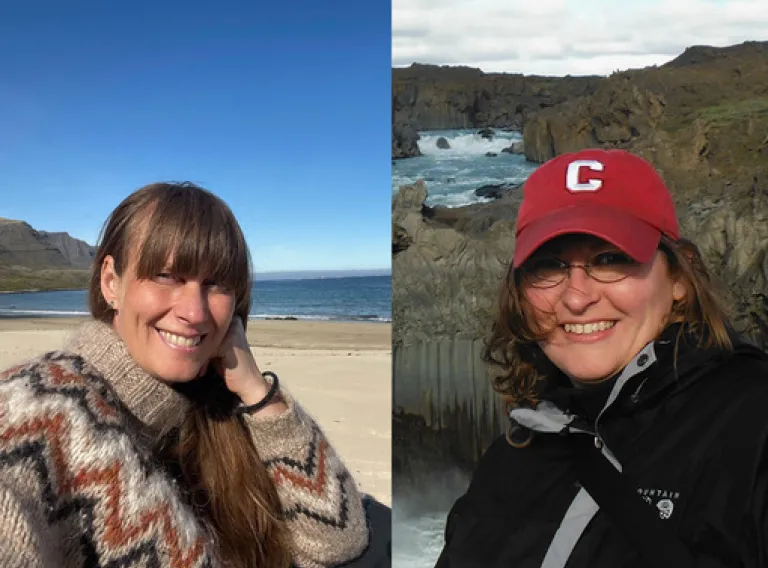
Keynote lecture at the conference Whales and Humans: Past Entanglements and Current Relations. Lísabet Guðmundsdóttir, Postdoctoral Fellow at Arkeologisk Museum Stavanger and Vicki Szabo, Professor at Western Carolina University give the talk “A Transdisciplinary Study of Whale Use in Iceland from Landnám through Late Middle Ages: The Case of Hafnir.”
About the lecture
Our paper presents the results of a ten-year transdisciplinary study of early medieval Icelandic whale use, from lándnam through the sixteenth century, making use of molecular analysis of archaeological whale bone, alongside new translations of medieval and early modern sources on whale use, including Jón lærði Guðmundsson and the Diplomatarium Islandicum. These new data and approaches reveal that medieval Icelanders relied, far more than traditionally thought, on cetacean products that were acquired through complex strategies of acquisition, division, and dispersal. While harvesting of stranded whales was a common means of acquisition, opportunistic hunting of selected species yielded important resources for subsistence consumption and perhaps commercial use. Our study indicates that blue whales dominate archaeological assemblages to a degree that implies both consistent and focused use on this species. The archaeological site of Hafnir, Skagafjörður, a highly organised seasonal fishing/hunting station, serves as a critical case study for discussion of species preferences, acquisition methods, and the division of whales among farms and communities.
About the lecturers
Dr. Vicki Szabo is a Professor of Medieval and Environmental History at Western Carolina University. She is the author of Monstrous Fishes and the Mead Dark Sea (Brill 2008) and several articles and book chapters on medieval whaling. Her research primarily focuses on transdisciplinary analysis of medieval Icelandic whale use.
Dr. Lísabet Guðmundsdóttir is an Icelandic archaeologist who has, over the last few years, focused her research on archaeological sites in danger due to coastal erosion. The majority of the sites are seasonal fishing/hunting stations, for which fairly little is known during the Viking Age and the Medieval period. She currently holds a postdoc position at the Arkeologisk museum in Stavanger, as well as being a part-time cultural heritage manager of the Westfjords.
Share
Buses 14, 1, 6, 3 and 12 stop at the University of Iceland in Vatnsmýri. Buses 11 and 15 also stop nearby. Let's travel in an ecological way!